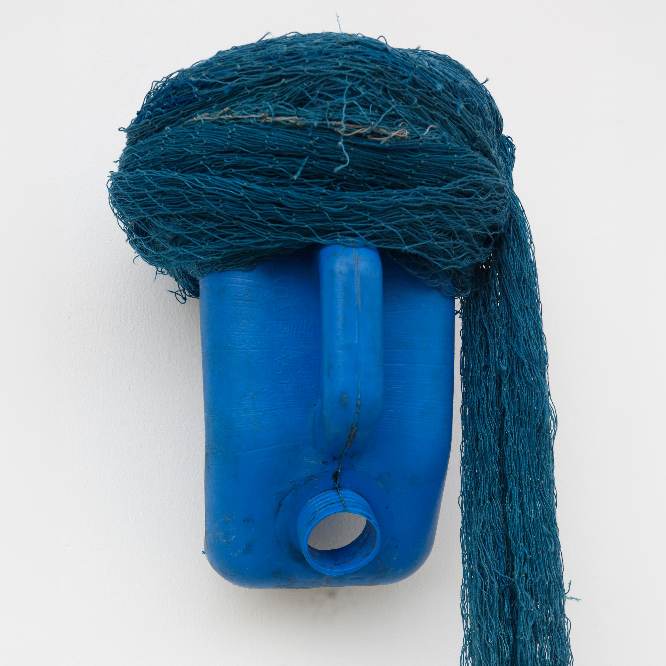
Romuald Hazoumè: My Blue Period

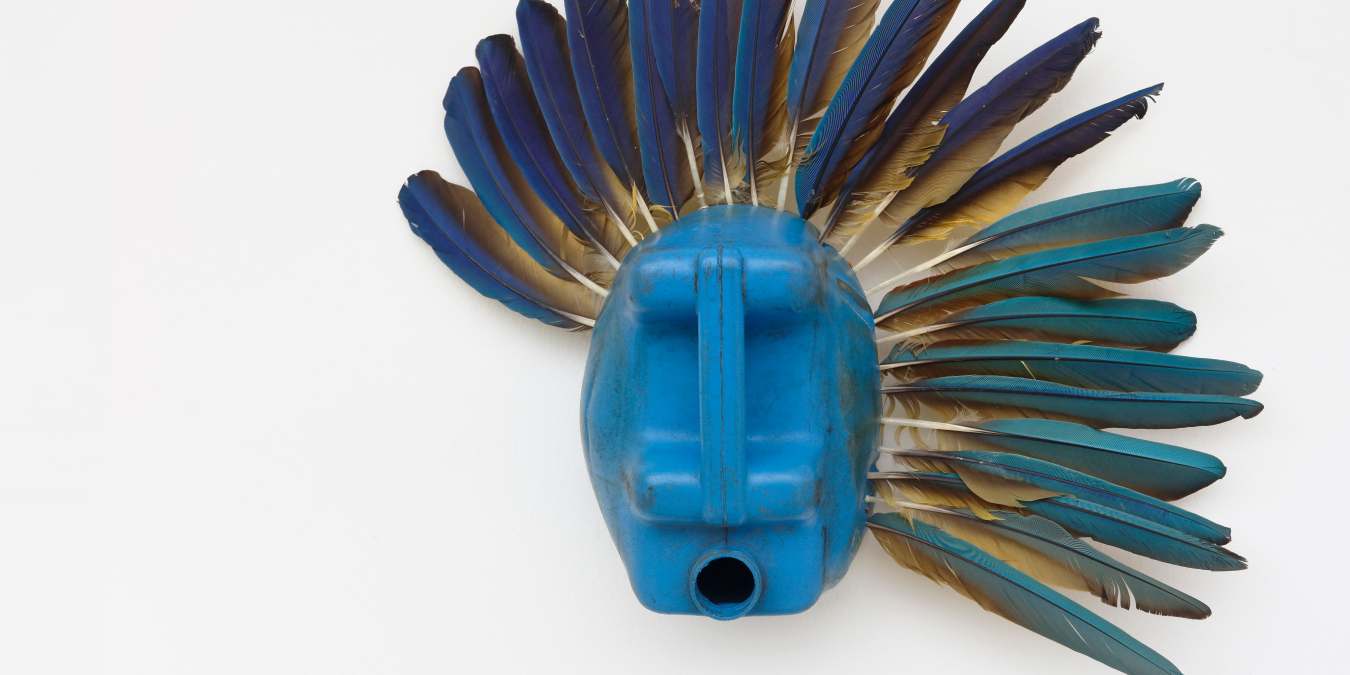
Found objects, 50 x 60 x 18 cm.

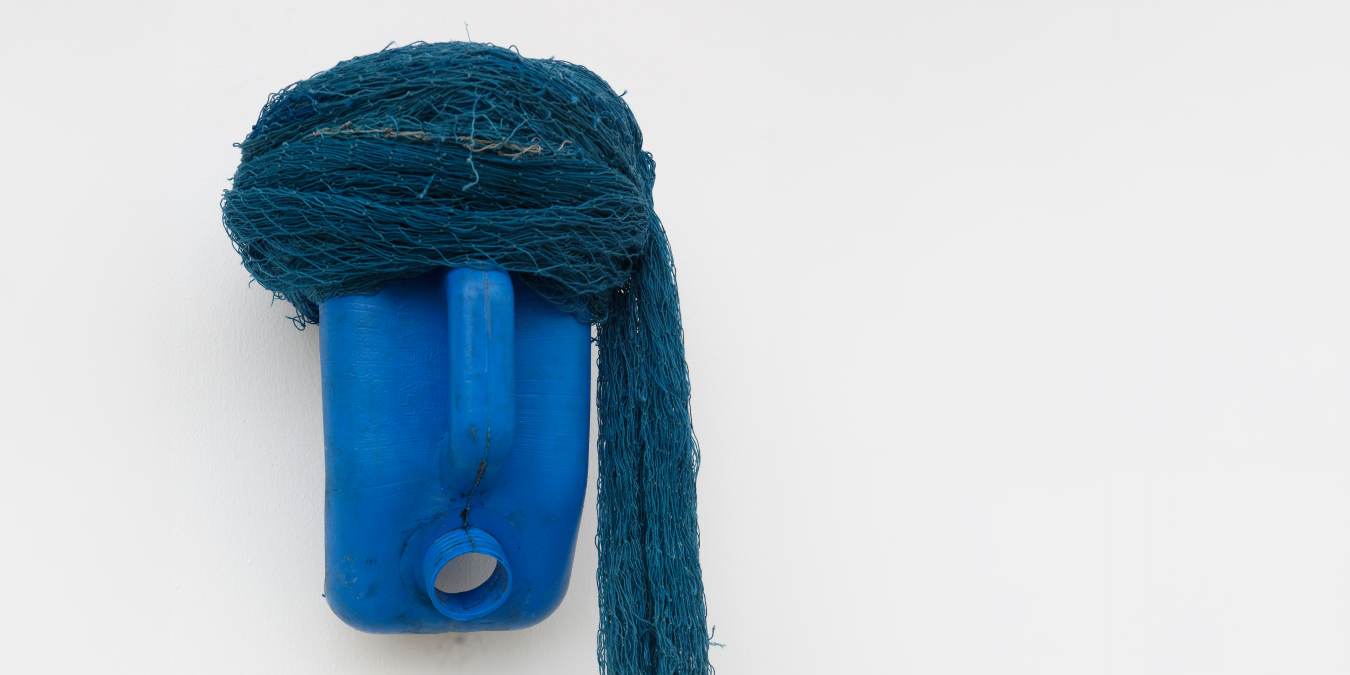
Found objects, 38 x 44 x 18 cm.
October Gallery presents My Blue Period, a solo exhibition by the internationally renowned artist Romuald Hazoumè, which coincides with 1-54 Contemporary African Art Fair and Frieze London.
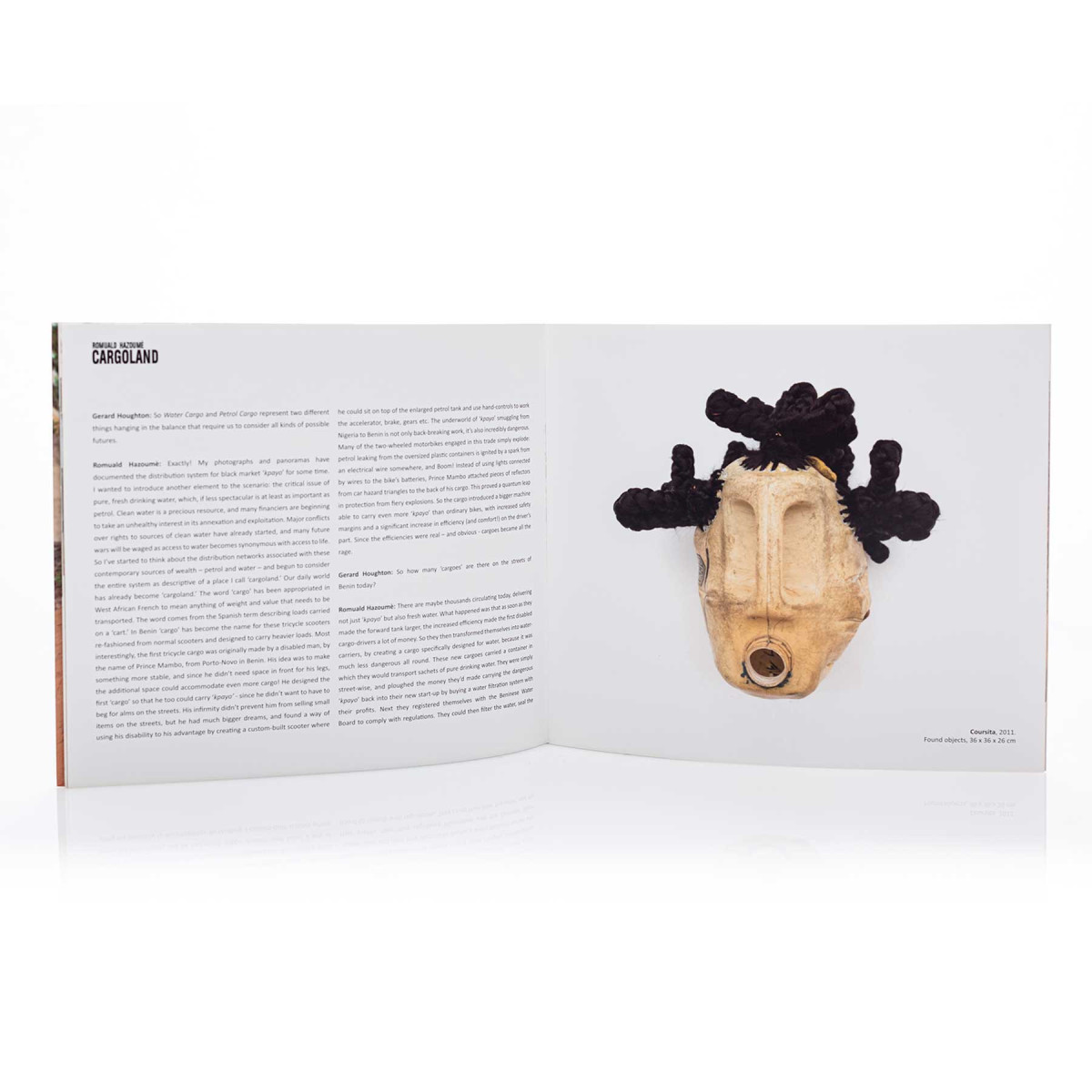
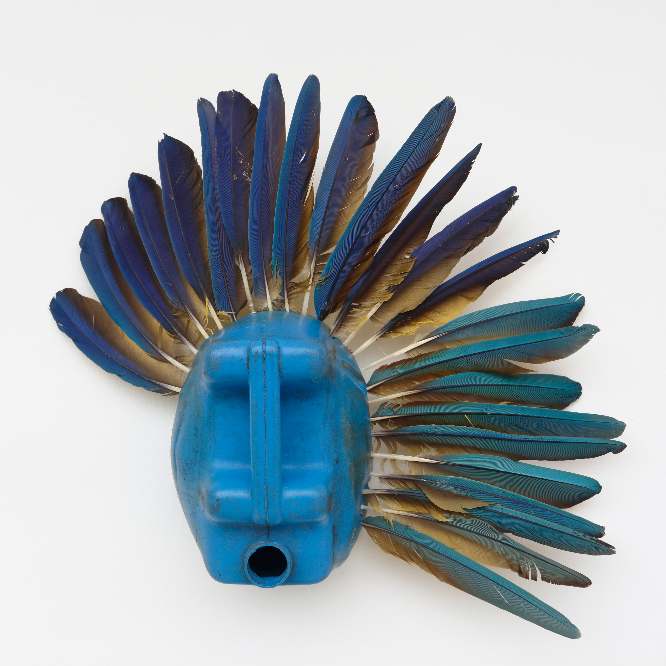
Romuald Hazoumè revisits his iconic masques bidons (Fr. bidon* – flask, container, bottle)—presenting a striking series of masks made from repurposed plastic containers that are adorned with an eclectic array of found materials. Wittily imagined as portraits of figures inhabiting particular places in the contemporary geo-political landscape, these new sculptures come freighted with Hazoumè’s biting commentaries on current issues of global concern. Displaying a wicked eye for detail, each mask dances before our eyes animated by his irreverent sense of humour. Revitalising the sculptural form for which he is best known, Hazoumè’s ironic avatars offer timely reflections on the precarious nature of the world we all inhabit. Once again, these powerful works, taken collectively, underline Hazoumè’s willing acceptance of the artist’s responsibility to confront patent abuses of authority while speaking truth to power.
Creating ‘masks’ from plastic containers, the majority of which are blue in colour, allows Hazoumè to play with associations that echo two separate yet distantly related ideas. The immediate reference is to the young Picasso’s ‘blue period’, when the majority of his canvases were dominated by an all-pervading blue tone, as he became fixated upon melancholic themes of youth, poverty, old-age and death. At the same time, Hazoumè’s title also suggests ‘the Blues’, that uniquely African-American form of music, rooted in traditions transported from central west Africa, which developed throughout the late 19th and early 20th centuries in the US. The distinctive genre of Blues music draws its power from the heartfelt expressions of marginalised people who, although powerless in the face of the conditions that surround them, unite in shared expressions of affirmative music that—even if only temporarily—offer transformative relief.
Hazoumè’s work is well known for addressing such complex matters as slavery (historical and modern), migration and the brutal realities developing in postcolonial Africa. Somehow, these blue masks seem to penetrate deeper still, adopting darker, more ominous tones, reflecting anxieties fed by the many interconnected crises of the present day. Their titles, often forenames or placenames, supply disquieting clues as to the undercurrents of thought currently colouring Hazoumè’s approach. Kongo (2024/25), alludes directly to the endless conflicts over natural resources that blight that immense country’s past, present and probable future. Autlan de Navarro (2024/25), flickers between contrasting visions of a once-proud indigenous people and the wretched survivors of a downtrodden minority eking out impoverished lives on the margins of a paradise where they once lived in balance with the biosphere that maintained them. Each mask pulls into focus another emergency or potential flashpoint: the ongoing ‘situation’ in Gaza; the Israeli-American coalition at war with Iran, the vicious spiral of hostilities in Putin’s ‘special military operation’ in Ukraine and the potential for any one of these to spill over, at any moment, into nuclear conflagration. Ever the agent provacateur, Hazoumè’s tongue-in-cheek borrowing of Picasso’s blue tones for this present period of work shows little evidence of dejection or despair. Rather, we can sense, radiating from within each mask, the fiery reds and incandescent whites of Hazoumè’s focussed indignation.