Join Our Mailing List   Shopping Cart
KENJI YOSHIDA: THE MEANING OF LIFE 5 March – 11 April 2026DREAM NO SMALL DREAM: The Story of October GalleryAvailable from our Book Store. £40 + P&P304 pages, full colour plates throughout. Edited by Gerard Houghton.
 

FORTHCOMING EXHIBITIONS

5 March – 11 April 2026
Kenji Yoshida, La Vie 'Arawareru' (Life Manifests), 1978.
Oil on canvas, 50 x 51 cm.
Kenji Yoshida, La Vie (Life), 1976.
Oil on paper, 37.5 x 46 cm.
The Meaning of Life, a solo exhibition by Kenji Yoshida, comprises a selection of significant works, spanning the decades between the 1960s and 1990s. Yoshida is best known for the monumental, almost transcendent works that employ precious metals of gold and
silver leaf upon Japanese lacquer and coloured paints on canvas. Highlights include exemplary works on paper from the 60s and 70s, portraying a unique combination of traditional Japanese and European modernist styles. These earlier works reveal Yoshida freely experimenting with colour and form to elaborate the iconic visual language that illuminates his mature canvases.

Conscripted at the age of 19, in 1943, Yoshida was directly assigned to a kamikaze squadron. The traumatic experiences he lived through left Yoshida profoundly conscious of the fragility of life and the overriding proximity of death, an awareness that permeates all the work that followed. Returning to his art after the Japanese surrender following Hiroshima, Yoshida moved to Paris, in the early 60s, to study graphic art techniques at Stanley Hayter’s influential Atelier 17. The works from the 60s and 70s highlight Yoshida’s blossoming to produce innovative etchings using subtle varieties of colour to highlight primary forms on the same plate. These early etchings already show Yoshida exploring metallic effects that lead into the delicate serigraphs and oil and ink on paper works of the 70s. We then see the artist explore the possibilities offered by gold and silver leaf as he moves assuredly towards the captivating multi-panelled works of the 80s and 90s. Here, highly mobile forms reveal the influence of European formalist abstraction while also recalling the irregular forms that pattern the grounds of traditional Japanese screen painting.
 
Djibril Dramé, Ndewendeul Series: Sama Xarit, 2022.
Print on Hahnemühle photorag 308g paper,120 x 80 cm,
Eddy Kamuanga Ilunga, Displacing the Living, 2025.
Acrylic and oil on canvas, 150 x 150 cm.

Inheriting the Future brings together dynamic works by Zana Masombuka, Eddy Kamuanga Ilunga, Alexis Peskine, and Djibril Dramé. Displaying painting, sculpture and photography, this multilayered exhibition explores how each artist understands their own identity as a function of a specific heritage—blending past histories, cultural traditions and spiritual legacies— while acknowledging the changing environments in which they’ve developed and the disruptive impacts of globalisation.

With powerful new works from her series, Akhulumile Amabhudango: Scenes from Dreams – Journeys with the Kosabo, Zana Masombuka navigates a liminal terrain between the physical and spiritual worlds, investigating themes of kingship, ascension and ancestral guidance. Through photography, beaded sculptural frames and symbolic objects drawn from Ndebele culture, Masombuka constructs a visual tour de force that explores the interrelation of lineage, destiny and sacred realms. By juxtaposing ancestral motives and elements of everyday familial life, Masombuka positions her Ndebele heritage both as a deeply personal inheritance and as an integral part of a broader cultural continuum.

Striking new paintings by Eddy Kamuanga Ilunga consider the legacies of economic and botanical exploitation in the Democratic Republic of Congo during the calamitous period of Belgian occupation, from 1885 to 1960. The destructive legacy of these colonial practices endures in the loss of indigenous cultures, ongoing environmental destruction and the asymmetric structures that continue to shape land ownership power and recorded history. Kamuanga pays tribute to the strength of local communities endowing his larger-than-life figures with a poignant, contemplative stillness, while situating heritage as a terrain of resilience and survival.

Alexis Peskine’s large-scale ‘portraits’ of people from the African Diaspora first begin as photographic portraits that are then transformed into remarkable sculptural pieces. Peskine’s recent works, delve into the transmission of healing powers inherent in ancestral African spirituality, exploring interiorised aspects of abundance and well-being. Peskine’s narratives draw upon an Afro-diasporic perspective, proposing ‘heritage’ not as a pre-determined legacy, but as something actively re-assembled through conscious selection of materials and methods of practice.

This exhibition introduces photographic works by Djibril Dramé who weaves philosophically engaged yet poetic approaches to cultural memory together with contemporary African aesthetics. Dramé began his series Ndewendeul in 2010 as an exploration of the spiritual ethos of the Baye Fall Sufi brotherhood—an unorthodox yet powerful community within the larger Islamic world. While the project is rooted in his close relationship with his Sufi “brothers” and “sisters,” it also extends beyond them, inviting the presence of the “other” and opening a broader dialogue about community, identity, and belonging.

These fours artists, using diverse media and dissimilar practices, illustrate productive approaches to navigating the disruptive transitions occurring as the cultural spaces they inhabit negotiate the impacts caused by contemporary global monoculture.


NEWS, EVENTS & RECOMMENDATIONS


Joe Nickols
Gallery Talk: Kenji Yoshida
Saturday, 7th March, 2026 3 pm – 4.30 pm
Free entry Location: Gallery Ground Floor
Join Joe Nickols, Project Curator of Samurai at the British Museum and Gerard Houghton, Director of Special Projects, October Gallery for a discussion about Kenji Yoshida and his solo exhibition, The Meaning of Life. The conversation will examine the late Japanese artist's extraordinary life and artistic career.
Joe Nickols
Gallery Talk: Lineages
Watch the full Gallery Talk with artists Eleanor Lakelin and Junko Mori in conversation with curator Eleri Fanshawe.

The conversation offers insight into the artists’ influences and shared sensibilities, inviting audiences to consider how an expanded understanding of line operates as both concept and structure within their work.
El Anatsui at Nigerian Modernism
Tate Modern
8th October, 2025 – 10th May, 2026
Tate Modern presents Nigerian Modernism, a landmark exhibition celebrating the artists who transformed modern art in Nigeria during the mid-20th century. The exhibition will include some of El Anatsui’s early wooden wall-hanging sculptures, such as Leopard's Paw Prints and Other Stories.

Created throughout the 1980s and 90s, these remarkable relief works reveal the beginnings of Anatsui’s signature style. Using richly hued tropical hardwoods—variously charred, carved and painted—the artist forged wall-hangings that occupy a space between painting and sculpture, anticipating the shimmering metal tapestries for which he later became renowned.
El Anatsui, Leopard's Paw Prints and Other Stories, 1991. Tropical hardwoods, 43.5 (H) x 93 (W) x 17 (D) cm.
Photo by Sebastiano Pellion di Persano.
El Anatsui at Art Basel Qatar | Stand M115
3rd – 7th February, 2026 Building M7, Msheireb Downtown Doha
October Gallery’s presentation at Art Basel Qatar explores El Anatsui’s innovative approach to process and materials. The exhibited works underline how the artist has — for many decades now — explored surprising avenues that have brought about a novel and unexpected synthesis of African practices and western modes. Over a career spanning more than five decades, El Anatsui has become one of the most acclaimed contemporary artists of our time. His sculptures, employing an extraordinary range of media and many uncommon materials, have investigated a broad array of different subjects.
Photo by Sebastiano Pellion di Persano.
El Anatsui: 'Go Back and Pick'
Virtual Tour
Explore our recent exhibition virtually
View photographs and watch the Cocktail Preview Opening Speeches, whilst immersed in a explorable, high resolution recording of the exhibition
El Anatsui: 'Go Back and Pick'


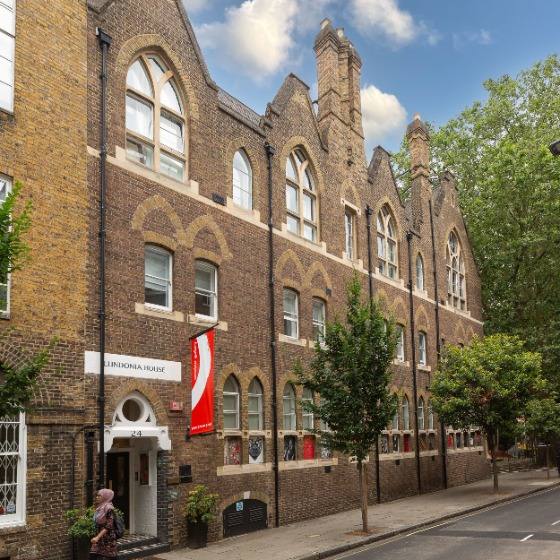
VISIT OCTOBER GALLERY

Bloomsbury, London

October Gallery has been instrumental in bringing to worldwide attention many of the world’s leading international artists, including El Anatsui, Rachid Koraïchi, Romuald Hazoumè, Nnenna Okore, Laila Shawa and Kenji Yoshida. The Gallery promotes the Transvangarde, the very best in contemporary art from around the planet, as well as maintaining a cultural hub in central London for poets, writers, intellectuals and artists, and hosts talks, performances and seminars, see www.octobergallery.co.uk/events

The rich diversity of art presented is an inspiration to collectors and enthusiasts. Institutions such as the British Museum, London; the Metropolitan Museum of Art, New York; Centre Pompidou, Paris; Museum Kunstpalast, Düsseldorf, Germany; Neue Galerie, Kassel, Germany; Setagagya Art Museum, Tokyo, Japan have all collected works from October Gallery.

Founded in 1979, October Gallery is a charitable trust which is supported by sales of art, rental of the Gallery's unique facilities, grants from various funding bodies and the active support of dedicated artists, musicians, writers and many friends from around the world. The Gallery’s Education Department is inclusive of all ages from under 5’s to PGCE student and delivers a wide range of provision, see www.octobergalleryeducation.com


October Gallery is open from 12:30 to 17:30 pm, Tuesday to Saturday.
The Gallery is closed during official holidays and the entire month of August.

October Gallery Cafe is open from 12:30 pm – 2:30 pm, Tuesday to Friday.

Loading menu...


ACCESSIBILITY

There are two steps at the main entrance, each has a rise of 160mm and a 310mm tread (no handrail). The main entrance push door is 750mm wide.
Assisted or ramp access at the Gallery’s main entrance is available upon request.

Chairs can be found in the Gallery space.
The refectory is fully accessible by wheelchair.
Access to the courtyard has a 100mm ramp down coming from the corridor door.
There is also an accessible toilet in the Courtyard.

October Gallery is a Grade II listed building and therefore has no lift access to rooms above the ground floor. This includes the Theatre, the Clubroom and the first floor.

We welcome all visitors and will do our best to accommodate specific needs. Please do let us know in advance if there is anything in particular, we can help with. Call + 44 (0)20 7242 7367 or email gallery@octobergallery.co.uk preferably a day in advance.


October Gallery is supported by: TFA London - Total Fine Art Solutions
October Gallery Education supported by: St Andrew Holborn Charities
Member - The Society of London Art Dealers GCC 2024