Inheriting the Future

Print on Hahnemühle photorag 308g paper,120 x 80 cm,

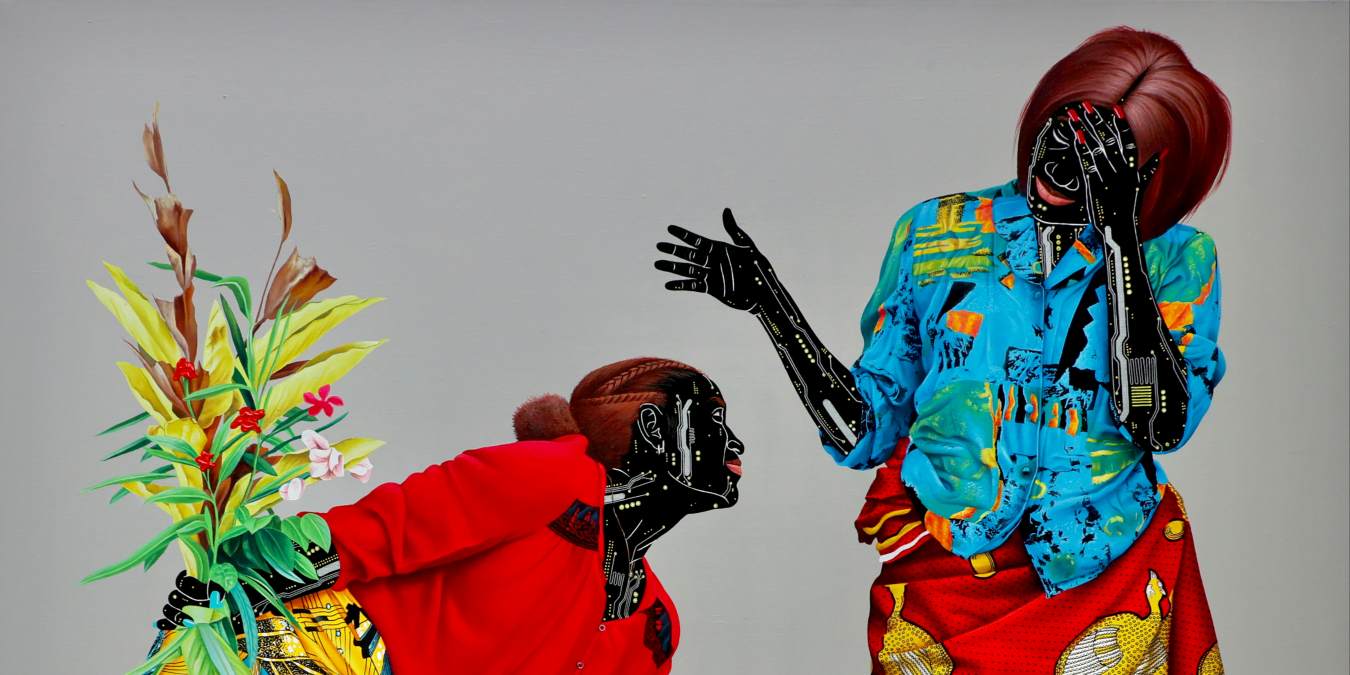
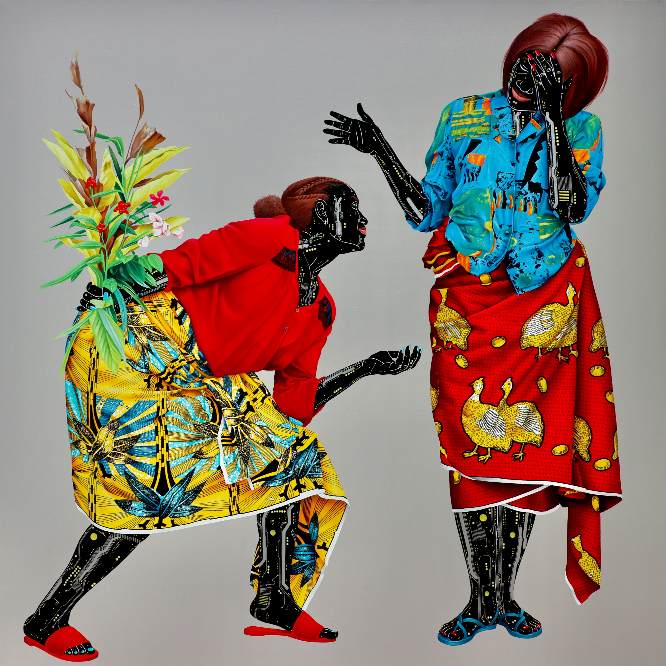
Acrylic and oil on canvas, 150 x 150 cm.
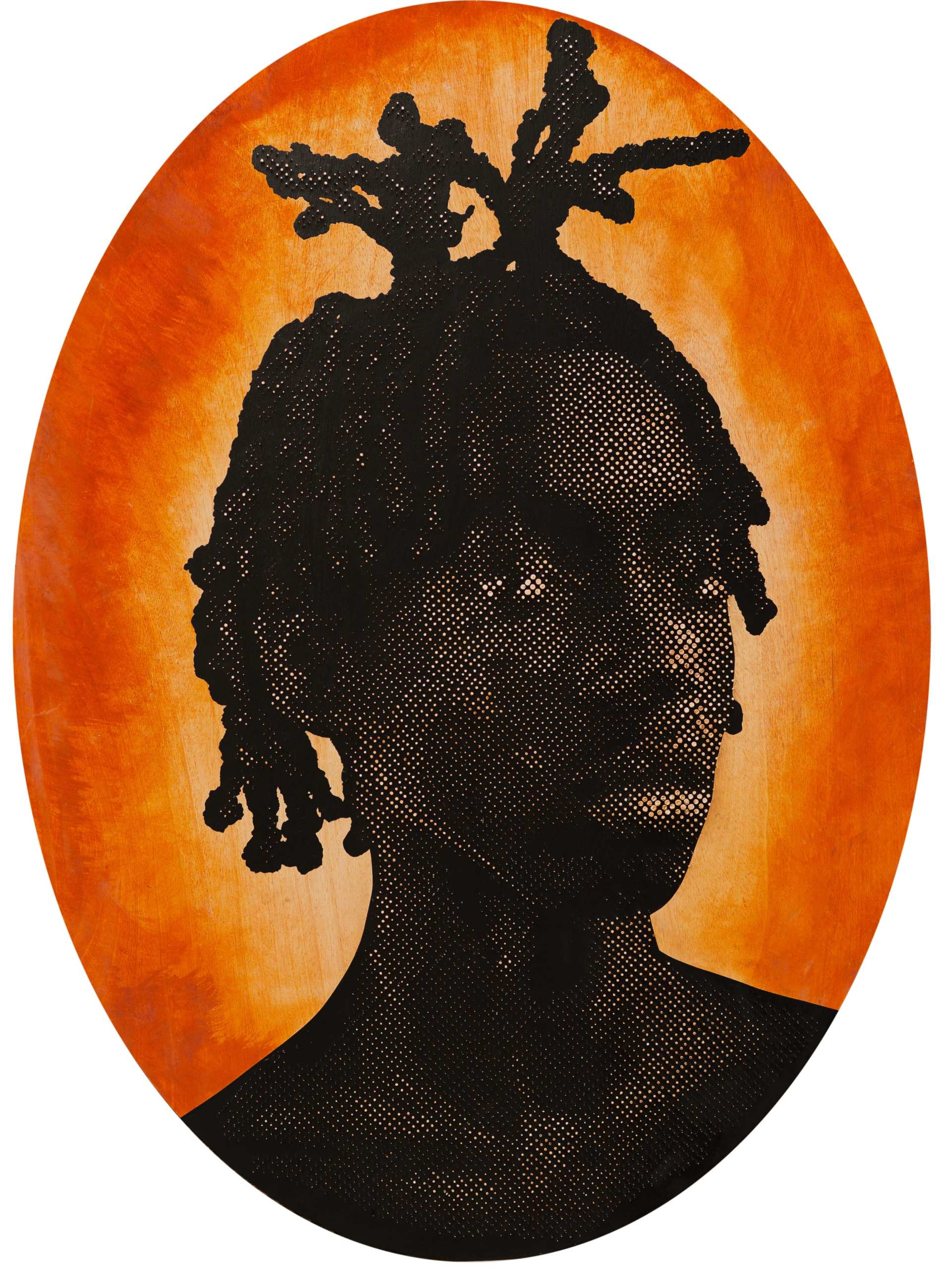
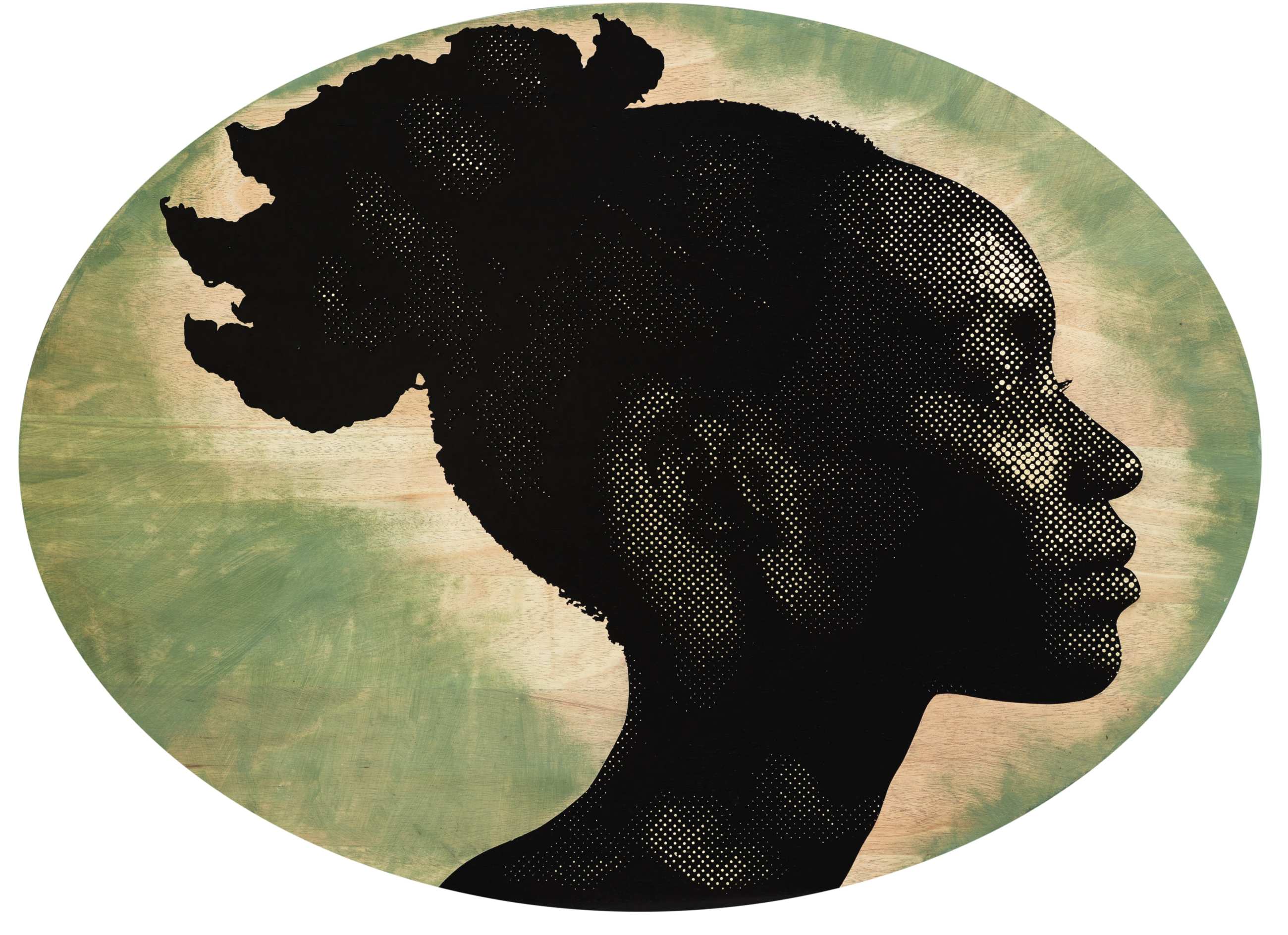
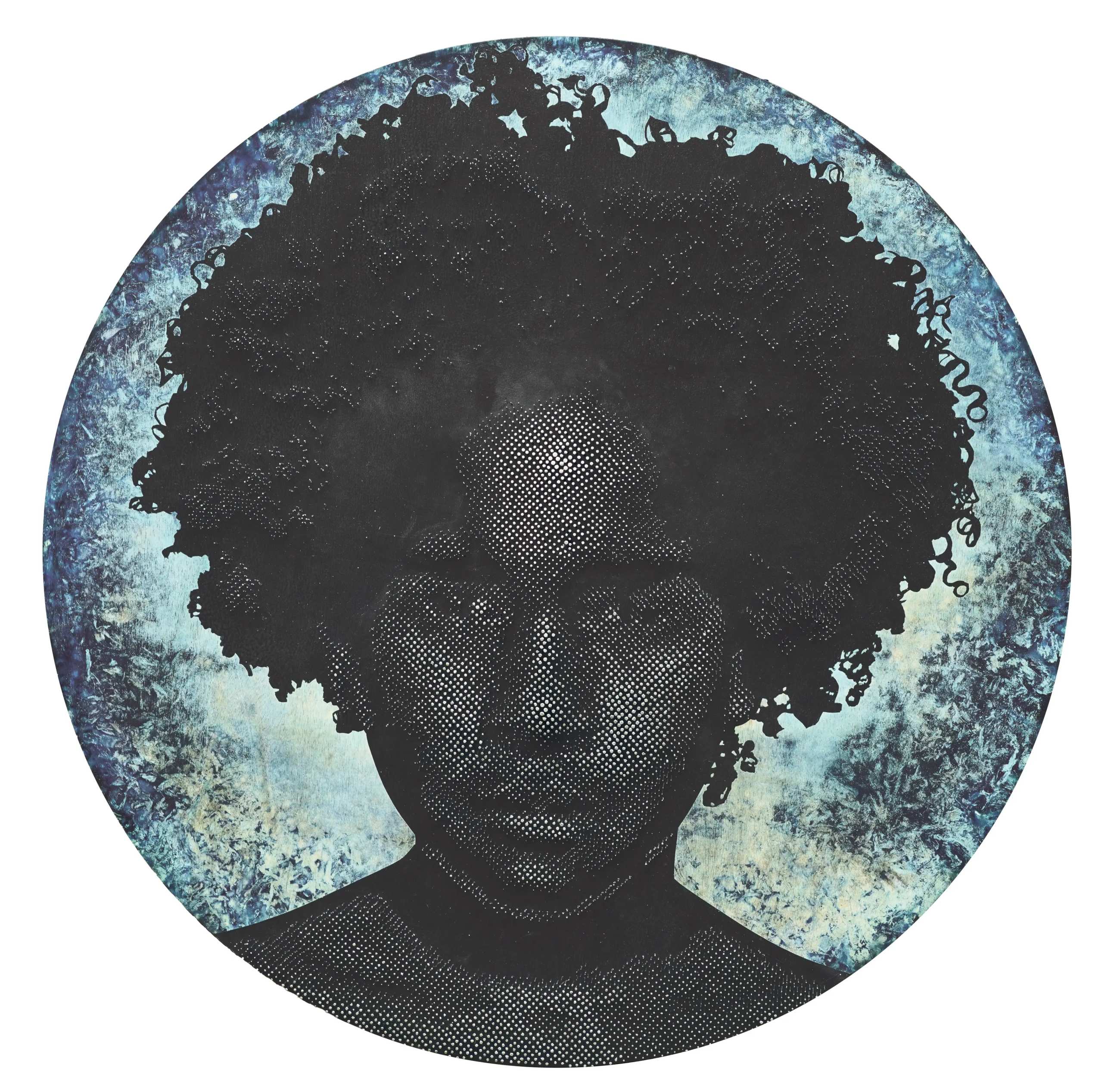
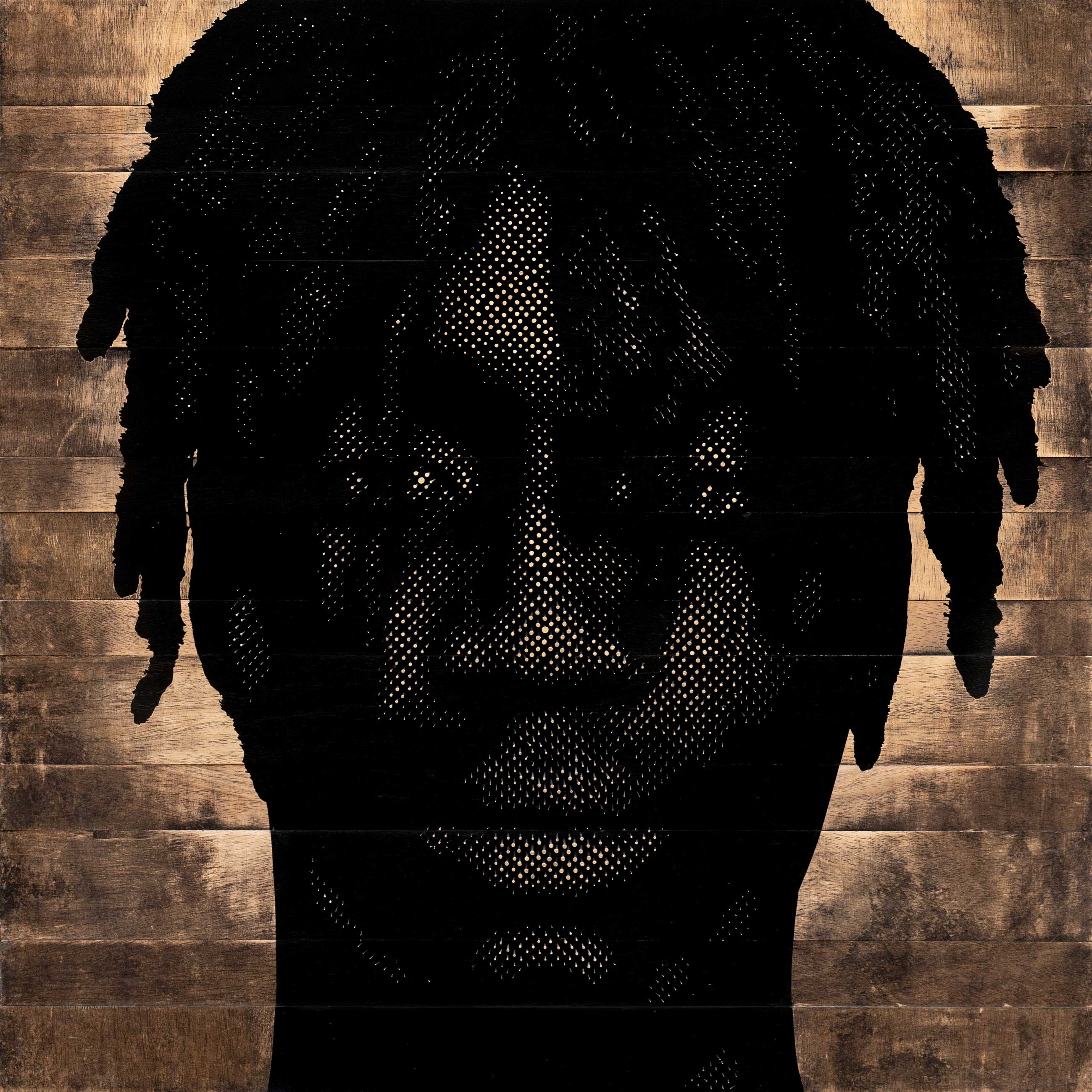
October Gallery presents a dynamic group exhibition of intriguing works by Zana Masombuka, Eddy Kamuanga Ilunga, Alexis Peskine, and Djibril Dramé. Displaying painting, sculpture and photography, this multilayered exhibition explores how each artist understands their own identity as a function of a specific heritage—blending past histories, cultural traditions and spiritual legacies—while acknowledging the changing environments in which they’ve developed and the disruptive impacts of globalisation.
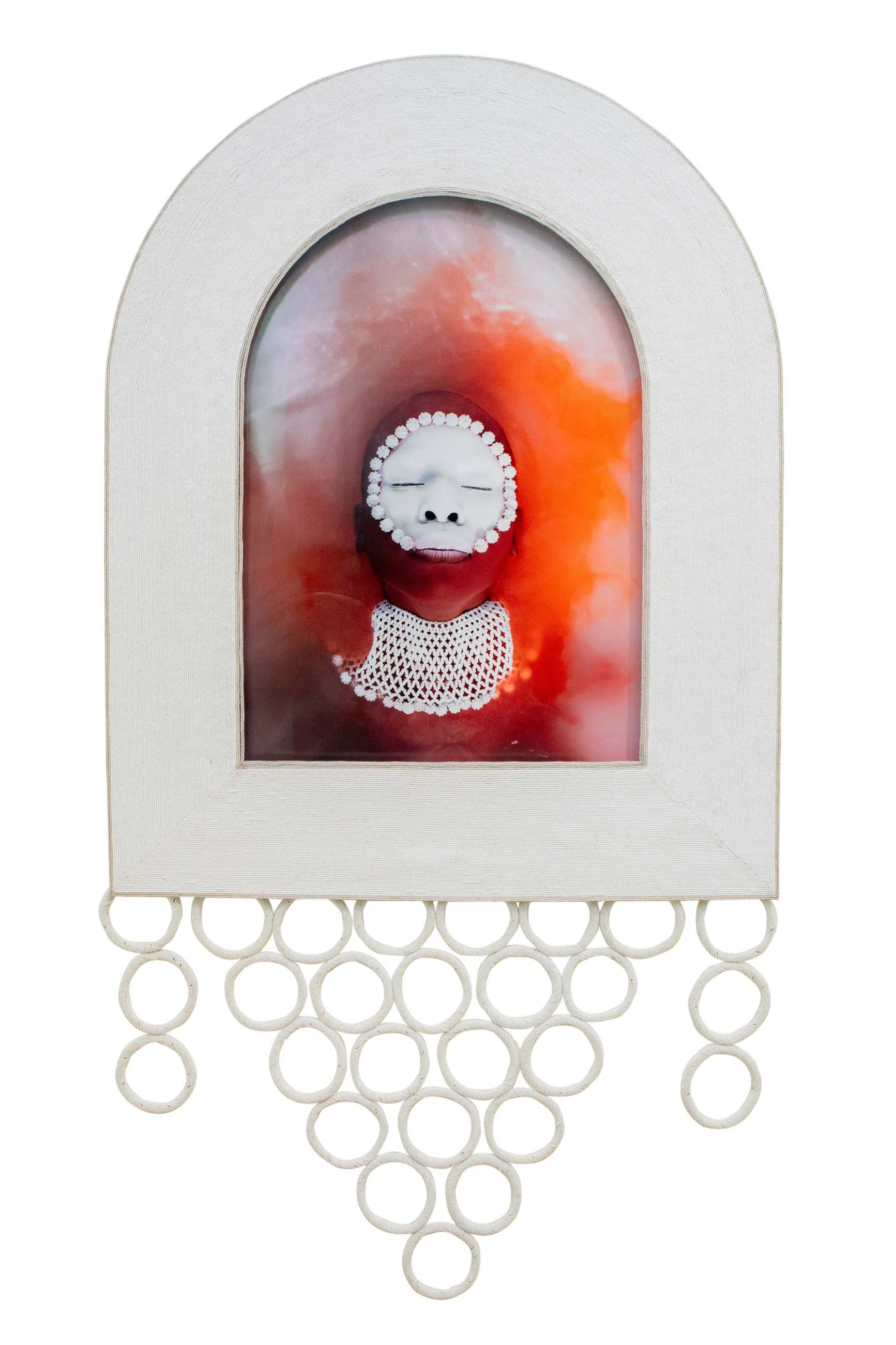
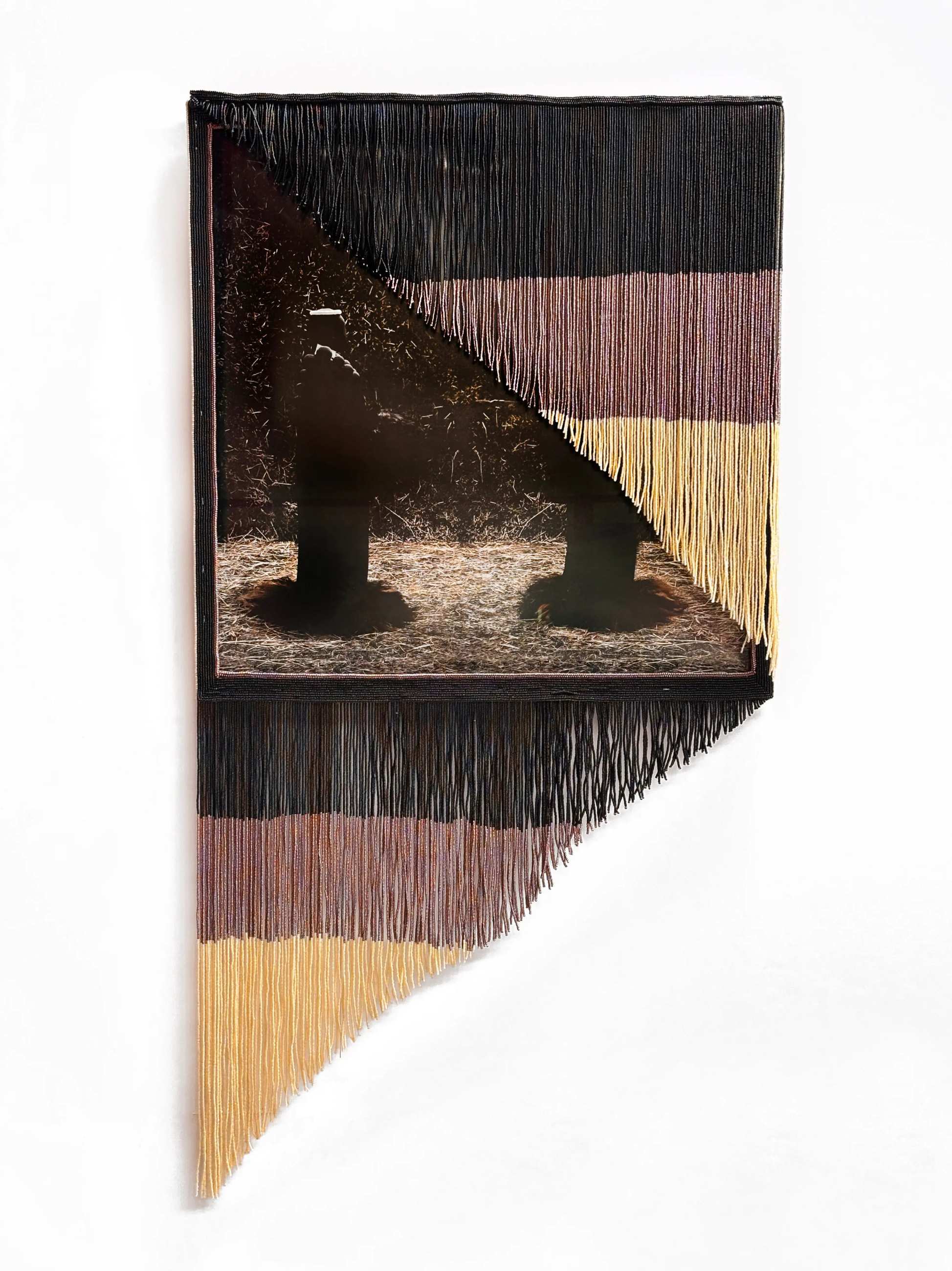
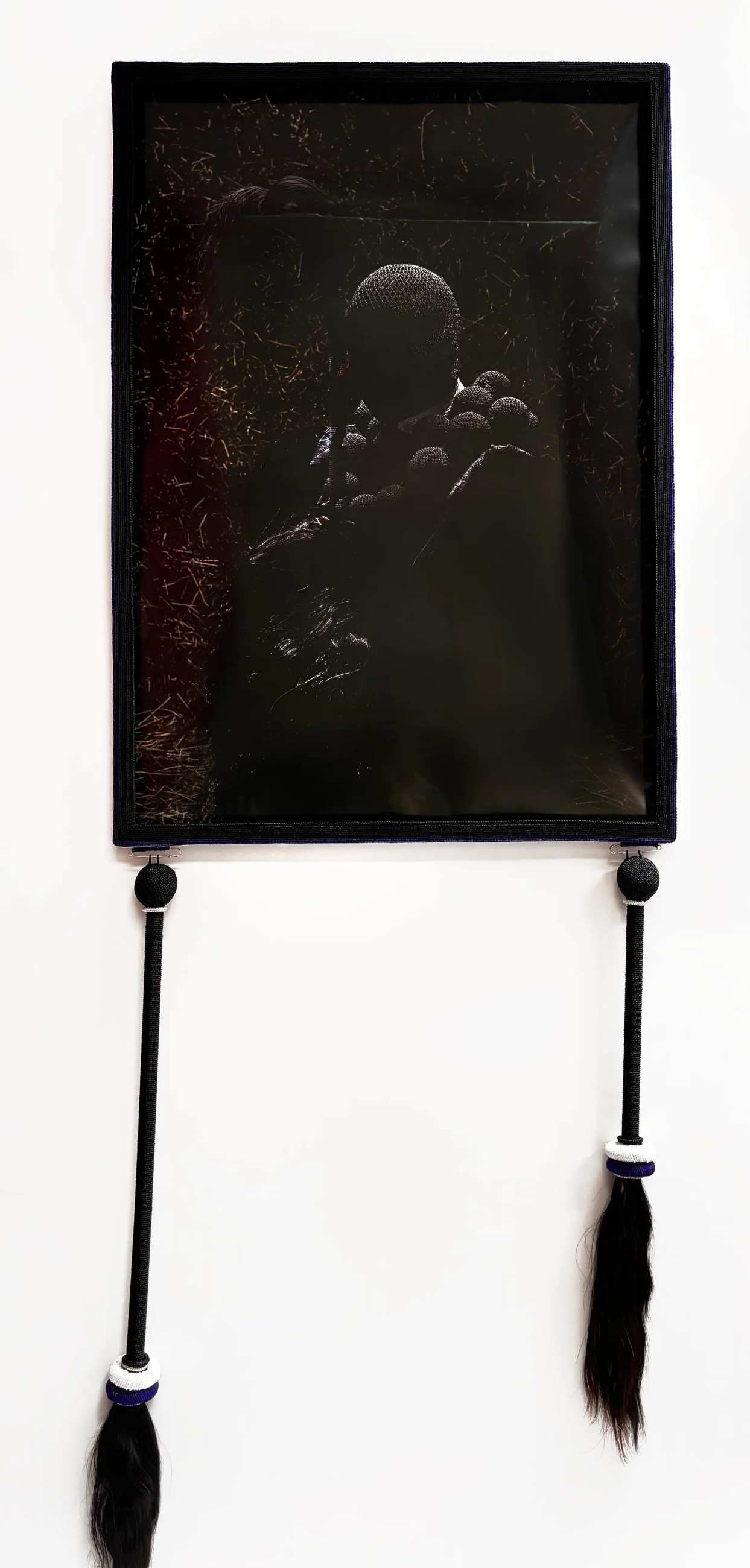
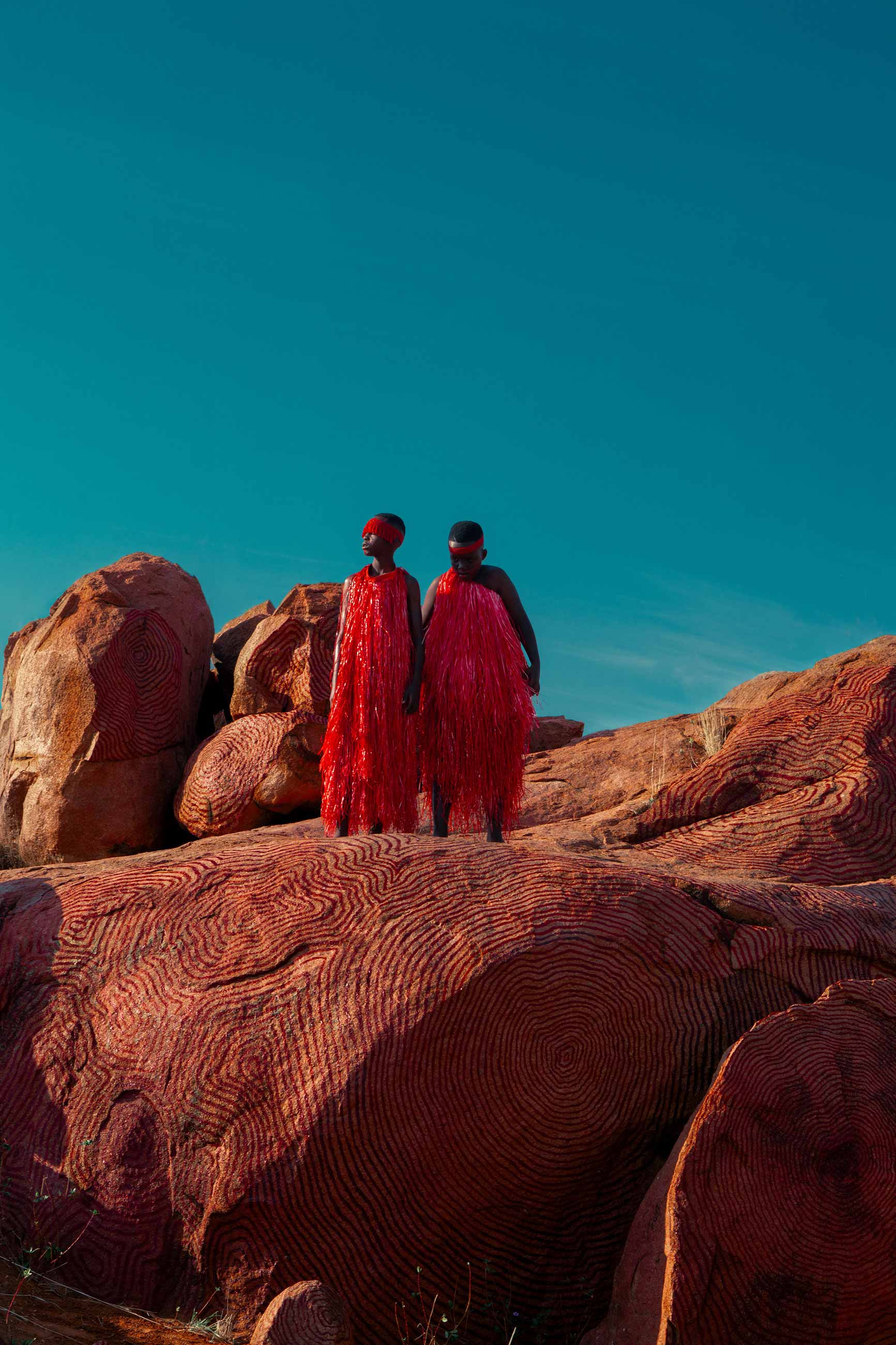
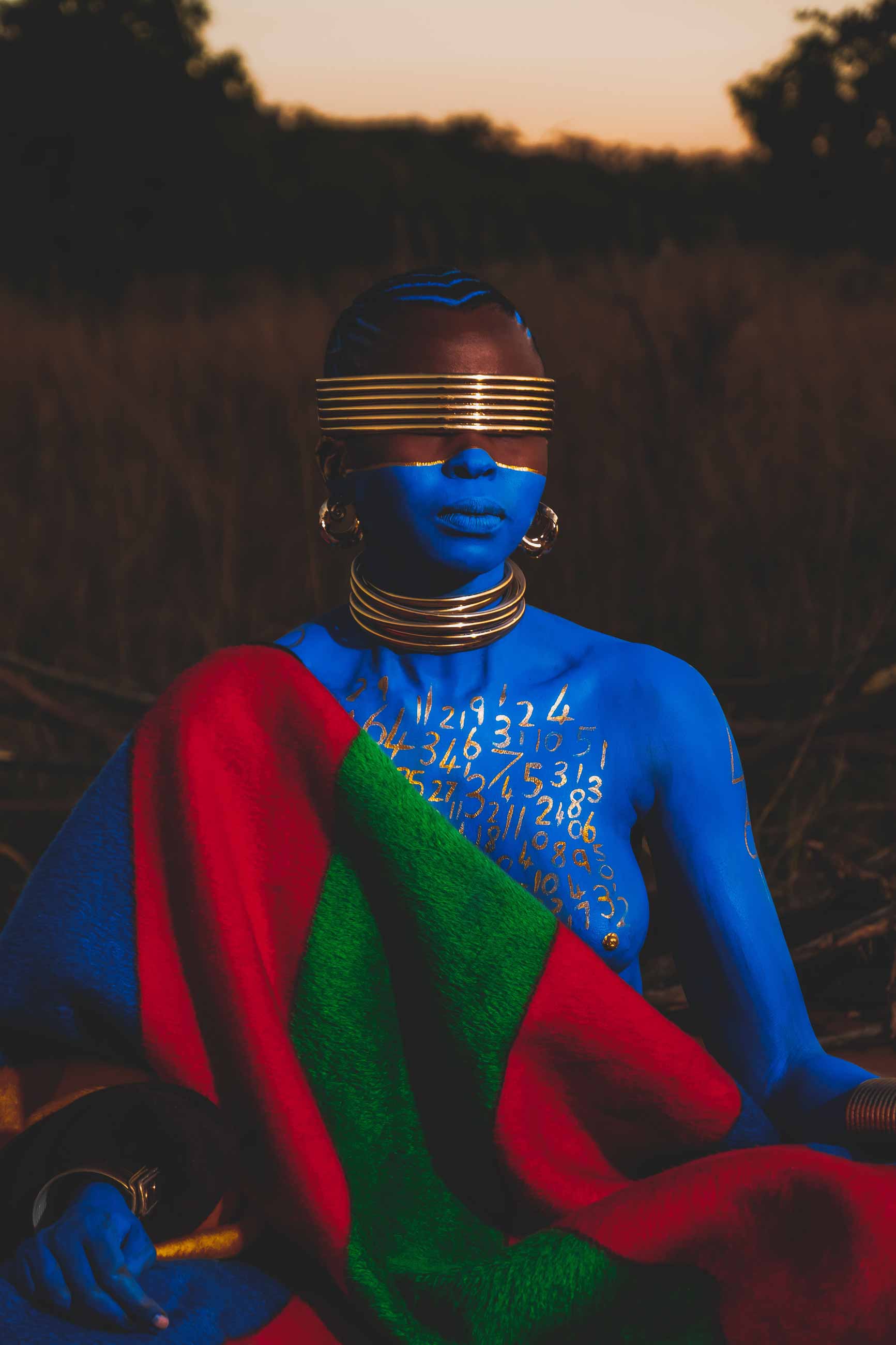
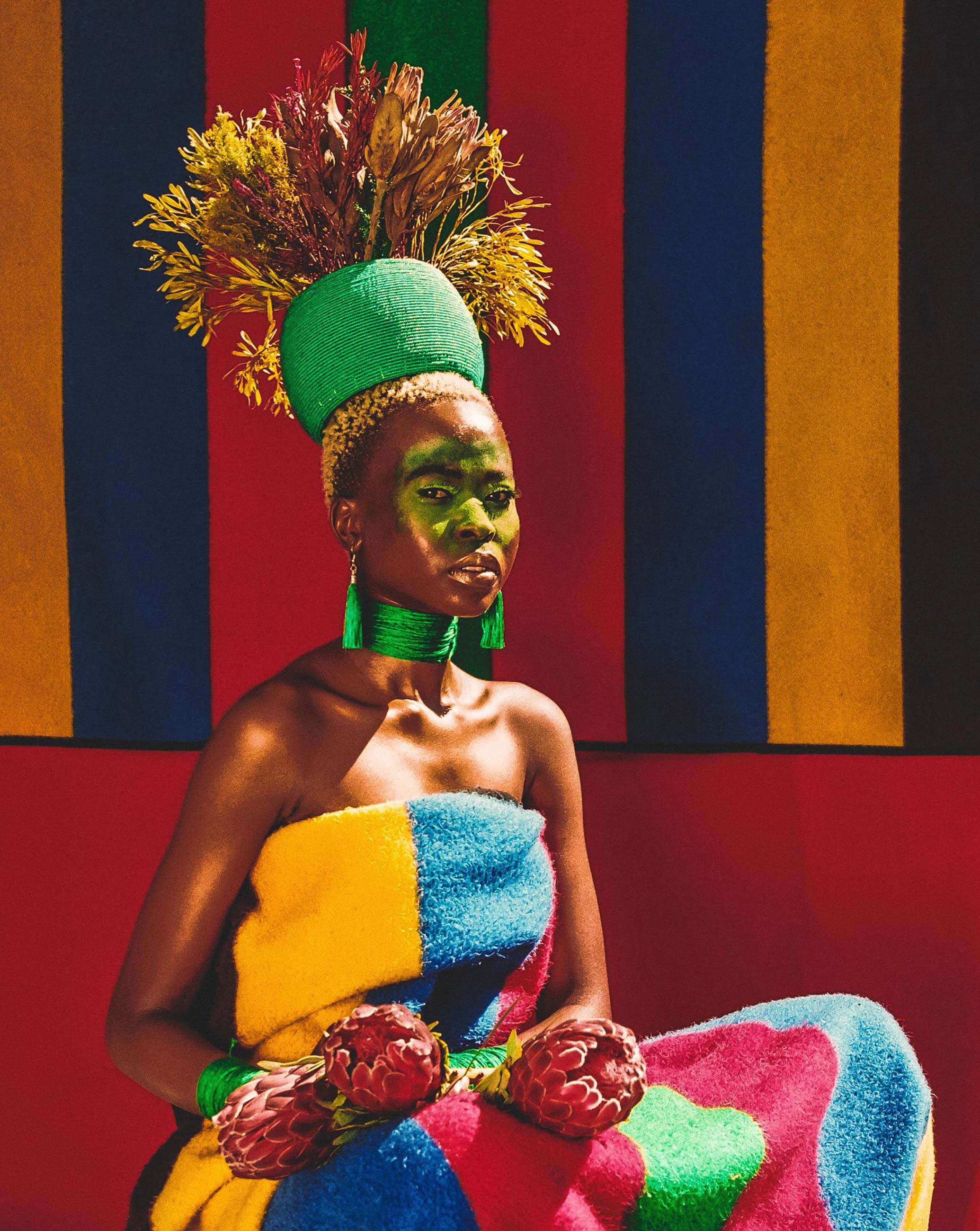
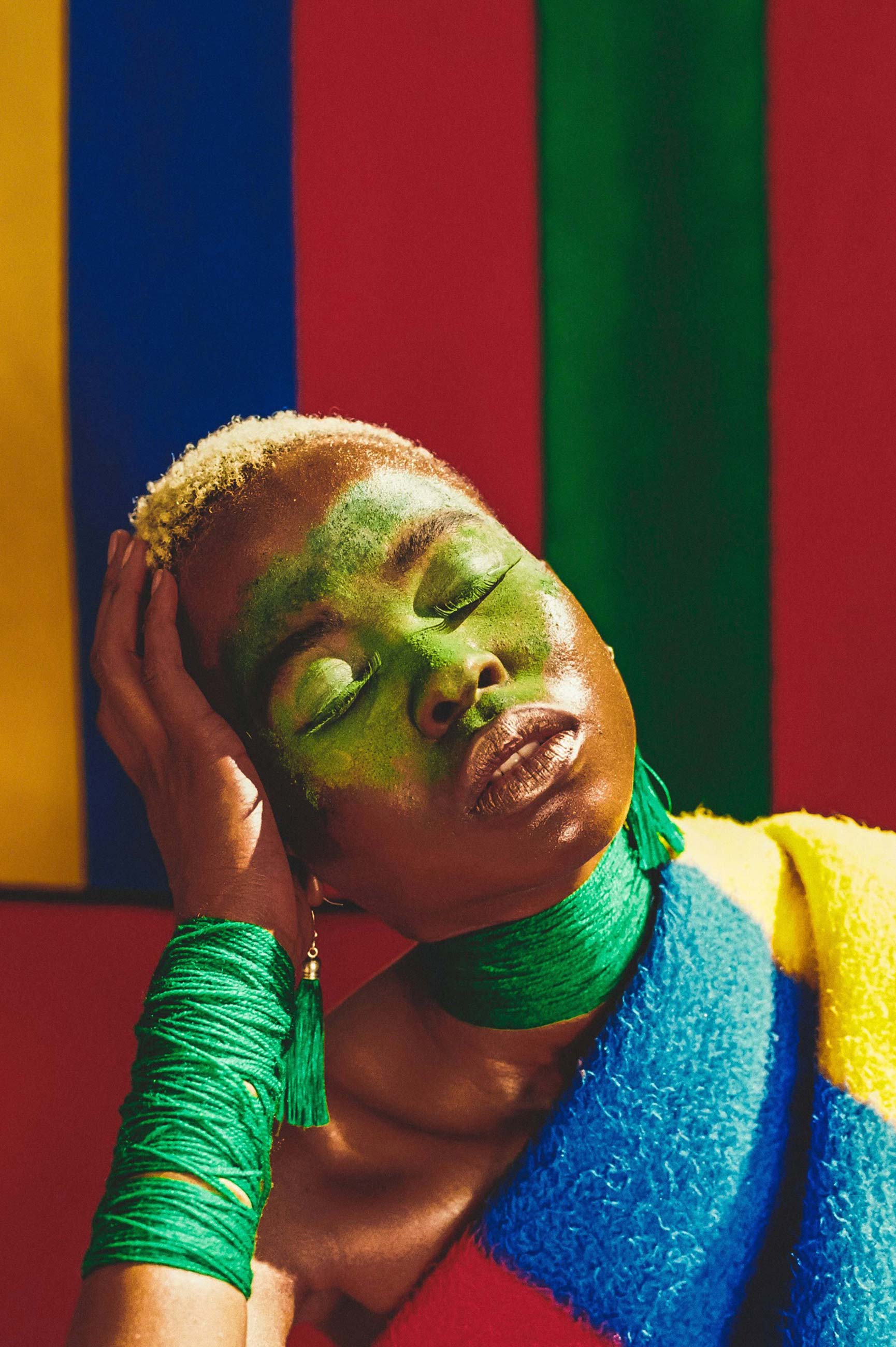
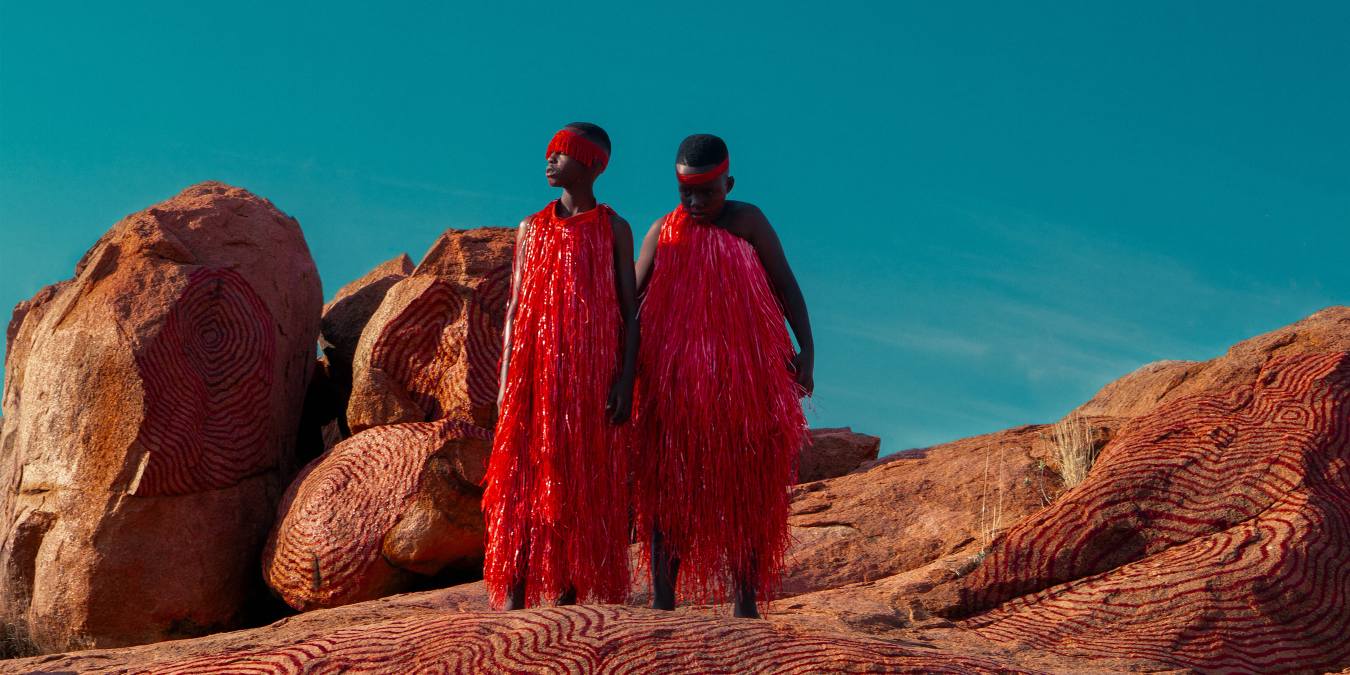
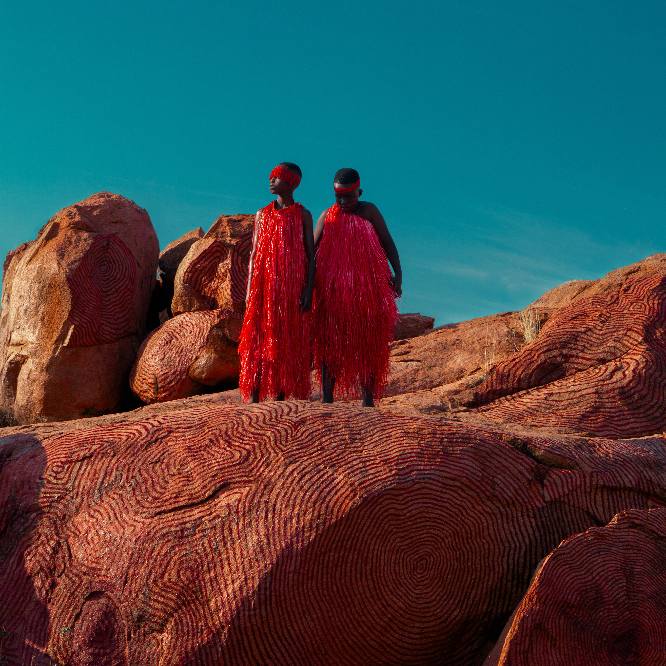
With powerful new works from her series, Akhulumile Amabhudango: Scenes from Dreams – Journeys with the Kosabo, Zana Masombuka navigates a liminal terrain between the physical and spiritual worlds, investigating themes of kingship, ascension and ancestral guidance. This body of work pays homage to her late maternal grandfather, Bishop Makhuwana Piet Mahlangu, whose life and spiritual legacy serve as its inspiration. Through photography, beaded sculptural frames and symbolic objects drawn from Ndebele culture, Masombuka constructs a visual tour de force that explores the interrelation of lineage, destiny and sacred realms. By juxtaposing ancestral motifs and elements of everyday familial life, Masombuka positions her Ndebele heritage both as a deeply personal inheritance and as an integral part of a broader cultural continuum. Also exhibited are selected works from her striking series titled, Ubonani: What Do You See?. Set in the rocky hills of Kwandebele, the artist sets ‘red’ as the aesthetic tone of the series whilst exploring themes of childhood curiosity, sensitivity, and openness. Within both series, Masombuka continues to investigate how material and spiritual legacies (from an indigenous Ndebele perspective) combine to create a unique identity that is, simultaneously, both traditional and contemporary.
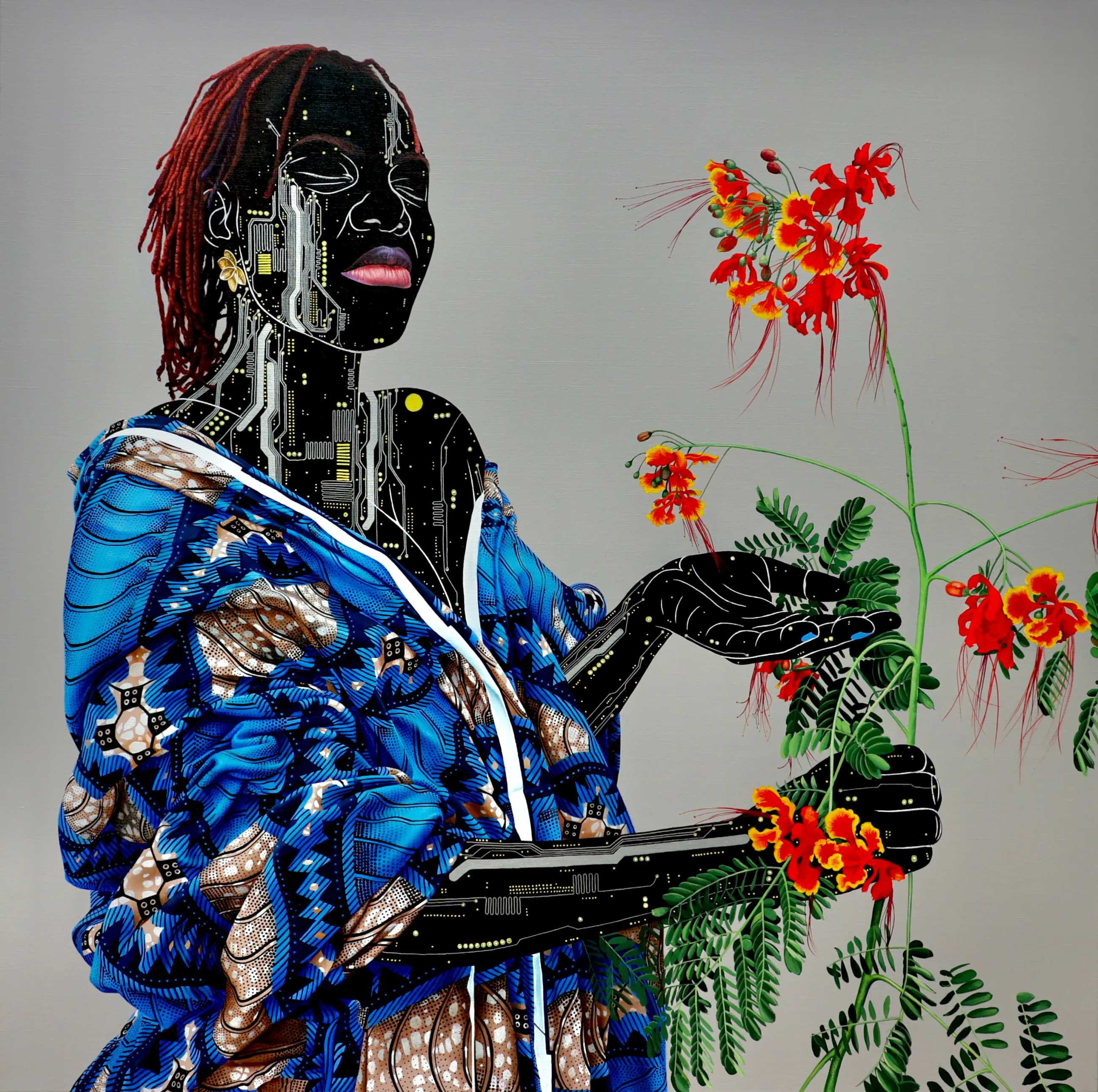
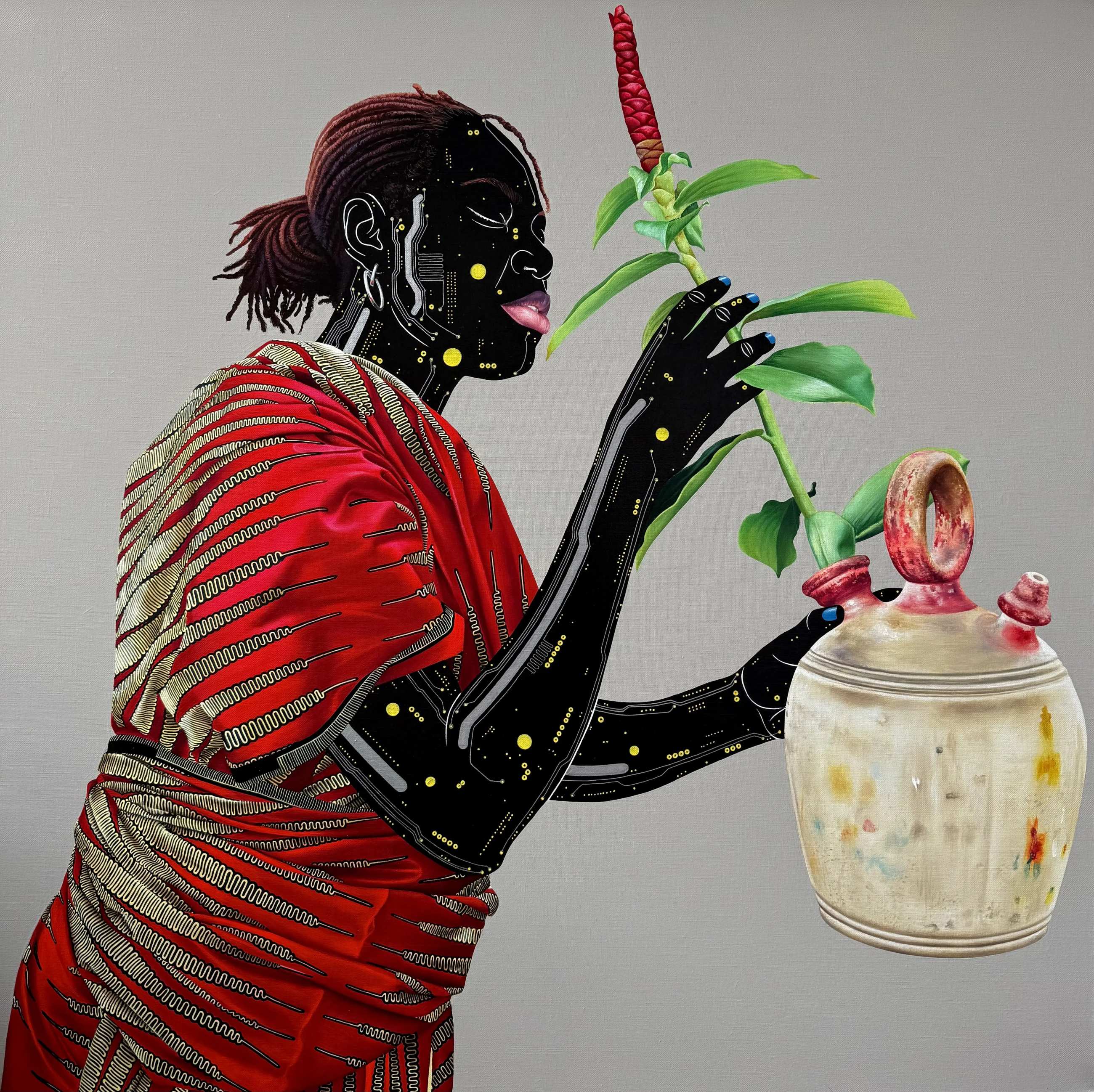
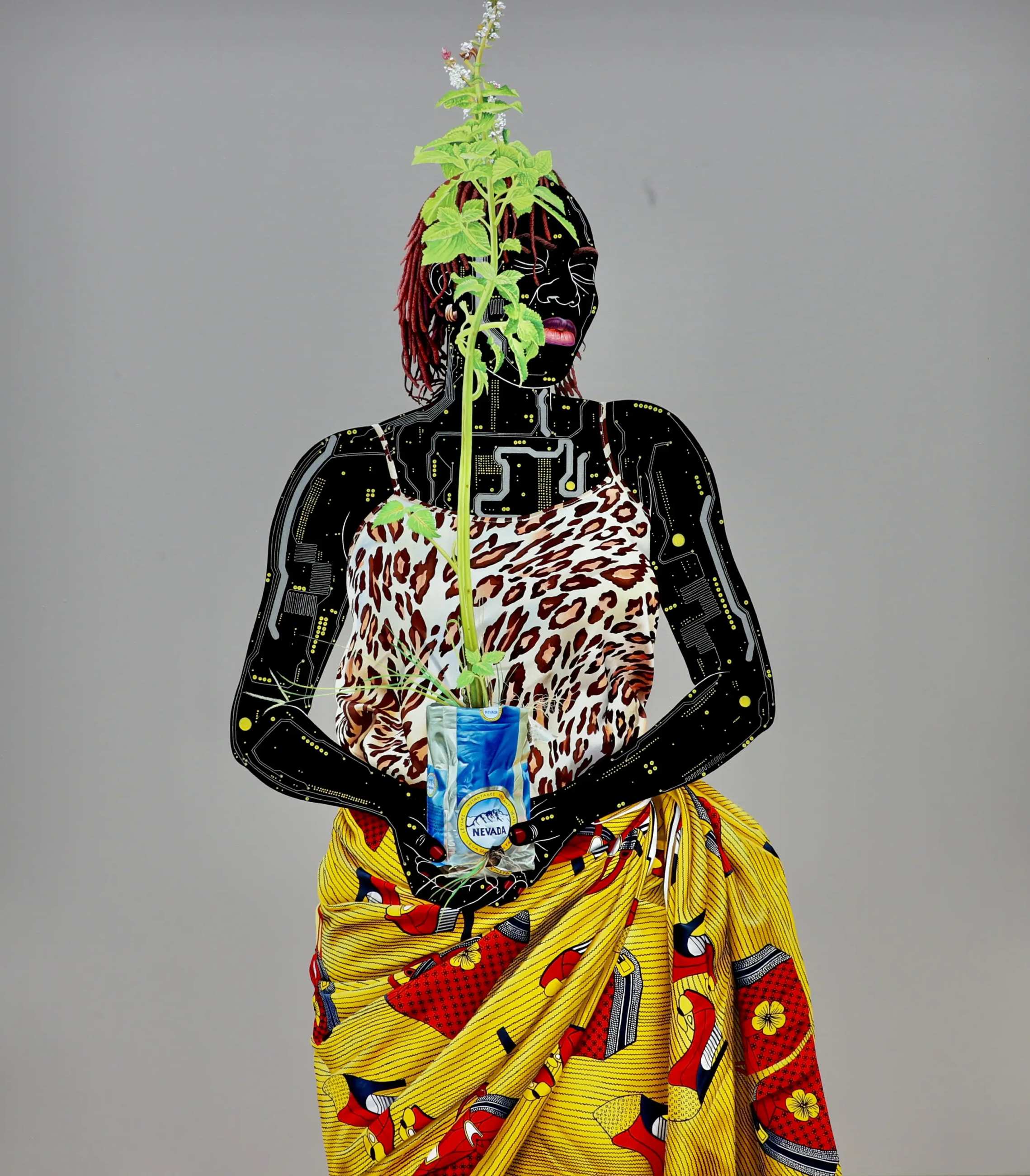
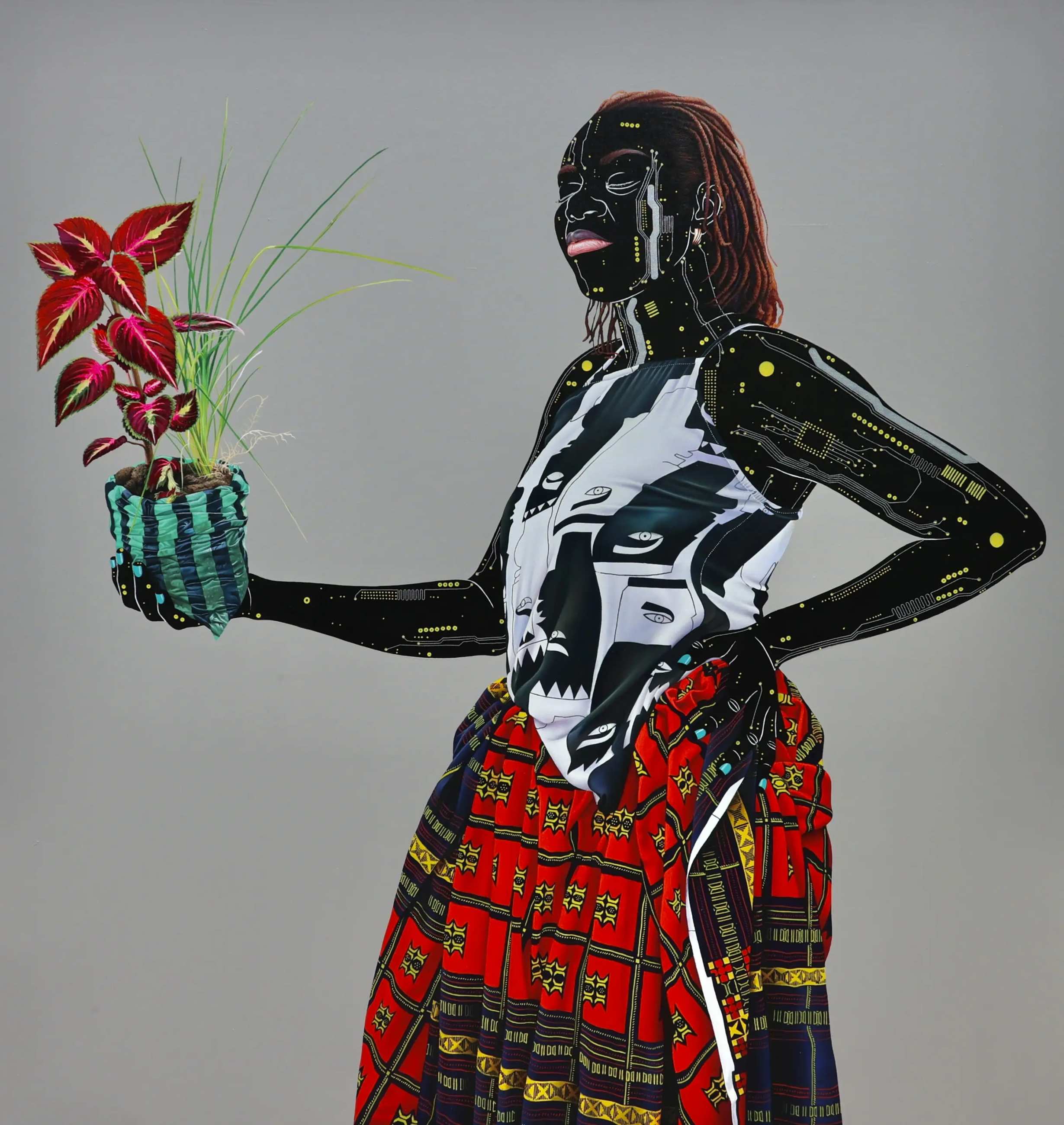
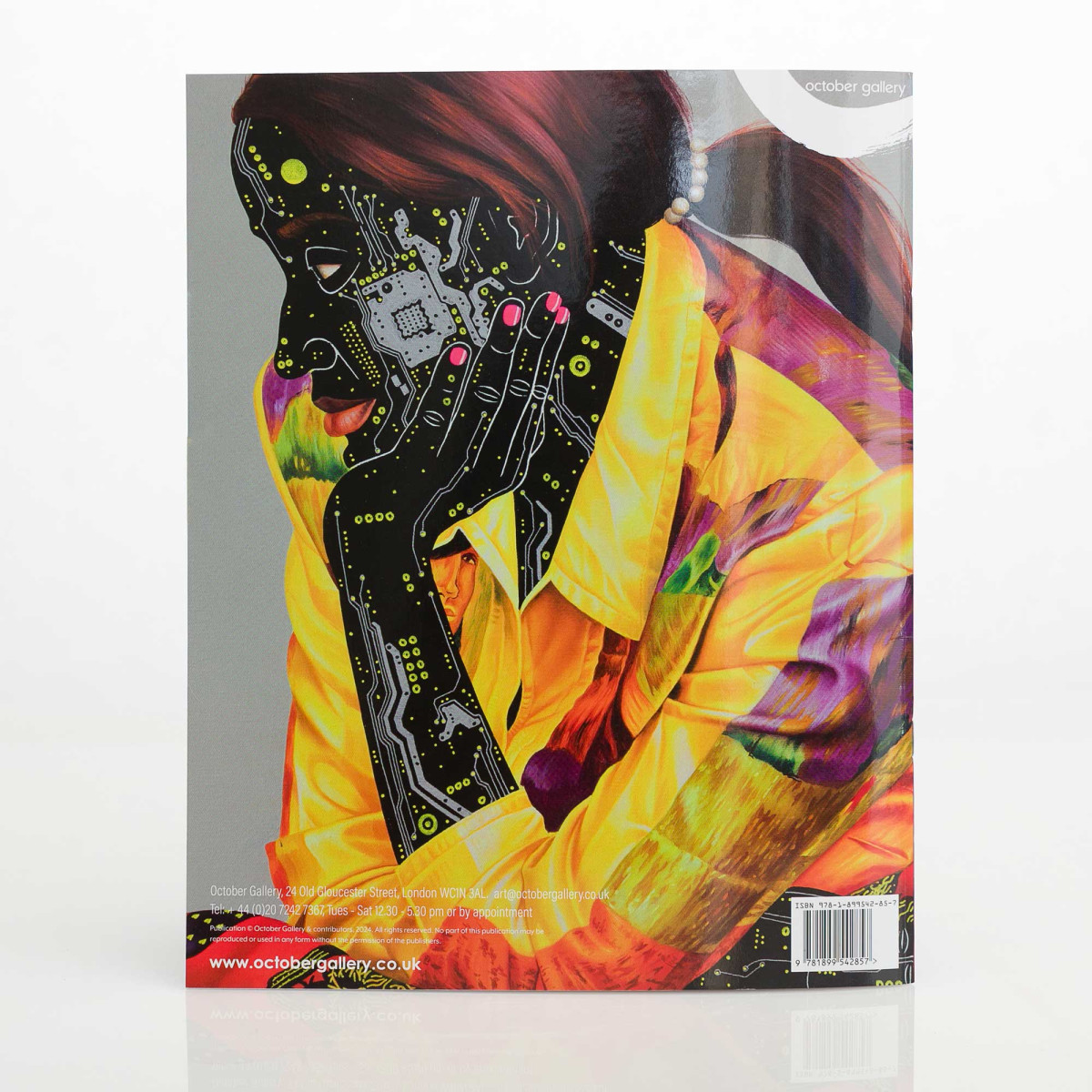
Striking new paintings by Eddy Kamuanga Ilunga consider the legacies of economic and botanical exploitation in the Democratic Republic of Congo during the calamitous period of Belgian occupation, from 1885 to 1960. Set against an empty grey background, symbolising the absence of all historical references to the horrors that took place, Kamuanga sets out his colourfully detailed and always enigmatic mise-en-scenes. The evocative figures, dressed in ‘African’ cloths imported from abroad, hold flowers that intertwine with past and present realities of those living in the DRC today. King Leopold II of Belgium tasked European naturalists to catalogue local fauna and flora and experiment on ‘exotic species’ so as to improve their potential for exploitation. An entire economy developed, forcing native labourers to extract rubber (a.k.a. ‘red rubber’ from the brutal bloodletting practised in the process) from a previously unknown vine found deep within the forests. Non-native plants, such as cotton, coffee, etc., were cultivated on plantations, producing still more commodities that exploited local labour and resources for the enrichment of offshore investors. The destructive legacy of these colonial practices endures in the loss of indigenous cultures, ongoing environmental destruction and the asymmetric structures that continue to shape land ownership, power and recorded history. Kamuanga pays tribute to the strength of local communities, endowing his larger-than-life figures with a poignant, contemplative stillness, while situating heritage as a terrain of resilience and survival. The integrated circuits patterning each figure’s skin refer to the insidious influence of industrial mining in the Congo today. The ubiquitous mobile phone, containing minerals extracted from Congolese mines, ensures that the historical cycle of brutal exploitation continues, almost unaltered, into the present.
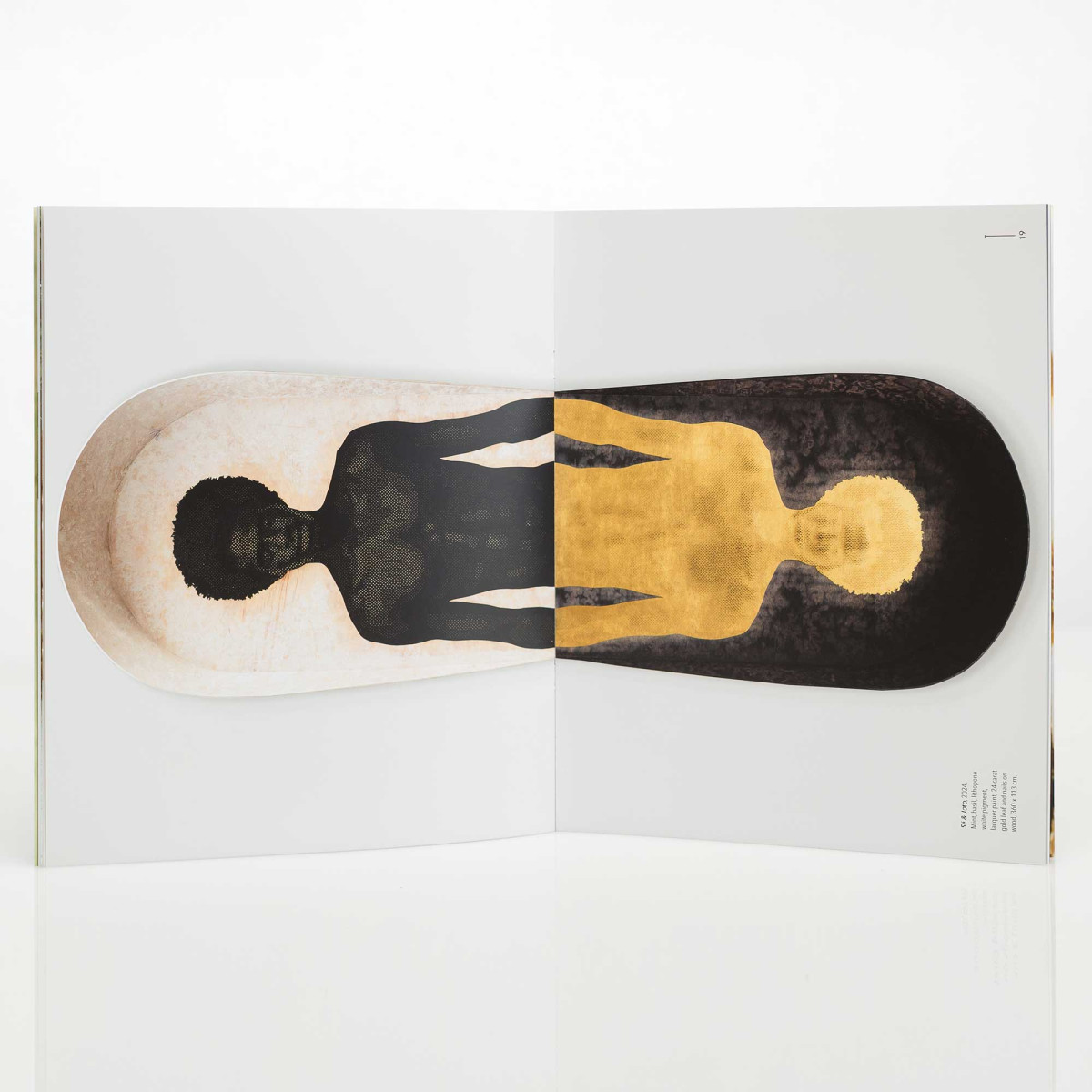
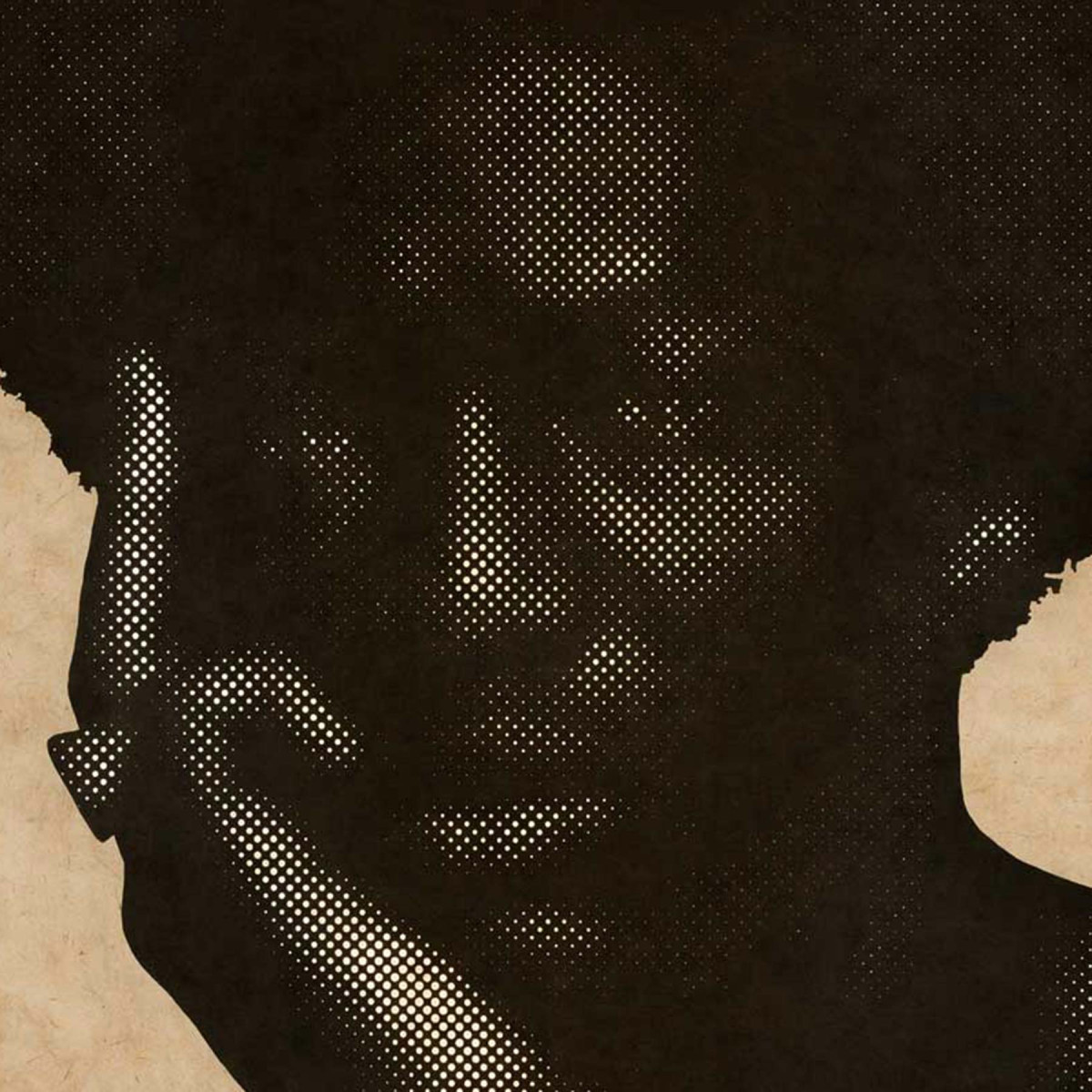
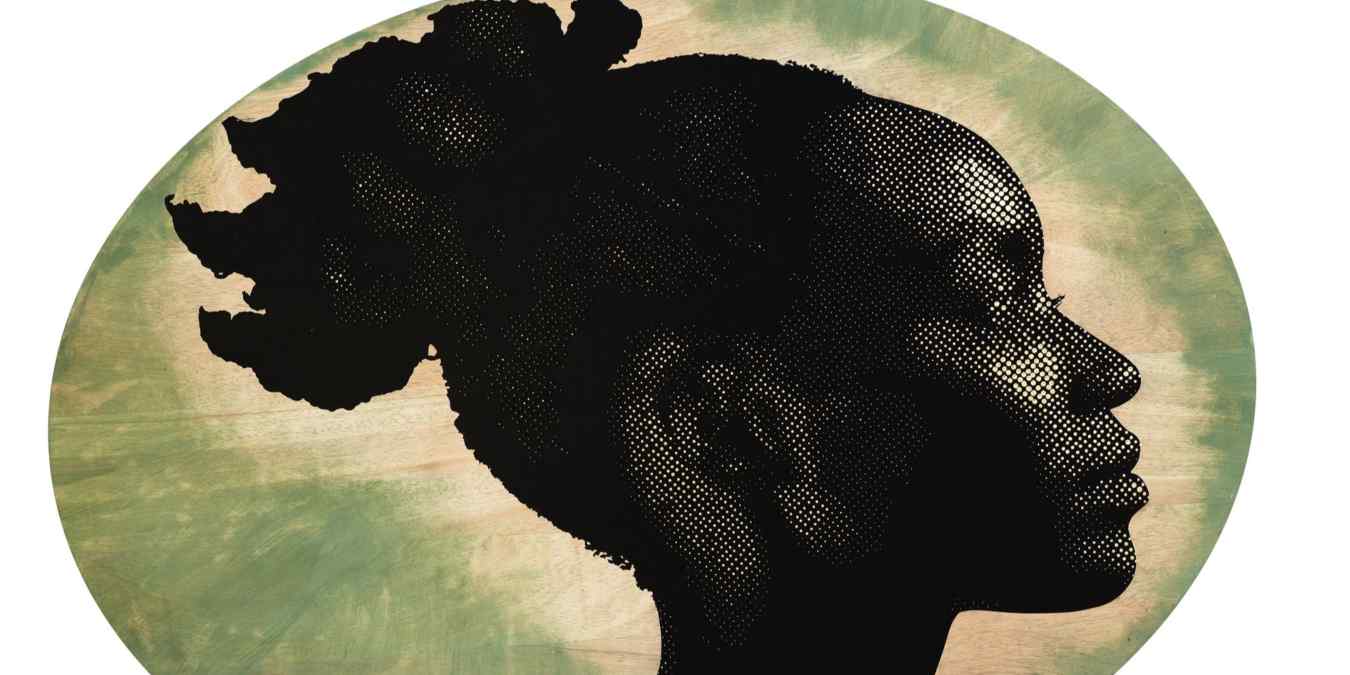
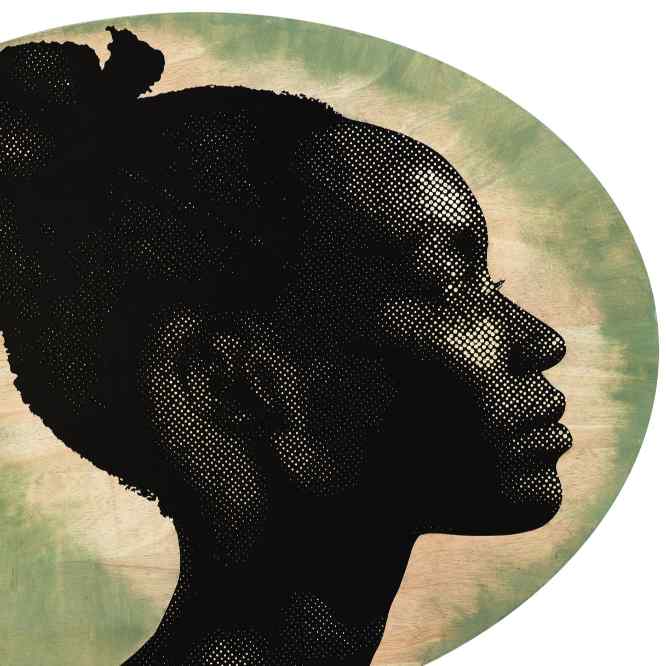
Alexis Peskine’s large-scale ‘portraits’ of people from the African Diaspora first begin as photographic portraits that are then transformed into remarkable sculptural pieces. Rendered with pinpoint precision through the laborious hammering of nails of varying gauges into stained wood, the variably layered surfaces that result become conscious echoes of the spiritually charged Minkisi, or 'power figures' of the Congo Basin. For Peskine, these vibrant works act as sites where raw, basic materials absorb and reflect the accumulated histories of trauma, displacement and migration undergone by successive generations of Black peoples. Peskine’s recent works, delve into the transmission of healing powers inherent in ancestral African spirituality, exploring interiorised aspects of abundance and well-being. Traces of the natural world are sensed in the leafy shapes stained with spiritually significant herbs, which include rosemary, basil, mint and macassar. Peskine’s narratives draw upon an Afro-diasporic perspective, proposing ‘heritage’ not as a pre-determined legacy, but as something actively re-assembled through conscious selection of materials and methods of practice.
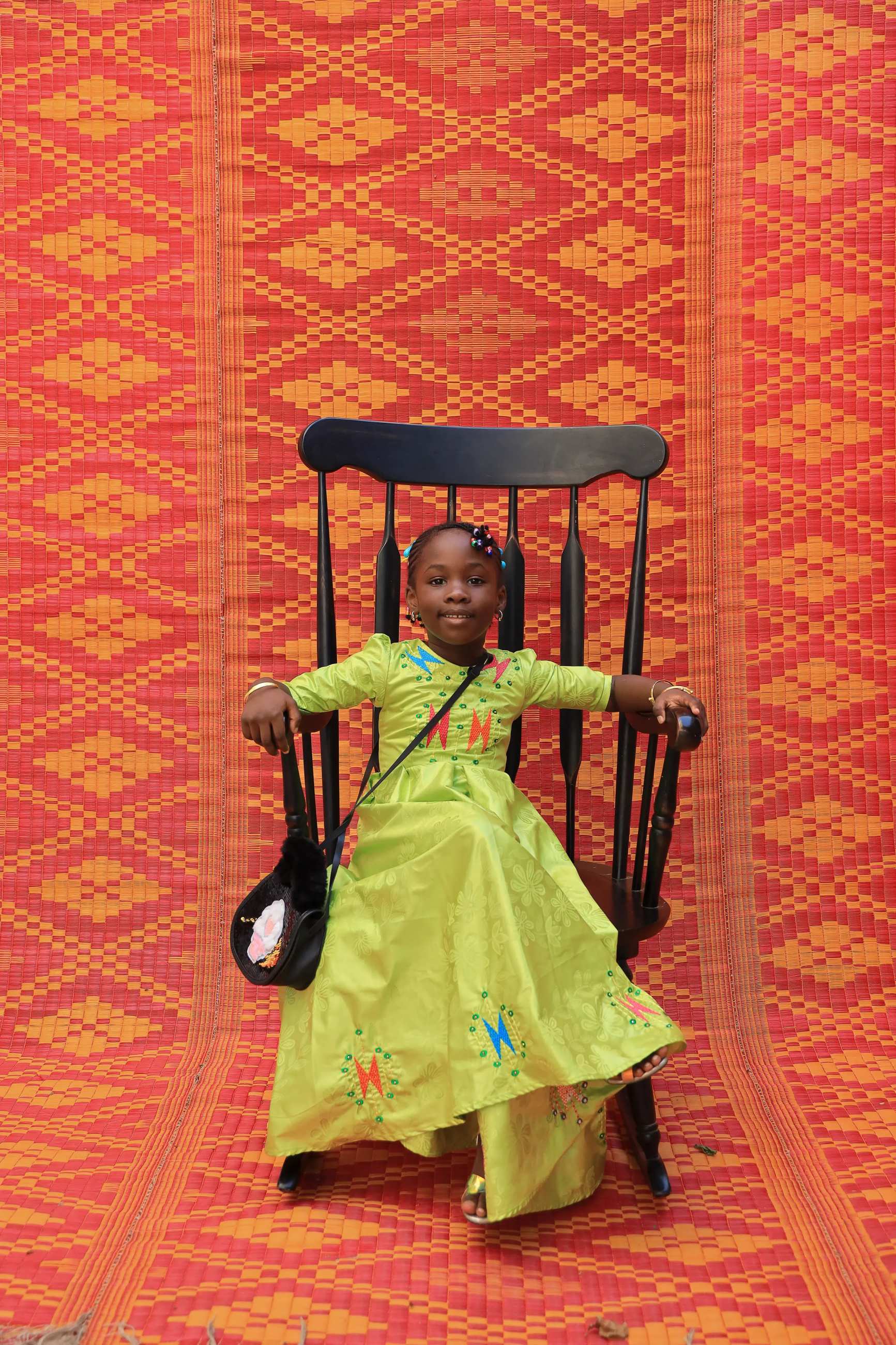
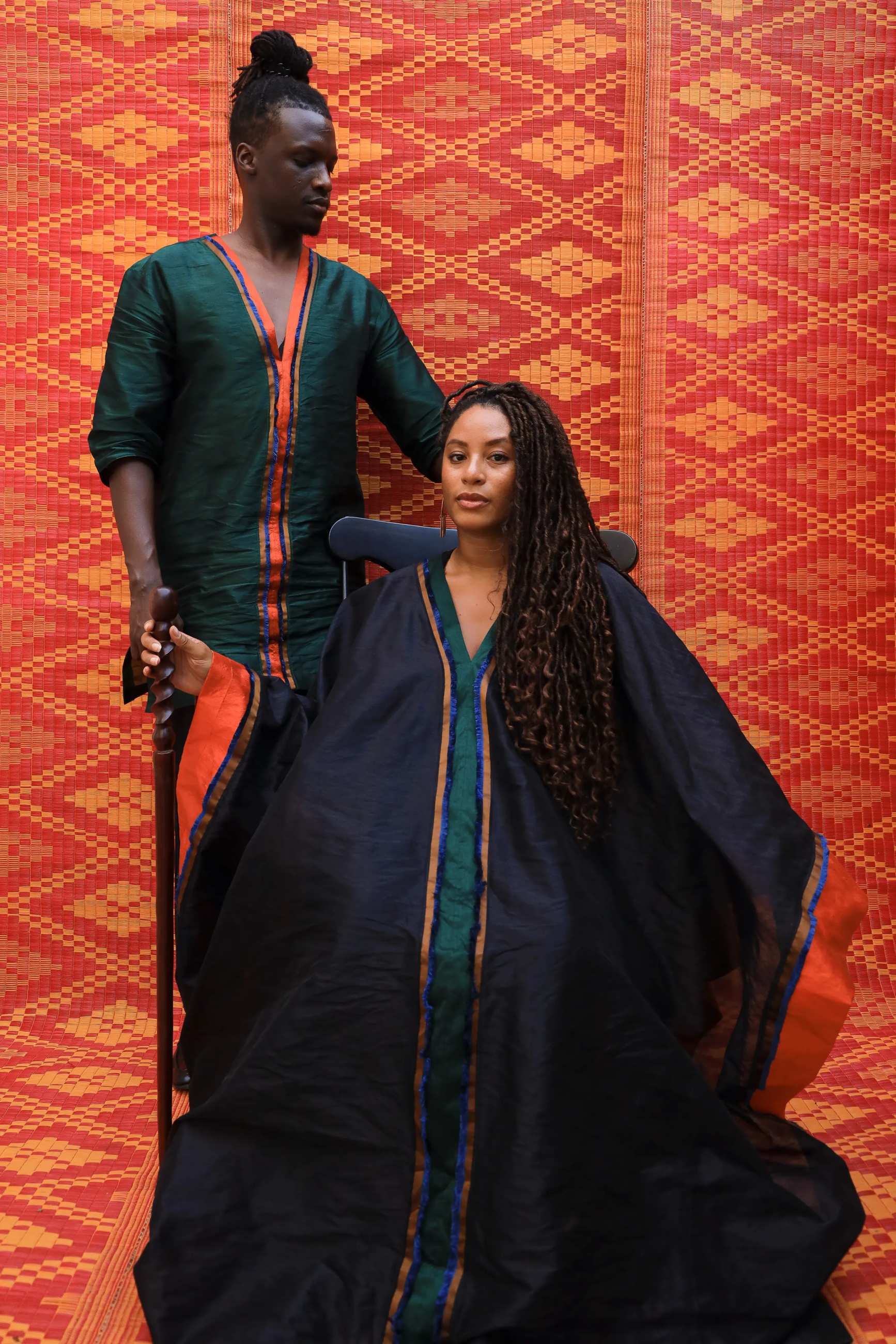
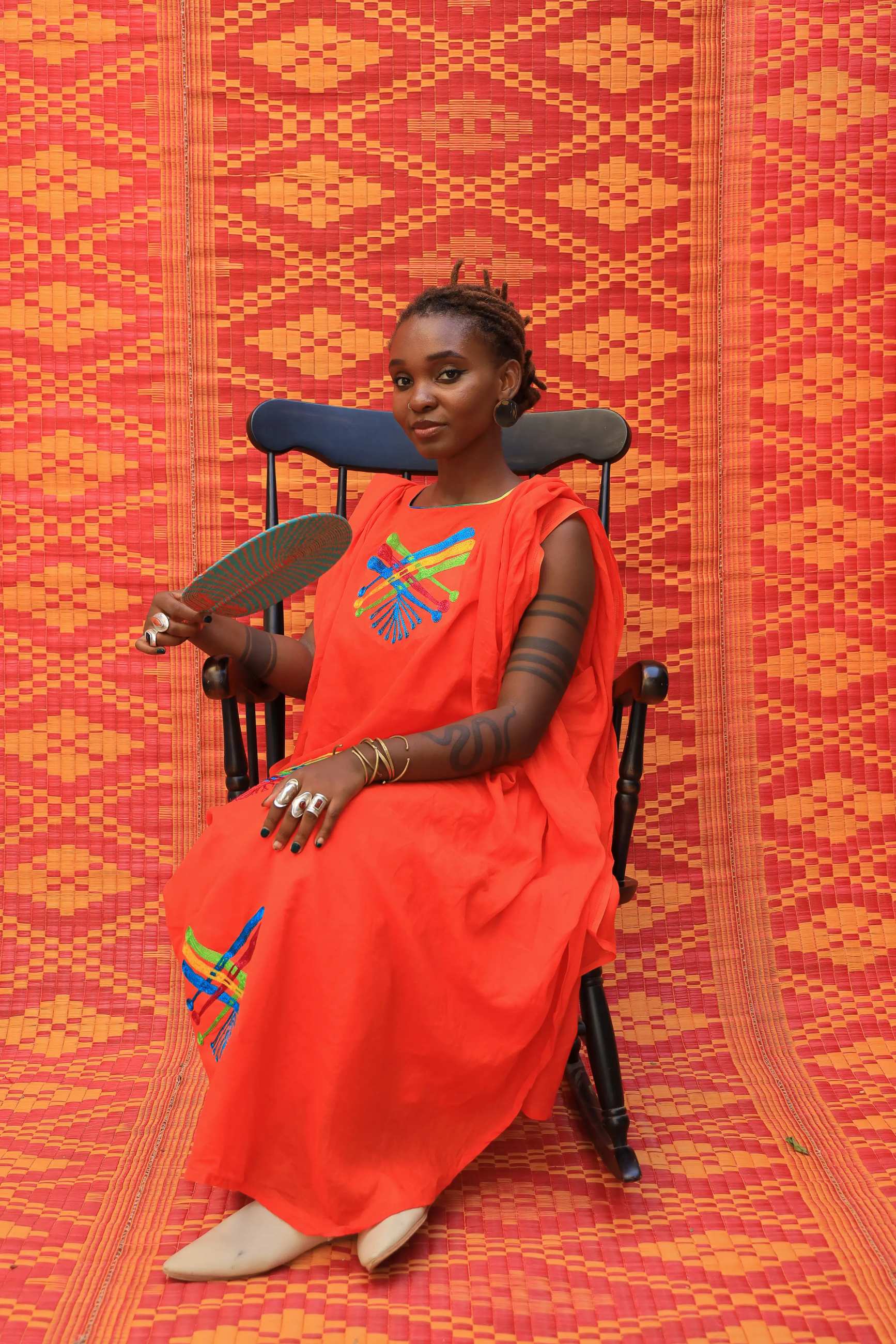
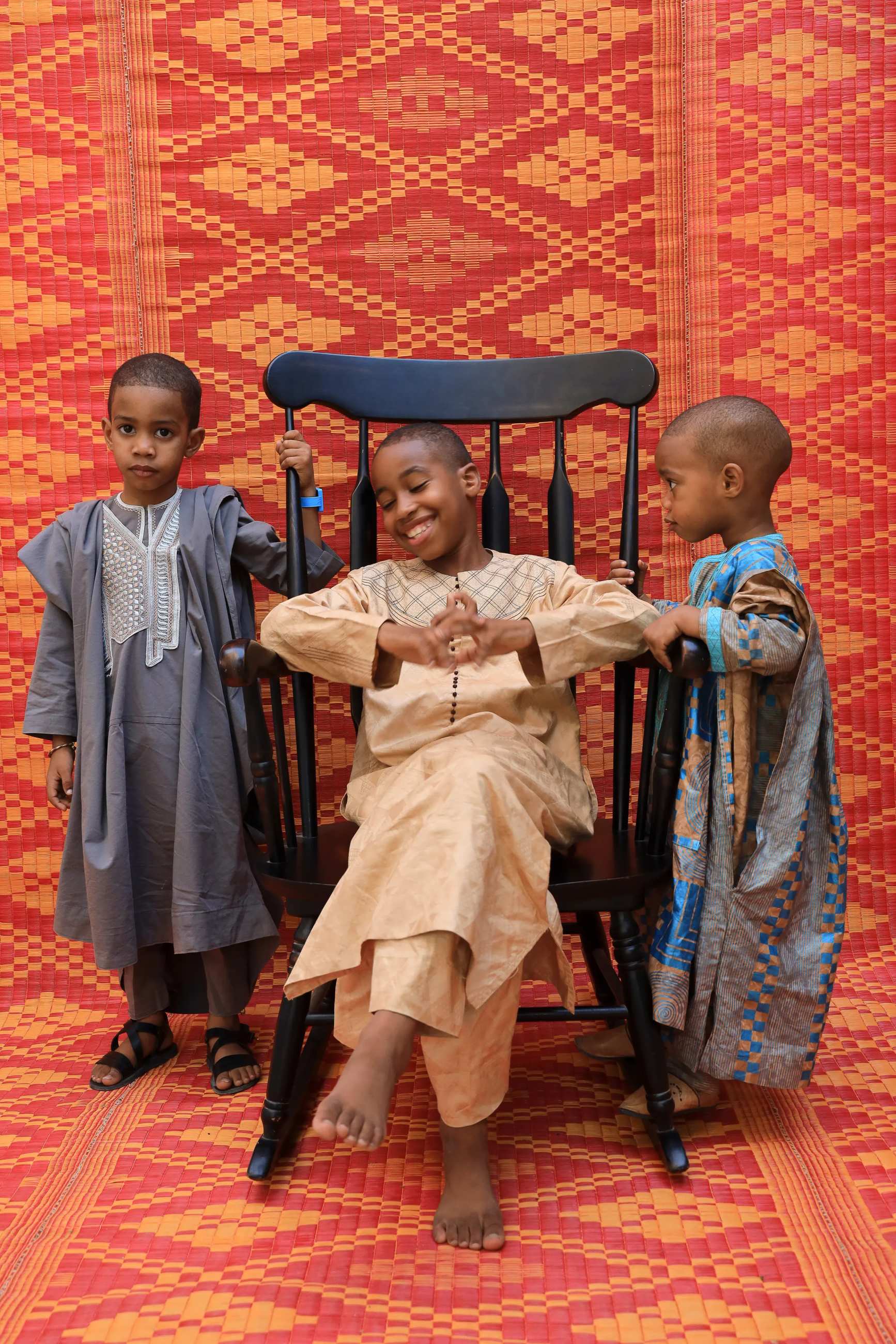
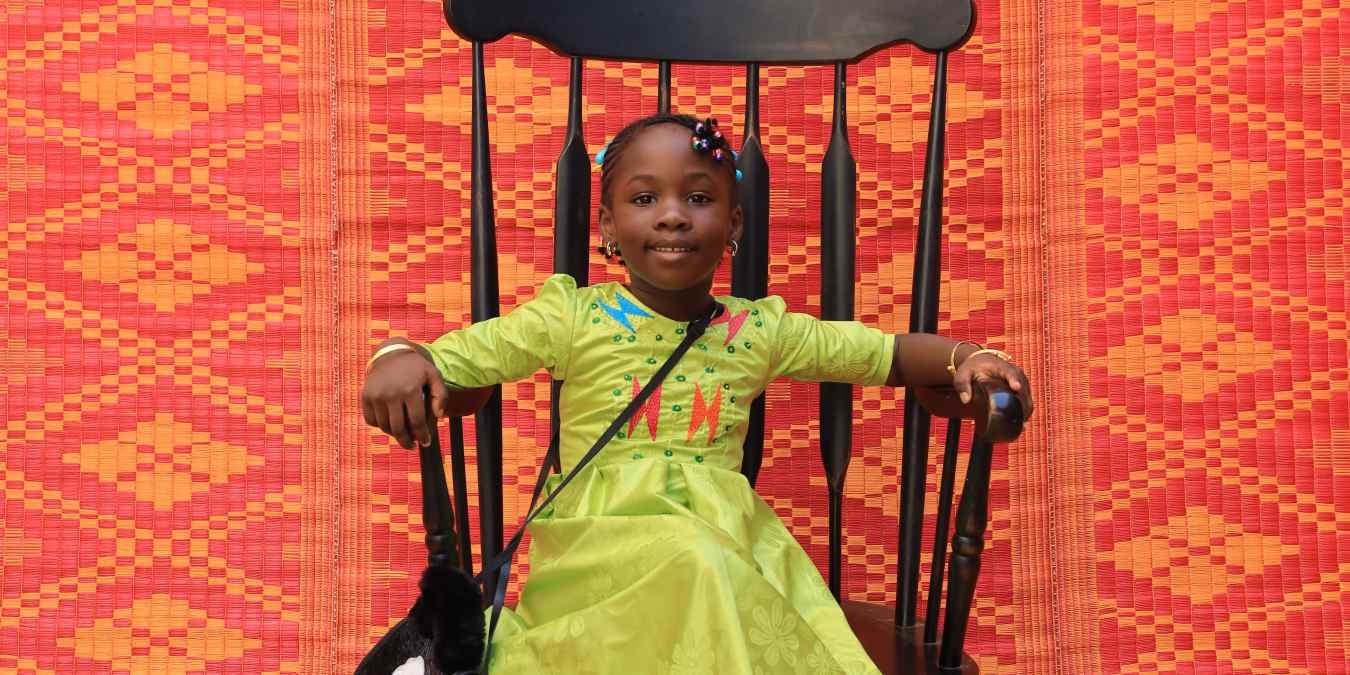
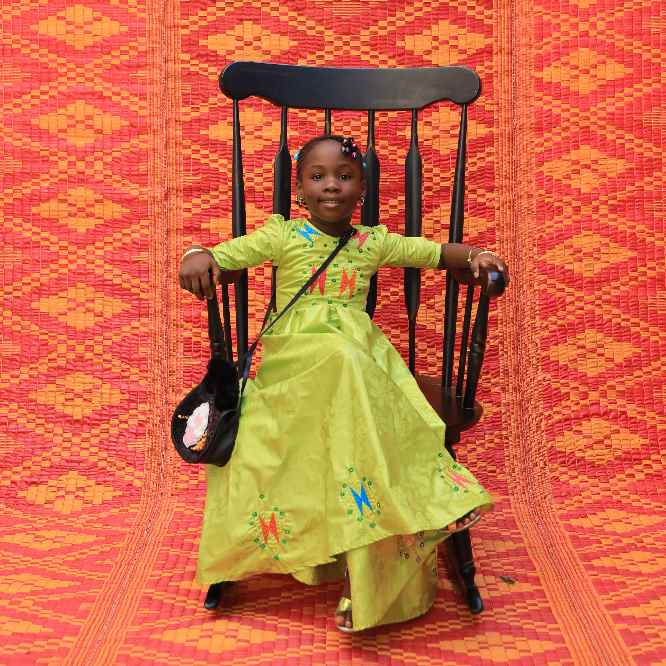
Inheriting the Future introduces photographic works by Djibril Dramé, who weaves philosophically engaged yet poetic approaches to cultural memory together with contemporary African aesthetics. Dramé began his series Ndewendeul in 2010 as an exploration of the spiritual ethos of the Baye Fall Sufi brotherhood—an unorthodox yet powerful community within the larger Islamic world. While the project is rooted in his close relationship with his Sufi “brothers” and “sisters,” it also extends beyond them, inviting the presence of the “other” and opening a broader dialogue about community, identity, and belonging. In 2014, Dramé developed the first major iteration of the series by setting up a portable studio in Dakar, Senegal. His privileged access allowed him to capture intimate moments of sharing and joyful celebration during traditional Eid festivities, using his medium-format Hasselblad. Through these portraits, he highlights the inner beauty and multifaceted nature of Baye Fall identity, which emphasizes service to others as a form of mystical devotion. He returned to this series six years later, to document the community’s resilience during the COVID pandemic, once again identifying and celebrating distinctive moments of expressive presence. Dramé’s arresting images reverberate with the dramatic styles of individuals dressed in the vibrantly coloured patchwork fabrics characteristic of the Baye Fall brotherhood, whom he often portrays against patterned, industrial PVC canvases.
These four artists, using diverse media and dissimilar practices, illustrate productive approaches to navigating the disruptive transitions occurring as the cultural spaces they inhabit negotiate the impacts caused by contemporary global monoculture.