


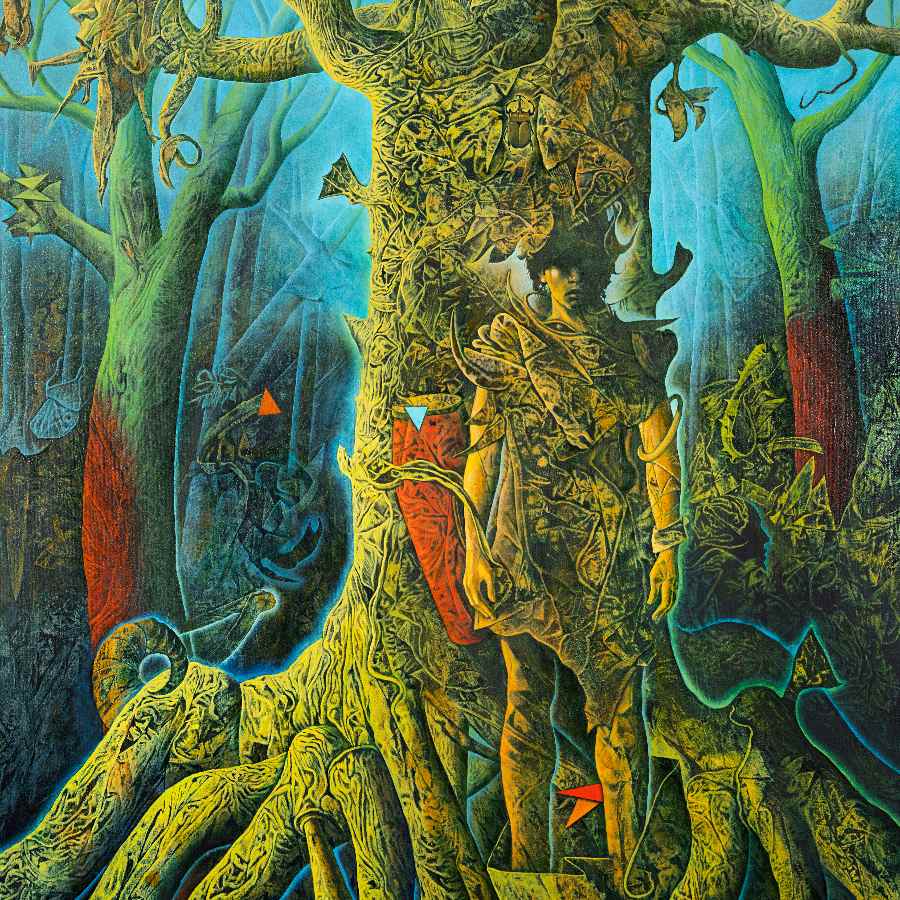
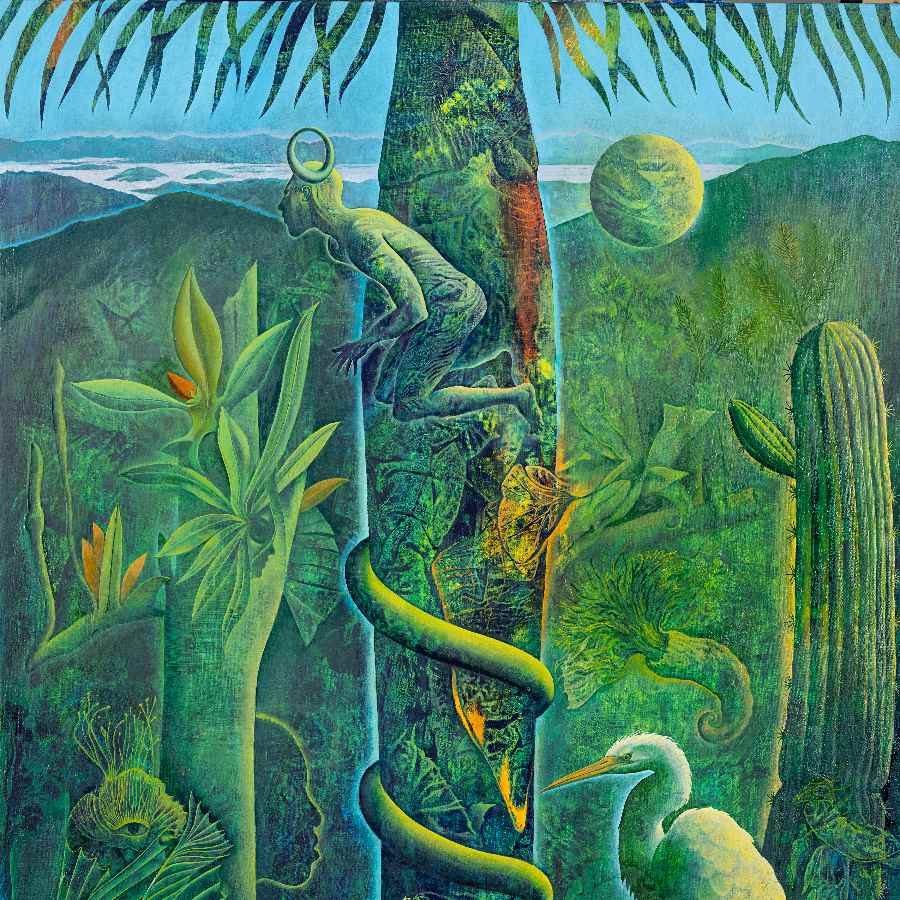
Rafael Trelles: Caliban
26th November, 2026 – 16th January, 2027

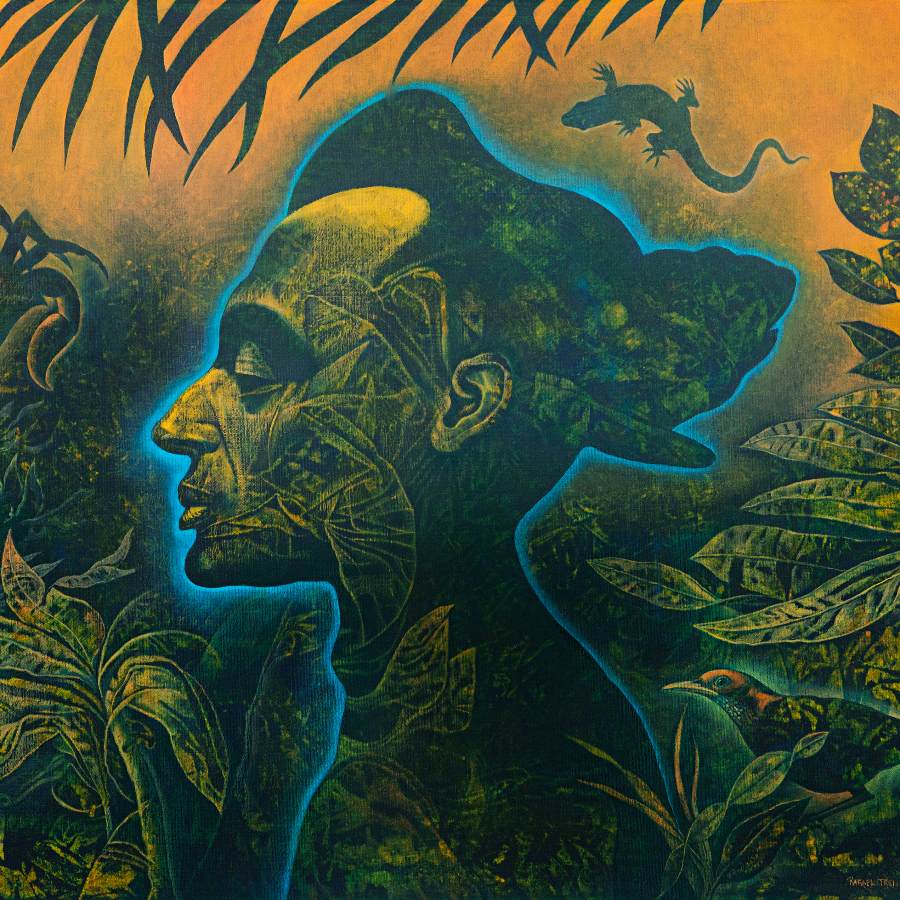
Oil on linen, 121.92 x 91.44 cm

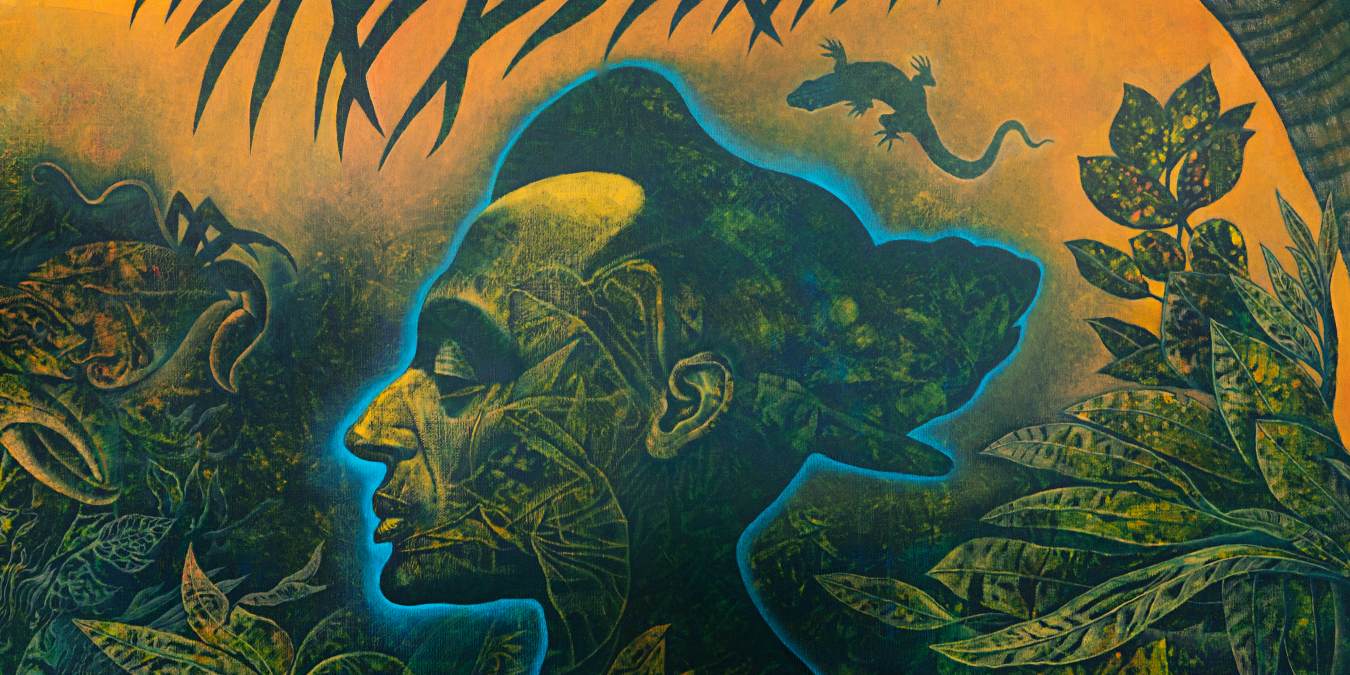
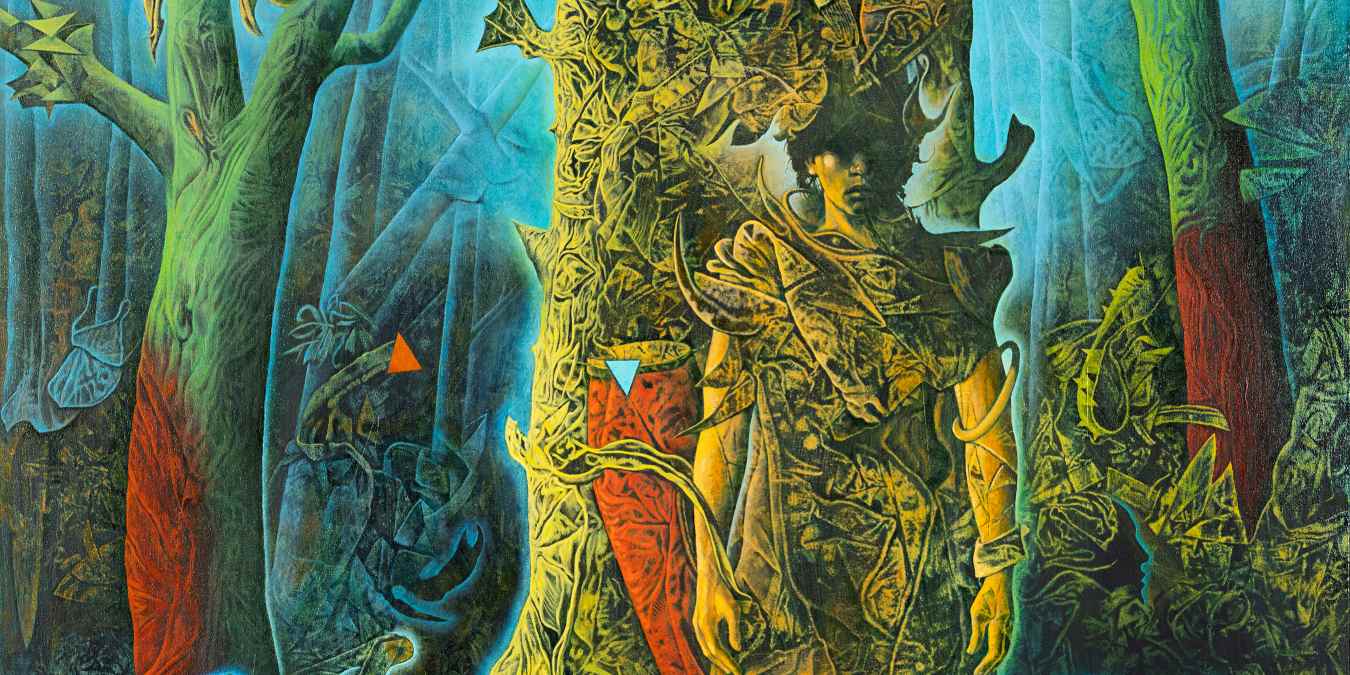
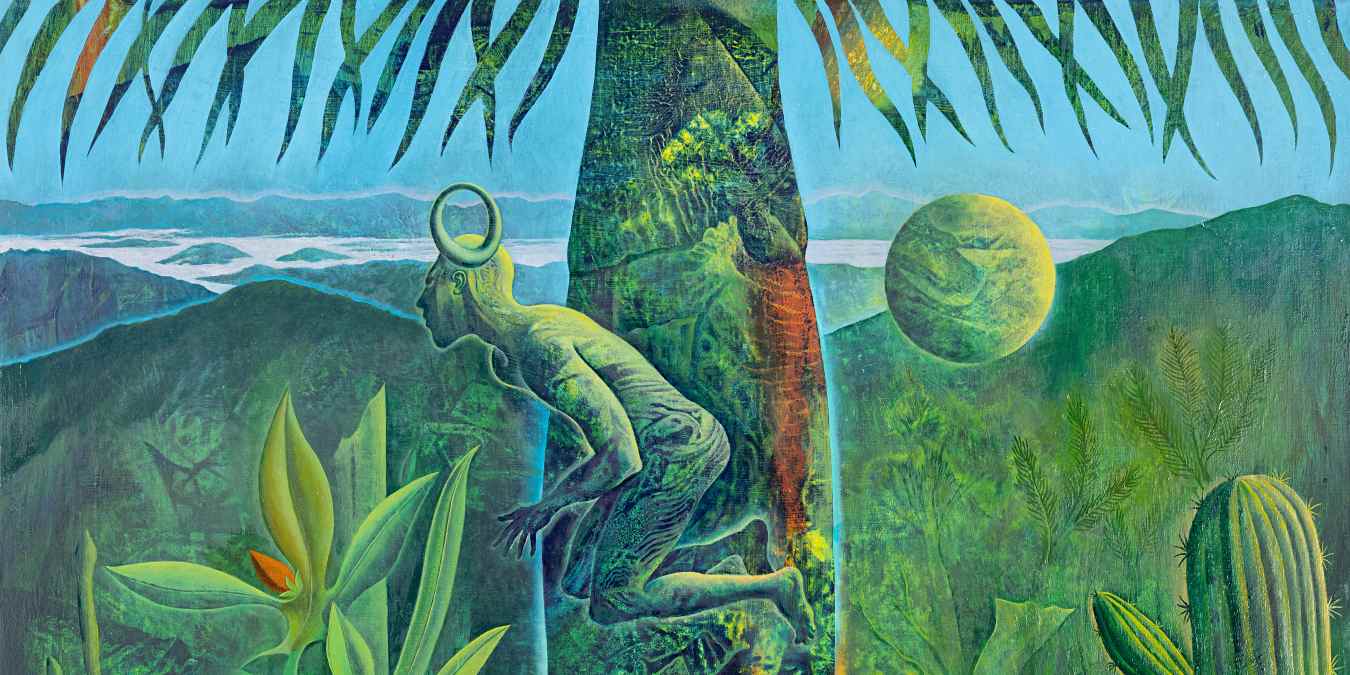
Known for their artful mastery, Trelles’ paintings depict magico-mythical realms conjured from overlapping layers that play with fantastical effects of light and shade. This latest series of paintings focuses on the character of Caliban, the sole inhabitant of the mysterious island in Shakespeare’s The Tempest on which the exiled Duke Prospero and his retinue have been shipwrecked. While Shakespeare’s tale recounts how Prospero used his magical powers to subjugate the ‘savage’ Caliban, control his captive spirits and dominate the unfolding narrative, Trelles entirely reverses that perspective to paint his Caliban figure as an archetype of the colonised subject. In this alternative magical-realist version, Caliban is endowed with symbolic attributes of dignity and resilience while his intuitive understanding of the complexities of the local fauna and flora suggest his inner determination to restore the lost freedoms of his occupied island home. Trelles’ re-visions draw upon the writings of the influential Cuban intellectual Roberto Fernández Retamar, who proposed that the name ‘Caliban’ acts as an anagram of ‘cannibal’, itself etymologically associated with the word Caribe, referring to all the indigenous inhabitants of the Caribbean island chain. For Trelles, this linguistic and historical connection becomes deeply personal, leading him to state, ‘In this precise sense, I am Caliban.’
Within the succession of ethereal canvases, Caliban is shown existing in harmony with his environment, a creature entirely at home in his dreamlike native state. By contrast, the interloper, Prospero, epitomises the western objectifying viewpoint, seeking to separate entities into categories that can be ordered and dominated using colonial systems of control. Trelles’ paintings portray the natural world neither as a passive backdrop nor as a commodity ripe for exploitation, but, instead, as an active space of symbiosis and interconnectivity. By bringing to the surface hidden links between literary figures and historical realities, Trelles connects the colonial history of the Caribbean with contemporary experiences of migration, racism and cultural displacement, while simultaneously revealing how the tales we tell ourselves might unconsciously condition the worlds we inhabit.
The magical island depicted by Trelles can be understood simultaneously as landscape, memory and cultural territory. It evokes a way of being in which the natural world is encountered through passive integration rather than active possession. This becomes significant in relation to the colonial history of the Caribbean islands. Colonialism not only displaced peoples and redefined their cultures; it also transformed land into territory to be mapped, owned and exploited. Trelles’s imagery proposes a very different relationship: one in which the human figure rather than dominating the landscape recognises their position as an integral part of it. Trelles ultimately proposes Caliban’s reclamation of identity as being local to a known environment: the transformation of a figure historically deprived of agency who asserts their right to define themselves as a being inseparable from the natural world that nurtures them.
