
Xanthe Somers


Currently based in London, Xanthe Somers is a Zimbabwean ceramicist whose work is a critical reading of extraction economies and notions of domesticity within post-colonial contexts, with a particular lens focused on the country of her birth.
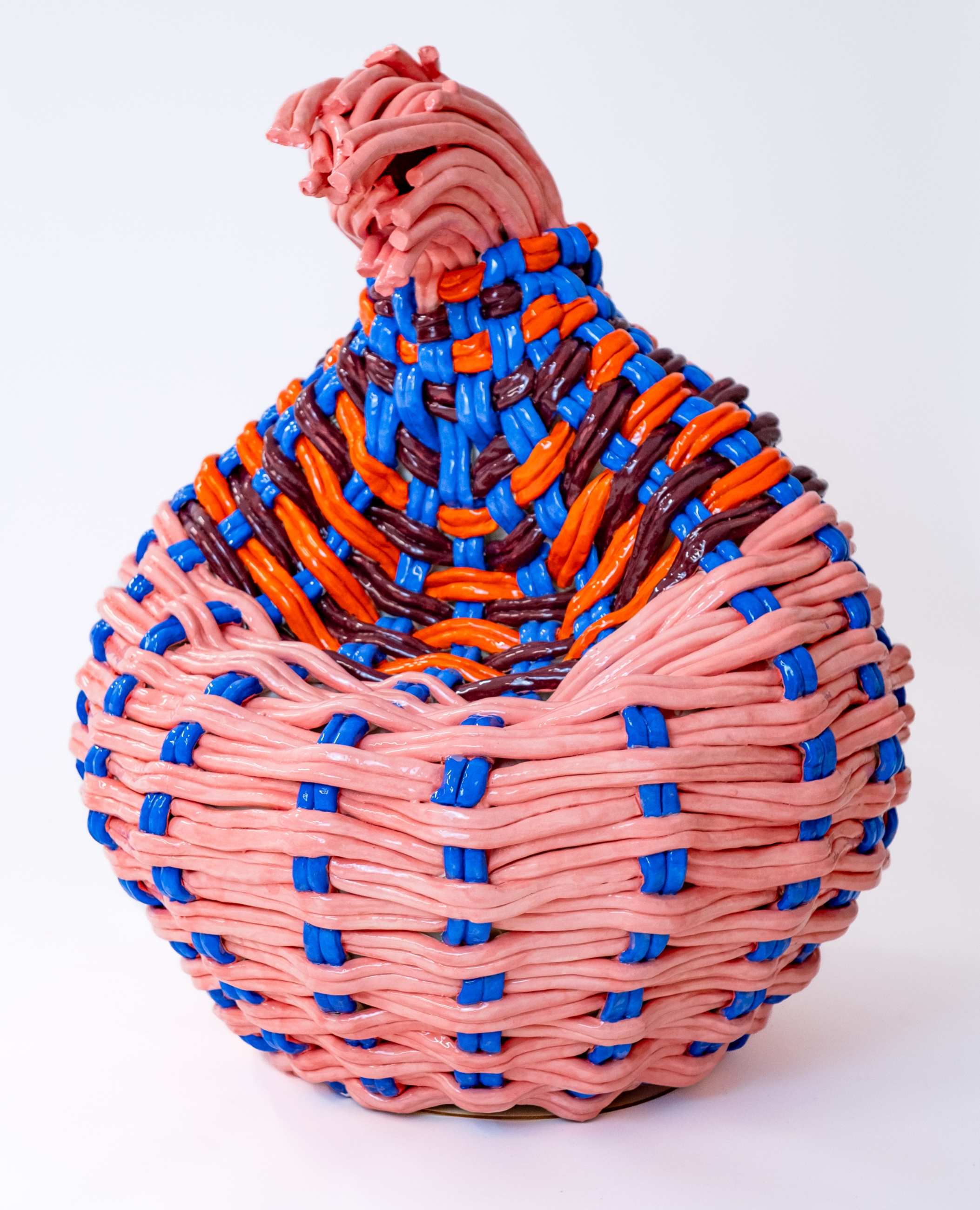
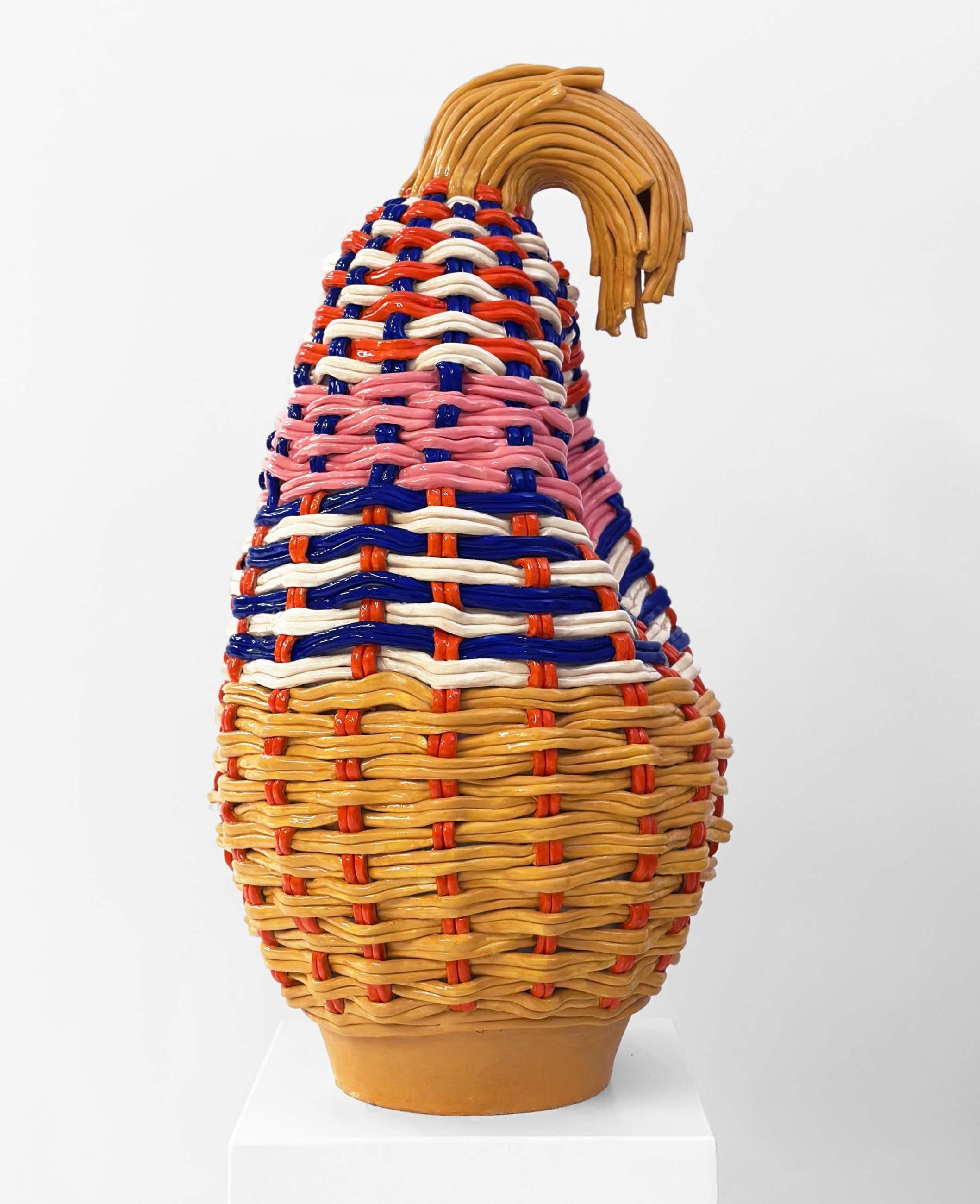
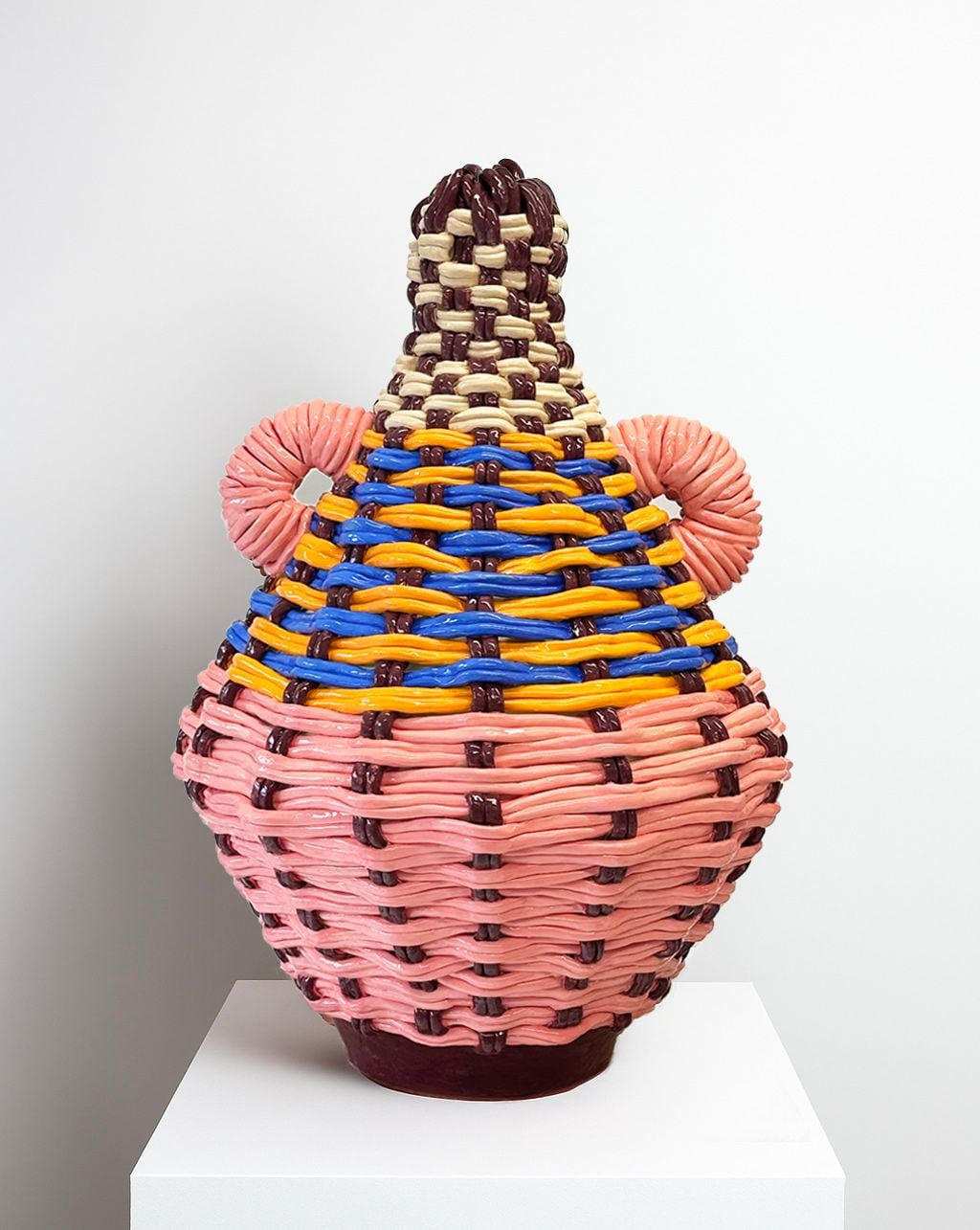
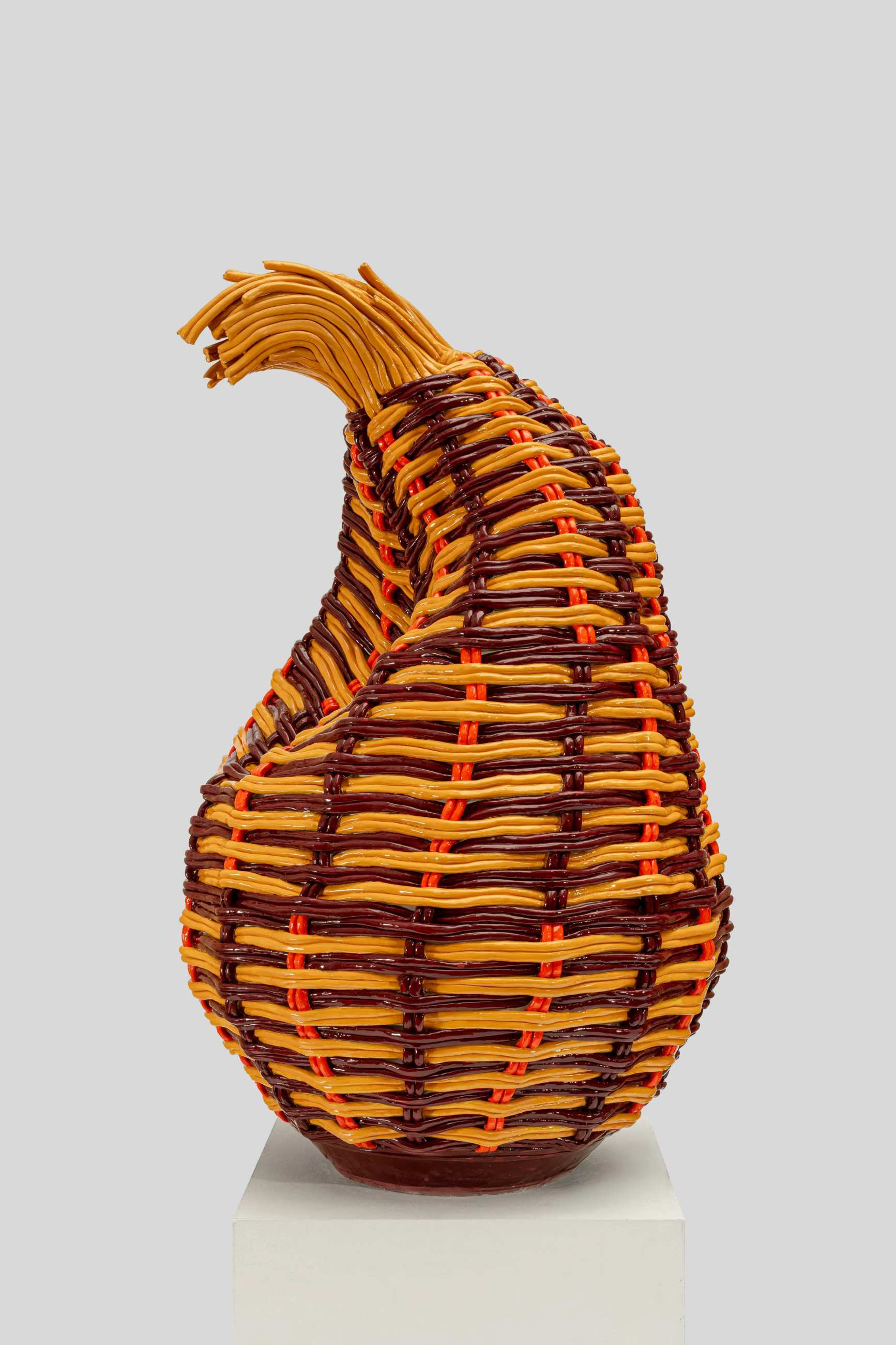
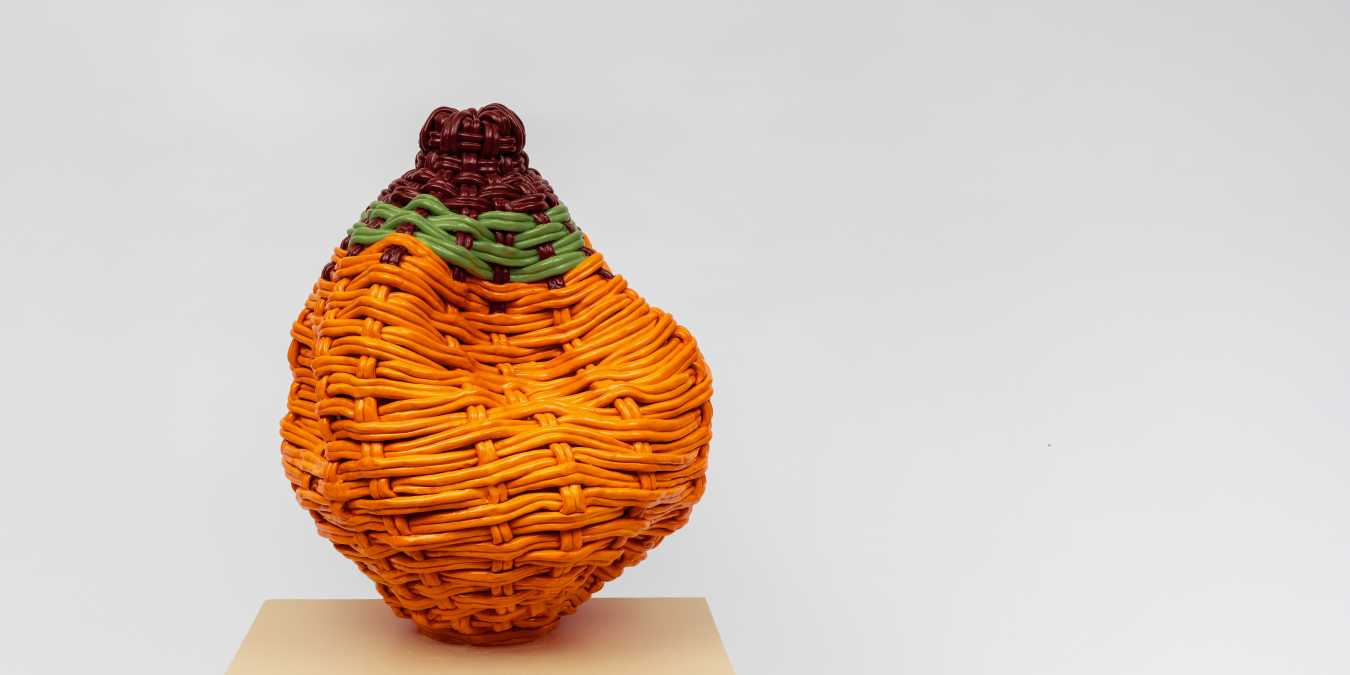
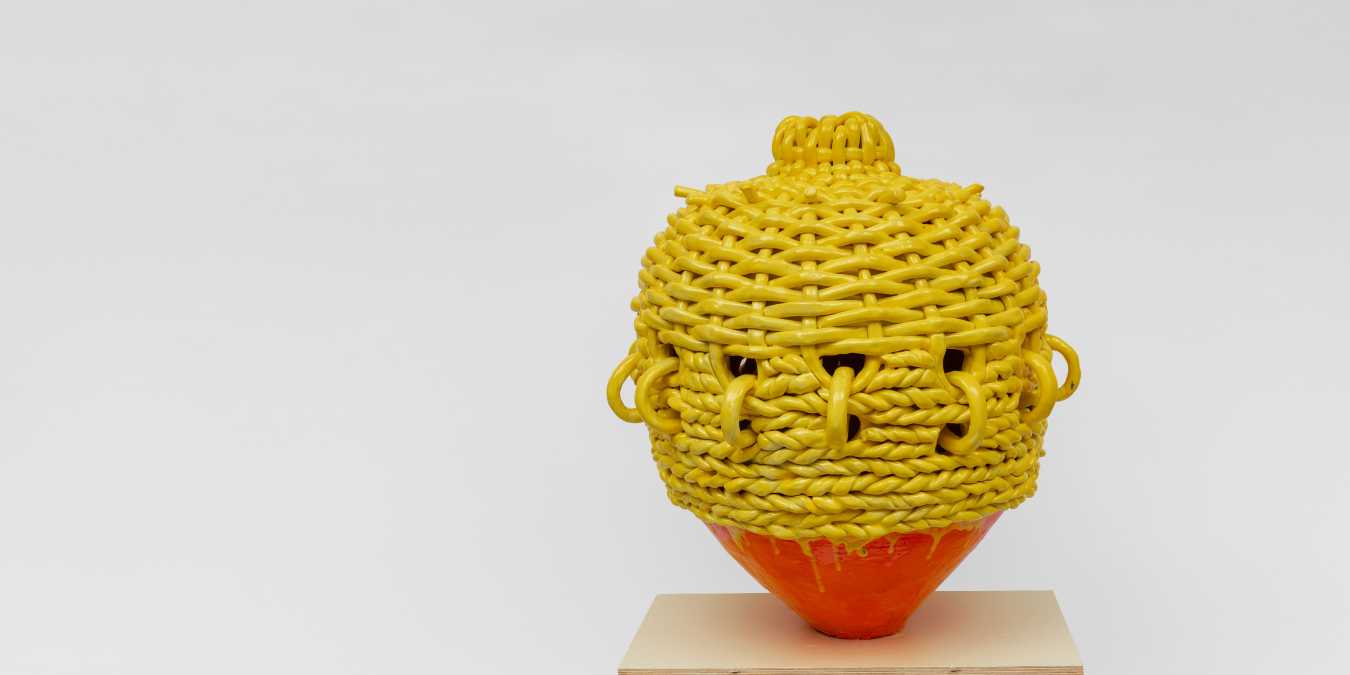
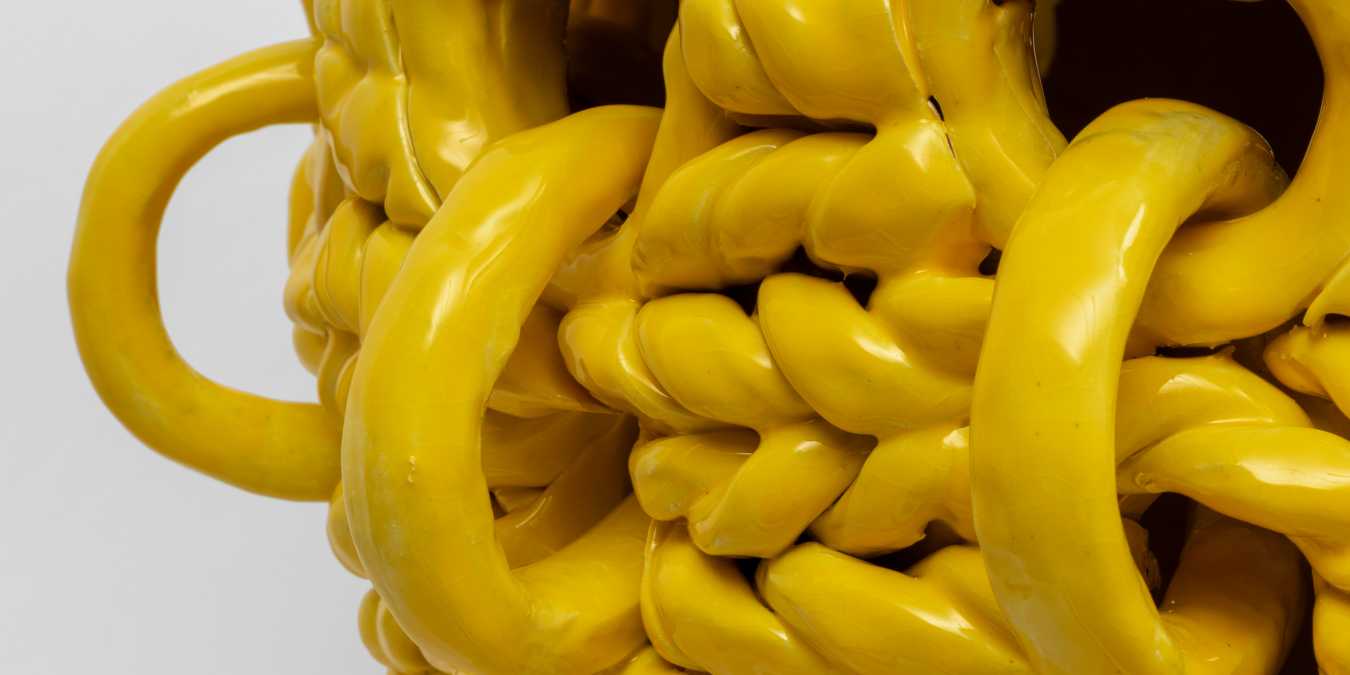
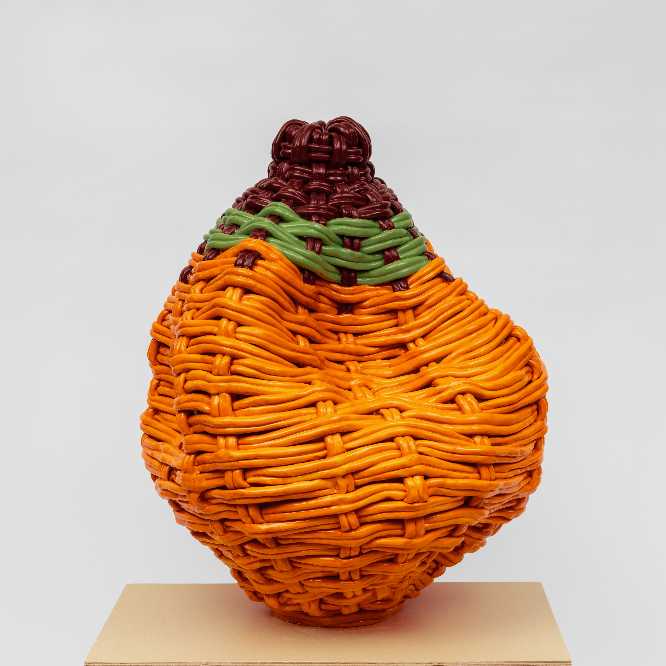
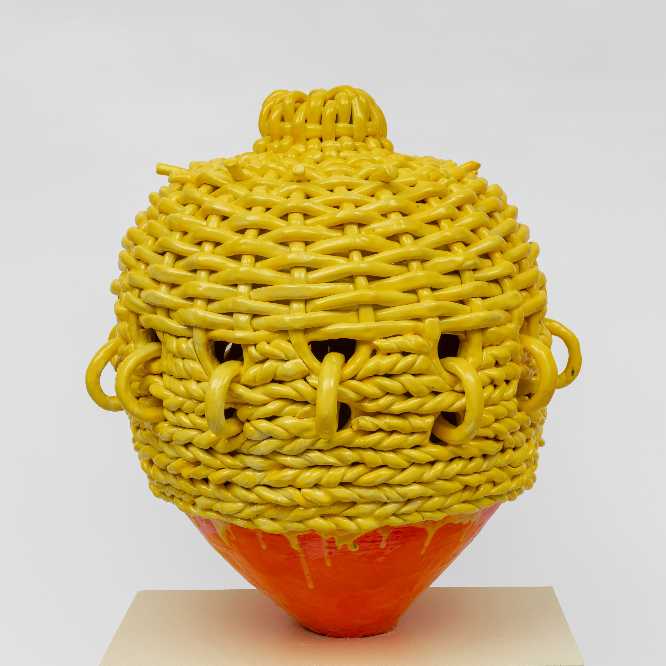
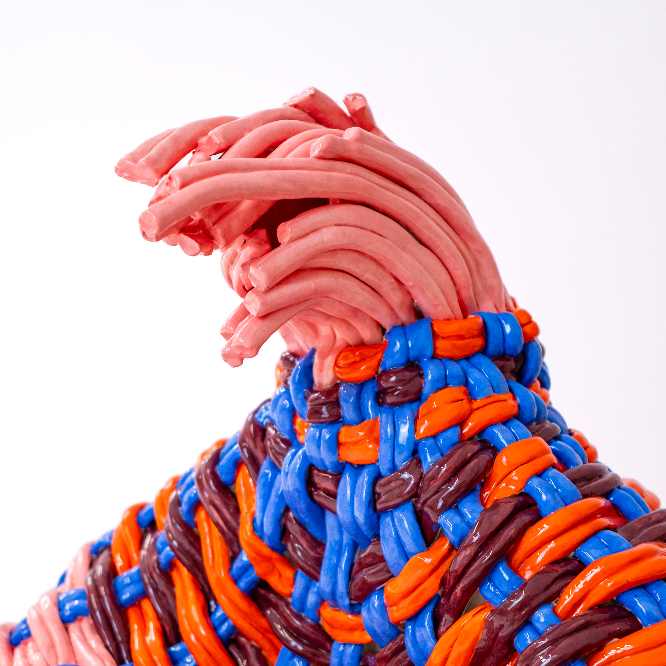
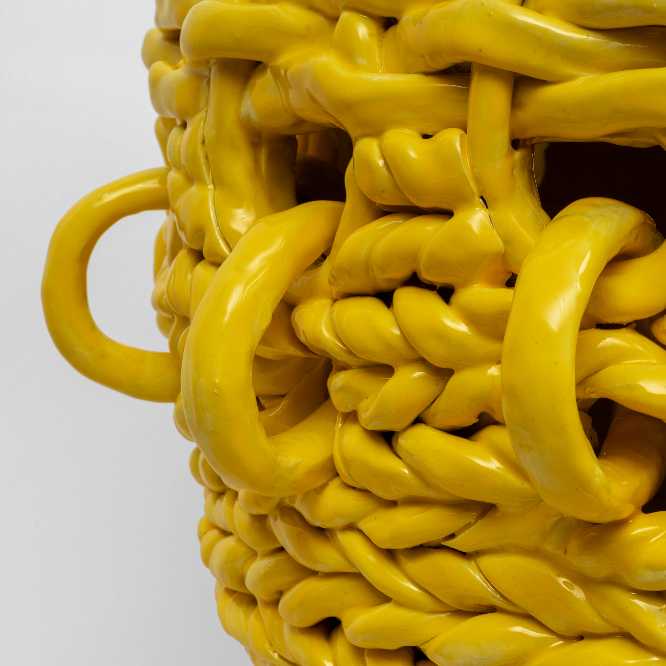
Somers graduated from Michaelis School of Fine Art, UCT, Cape Town, South Africa in 2015 and was subsequently awarded a grant to study MA Postcolonial Culture and Global Policy at Goldsmiths, University of London, which she completed in 2020 with distinction. Her large-scale, vibrant works carry barbed social and political critiques. The bodies of her intricate pieces are hand-coiled in the traditional way and then disrupted – their surfaces punctured, woven or adorned with meticulously shaped and painted details. Her ceramics draw on a rich vocabulary of contemporary symbols to examine what she refers to as the “subtle treason of objects”. Their hand-coiled forms bristle, morph and move, fusing political commentary with a strong sense of domestic intimacy. These idiosyncratic creations evoke a sense of play, by deliberately combining excessive ornamentation with veiled political commentary that draws attention to women's work, cheap labour, overconsumption and the impact of eco-racist practices throughout the Global South. Additionally, the weighted shape of her ceramics - favouring curvature and vessel form - pose as a feminist engagement of sculpture. Somers asks us to question the ways in which the post-colony co-opts us into its campaigns of violence against marginalised peoples, she impels us to consider how cruelty can exist within the ordinary of everyday life.
In 2026, October Gallery featured her series, Cleaner, Carer, Mother, Maker, in a duo exhibition, Poetic Threads, alongside Moroccan painter Yacout Hamdouch. Somers weaves together three age-old disciplines - clay pottery, basket-making and textiles – to create a novel visual language. She comments, ‘I think weaving in general is a visceral way to speak about the domestic. These vessels, while referencing grass basketry, also depict blankets, kitchen cloths and other humble textiles that quietly signal care within the home. Weaving becomes a wider metaphor for social cohesion, or lack thereof. While this tension is acutely felt in Zimbabwe, it resonates globally, where women’s work continues to be systematically undervalued.’
Somers first exhibited at October Gallery in the group exhibition, Material Sensibilities (2025) which explored the liminal boundaries of creative materiality. Her works have since had significant display with October Gallery at the first edition of Africa Basel in Switzerland (2025) and 1-54 Contemporary African Art Fair in London (2025). These presentations featured works from her ongoing Invisible Hand series. The series’ title references economist Adam Smith’s theory of the free market, which suggests that the pursuit of self-interest by individuals, corporations and legal entities indirectly benefits society as a whole, leading to economic growth and prosperity without the need for centralised coordination or direction. By using this title to make labour and efforts that are commonly devalued visible, Somers reaches for epistemological justice, questioning how “free” the market actually is.
Utilising techniques rooted in indigenous Zimbabwean artistry, this body of work is situated within the political and historical context of Binga, an area in Zimbabwe deeply affected by the colonial construction of Lake Kariba. . Created by the erection of the Kariba Dam on the Zambezi River between 1955 and 1959, Lake Kariba is the world’s largest artificial lake by volume. Its creation submerged vast tracts of land, altered natural habitats, affected local wildlife and displaced over 57,000 riverine people from both sides of its banks. Employing basket-making methods from this region and translating them through the language of clay, Somers utilises weaving as both metaphor and mnemonic device. Clay as a medium carries a specialised capacity to hold memory and articulate notions of the domestic realm - it is quotidian, and yet still extraordinary.
Xanthe completed a two-month GUILD artist residency with Southern Guild in Cape Town, South Africa, March-May 2024. She won the 2024 ANNA award for female African artists, presented by Latitudes. Her work is held in many private collections as well as public institutions such as the Victoria and Albert Museum in London. Xanthe's work has been published in The Times, The Telegraph, The Guardian, Ceramic Review, House and Garden UK, Elle Decoration UK. She was recently shortlisted for the 2026 LOEWE Foundation Craft Prize, marking the ninth edition of the prestigious award celebrating extraordinary command of materials by hand. Her work, The Caretaker’s Clotheshorse II, was shown in the finalist exhibition alongside thirty other makers at the National Gallery of Singapore.
For sales enquiries please contact: art@octobergallery.co.uk Or call + 44 (0)20 7242 7367
View below for career highlights and works for sale by the artist.