LINEAGES 29 January – 28 February, 2026.LINEAGES 29 January – 28 February, 2026.
 

FORTHCOMING EXHIBITION

29 January - 28 February, 2026
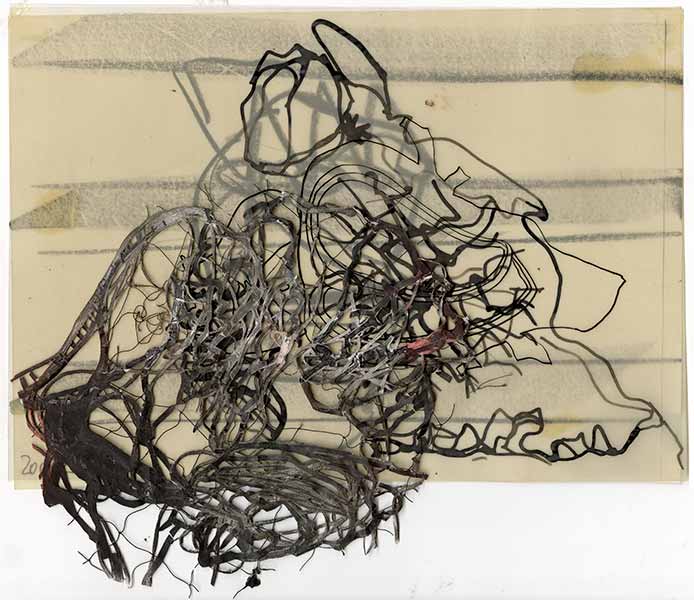
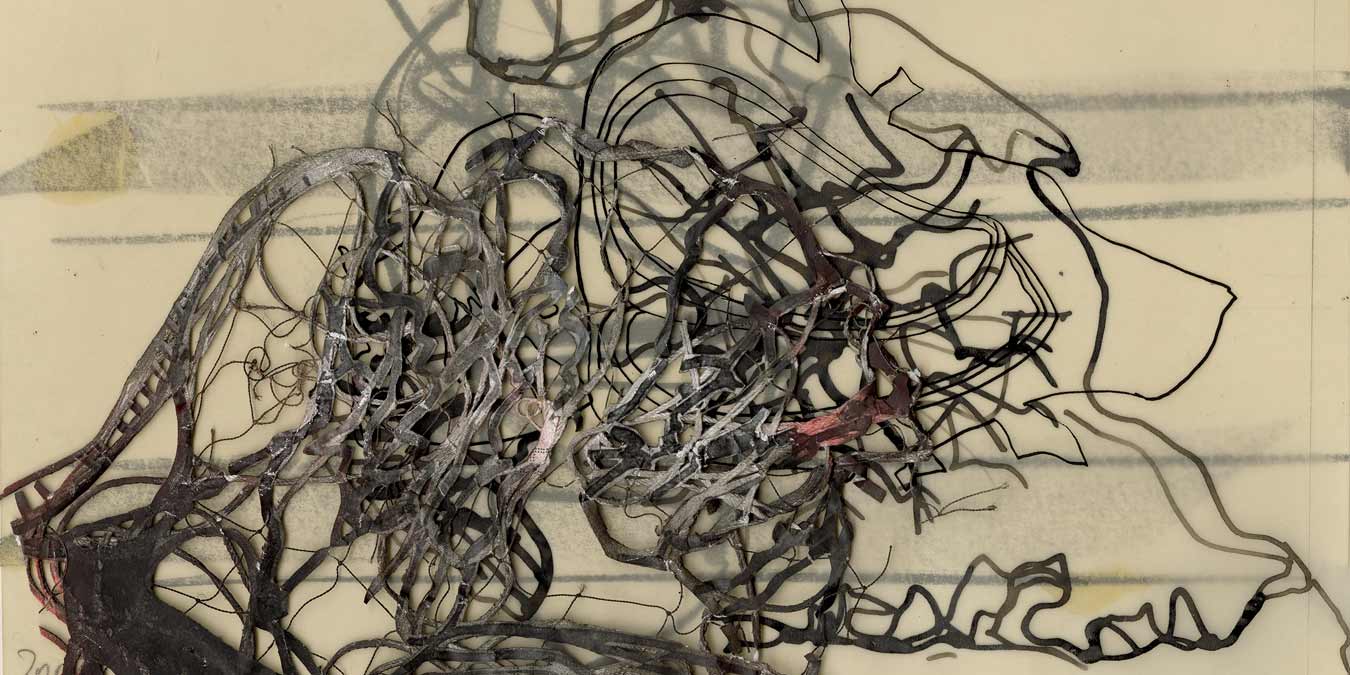
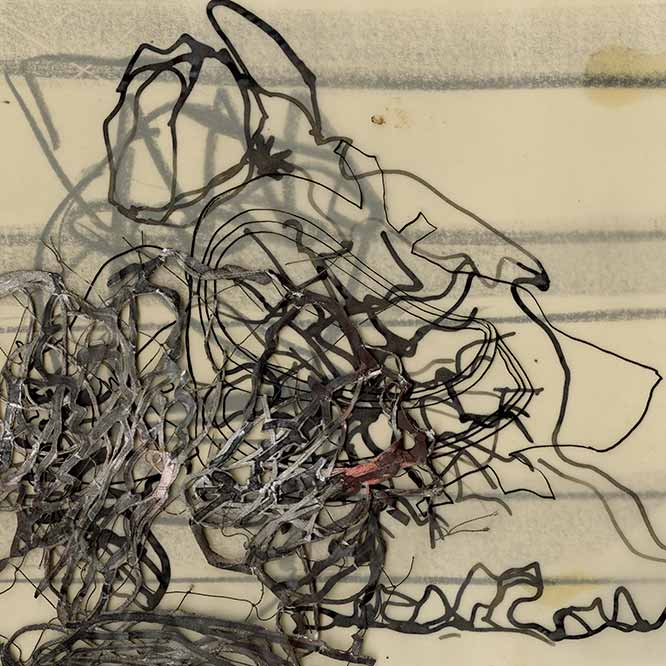
Susanne Kessler, 014 - layered from 2007 onwards: 4 layers, 2007 - 2025.
Charcoal, ink, printed foil, thread on paper, 21 × 29.5 cm.
Phot: Evan Mason
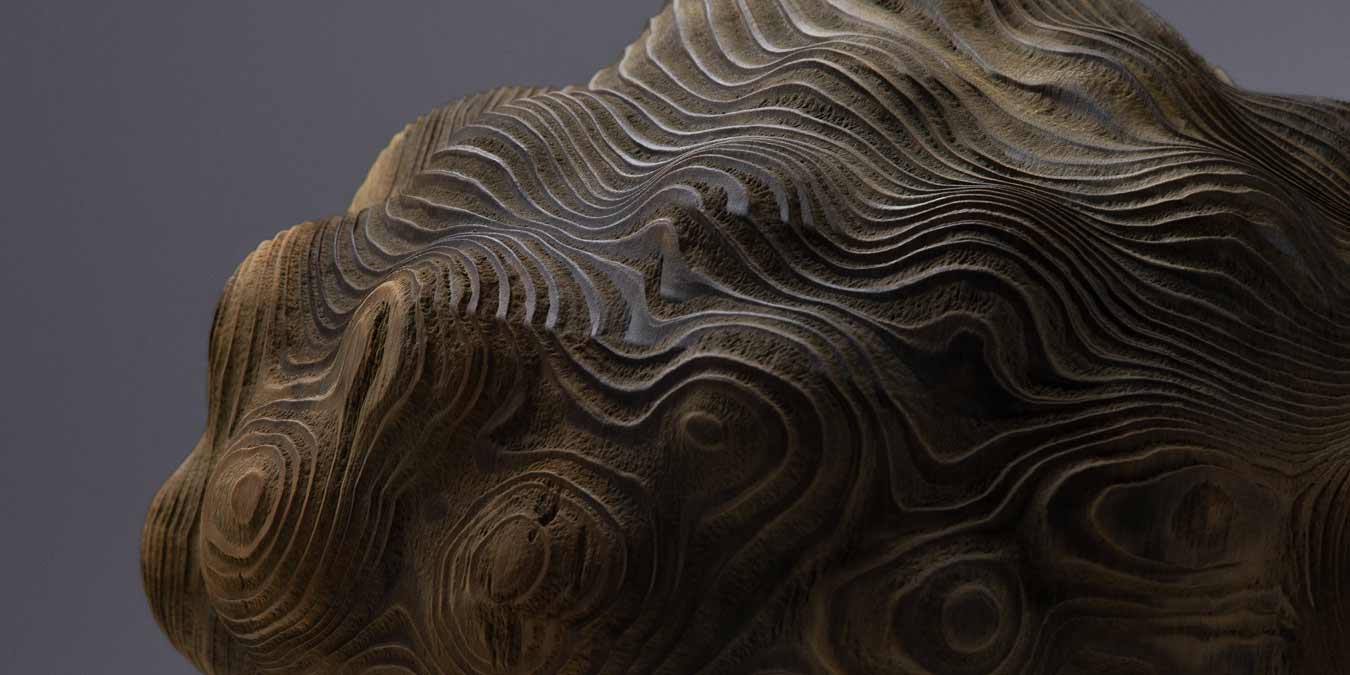
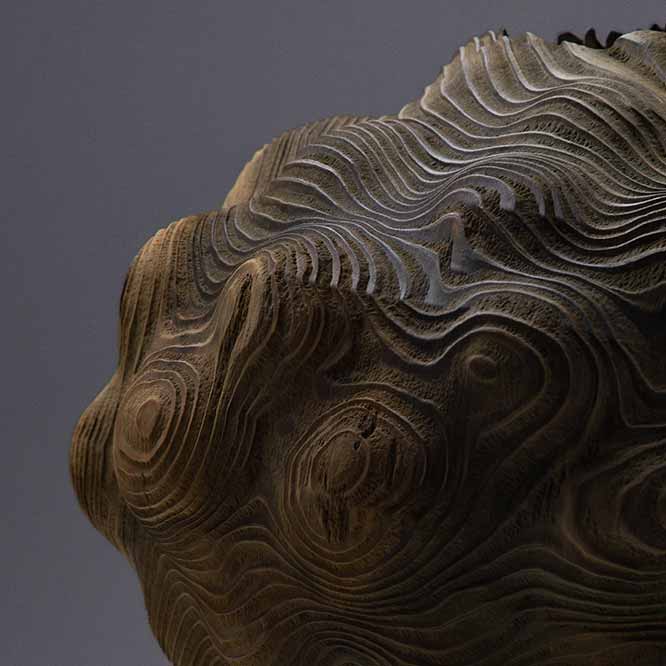
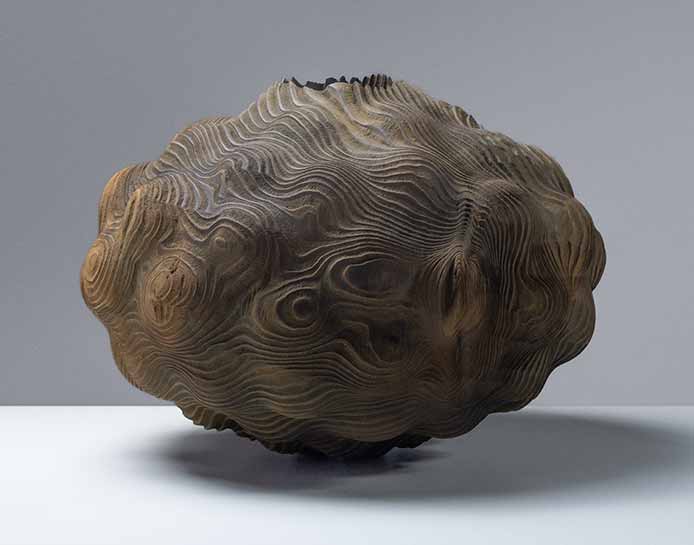
Eleanor Lakelin, Landscape 2, 2025.
Sequoia, iron-stained, 38 x 38 x 28cm.
Phot: Evan Mason
October Gallery presents Lineages which brings together the work of Susanne Kessler, Elisabeth Lalouschek, Theresa Weber, Golnaz Fathi, Tian Wei, El Anatsui, Gerald Wilde and includes for the first time, striking works by Eleanor Lakelin, Junko Mori, and Bev Butkow. The exhibition explores the employment of line within these artists’ practice, in which the notion of line is not confined to the drawn mark, but emerges as a connective thread in concept and form.

Each selected work examines where lines become pathways across histories, environment, languages and materials: Susanne Kessler’s works on paper, collages, paintings, sculptures and installations investigate line - in all its manifestations, while Elisabeth Lalouschek’s  abstract compositions are rooted in gesture, rhythm and the physical act of mark-making.

Two new relief paintings presented by Theresa Weber reflect her conceptual approach to the ever-changing nexus of identity and lineage. These works reveal an intuitive mapping of the intersectional body from a de-colonial perspective that resists the Western idea of the ‘grid’ or linear time in favour of organic forms, energy fields and circular time as an act of resistance.

Other works exhibited celebrate line within nature’s formations, such as works by Eleanor Lakelin and Junko Mori. Guided by nature, both Lakelin and Mori understand line as a transformational tool, whether carved into or built upon, using it as a means of wayfinding through the evolving dialogue of sculptural creation. Junko Mori’s works are exhibited courtesy of Adrian Sassoon, London.

Bev Butkow’s work transgresses the boundaries between textile art, painting, sculpture and installation. She works experimentally across and between these genres, using weaving as a literal and figurative process that connects the material, the personal and the social.

Work by Golnaz Fathi explores the potential for overlap and exchange between the quite separate domains of modernist abstraction and classical Persian calligraphy, while Tian Wei’s detailed paintings explore the intersection of language, philosophy and abstraction. Within El Anatsui’s Earth struggling to grow roots and leaves, 2023, the viewer sees bottle tops layered together with coloured lines reaching out across the work, masterfully sewn together with copper wire to create a dynamic wall hanging sculpture. For British artist Gerald Wilde line for was both expressive and architectural, carving out space while also embodying raw emotion.

Each artist charts a unique course through the conceptual and literal activation of line. The works in Lineages invite viewers to consider how artists use line through gesture and materiality and furthermore, as a form of ways that unpacks culture, nature, identity and imagination.


RECENT EXHIBITIONS

4 December, 2025 – 24 January, 2026
Govinda Sah 'Azad', Incandescence, 2025.
Tropical hardwood and tempera, Acrylic on canvas, 180 x 140 cm.
Govinda Sah 'Azad', Mountain to Margate, 2025.
Tropical hardwood and tempera, Acrylic on canvas, 180 x 160 cm.
October Gallery presents its fifth solo exhibition of compelling works by Govinda Sah ‘Azad’, a Nepalese artist now working in Margate. This exhibition highlights Sah’s latest large-scale oil and acrylic paintings on canvas and presents selected smaller scale works. Journey to the Heart of Light weaves together the artist’s personal journeys through both inner and outer realms. Beginning his artistic career in the Himalayan mountains close to where he was born, Sah first moved to London to study at Wimbledon College of Arts, before moving from London to Margate, where he recently opened a purpose-built studio. Although seemingly unconnected, the landlocked peaks of the high Himalaya and the tumultuous seascapes of Margate are connected in Sah’s imagination by the atmospheric clouds that envelop them, which upon parting reveal dynamic vistas illuminated by shafts of light below. Sah’s intensely detailed work is filled with an inner light, one that he first admired in the expressive radiance he found in J. M. W. Turner’s oil paintings, particularly around the coasts of Margate. Sah’s paintings, although different both in design and execution, afford tantalising reflections of the light that guided him to follow in the English Master’s footsteps as he, too, travelled from spectacular mountain views to draw inspiration from Margate’s dramatic seascapes.

Fascinated by the changing qualities of light playing through various layers of cloud, Sah represents his shifting experiences of the outer environment to explore more subtle emotional changes occurring within his ‘inner landscape.’ The artist’s works are composed of densely interwoven layers of mark-making that build layer upon layer of oil and acrylic paints upon the canvas. For Sah, as the painted surface becomes saturated with detailed layers, the reiterative act of painting resolves into a meditation on the complex enigmas of life itself. Sah states, ‘Painting becomes this continual process of losing myself...During these dialogues (with the painting), ideas arise within me, surfacing through the mysterious process of painting. Knowledge exists outside all of us and, for me, painting is the activity by which I reach out to discover it.’
 
9 October – 29 November, 2025.
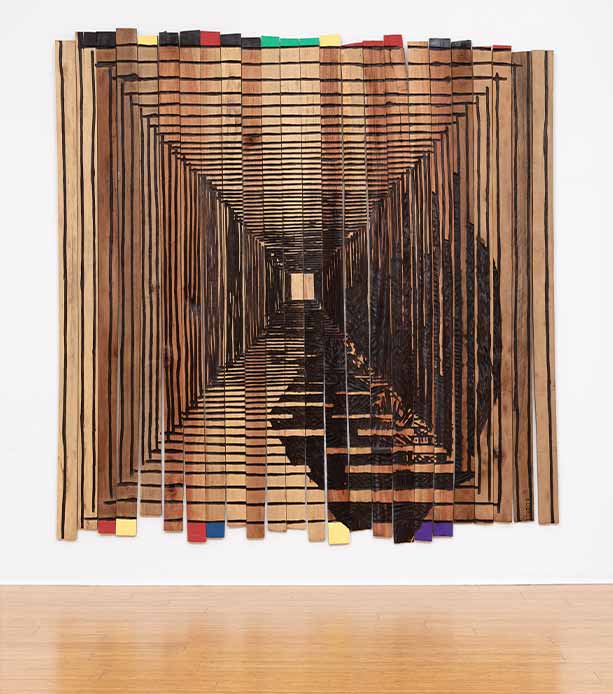
El Anatsui, Passage of Time, 2023.
Tropical hardwood and tempera, 244 x 244 cm.
Photos: Jonathan Greet
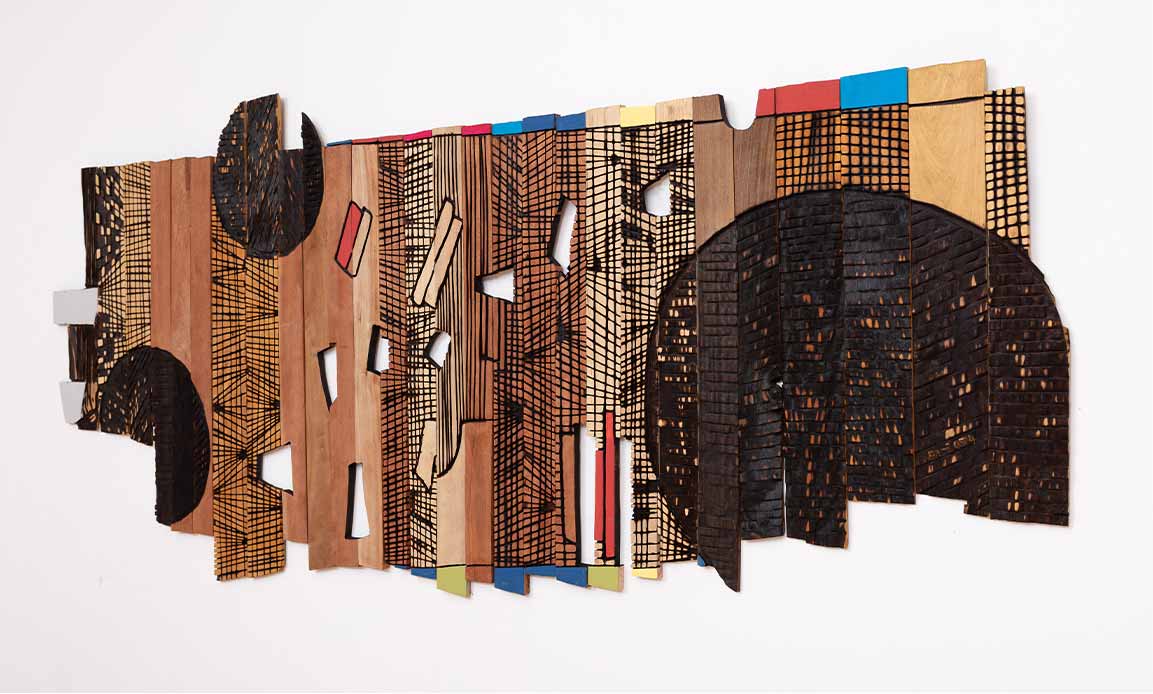
El Anatsui, Moon Fragments, 2024.
Tropical hardwood and tempera, 148 x 335 cm.
October Gallery and Goodman Gallery London are proud to present Go Back and Pick’, an exhibition in two parts by El Anatsui, widely regarded as one of the most influential contemporary artists working today. Anatsui’s new wooden sculptures mark a significant moment in his artistic trajectory, evolving from his foundational use of the medium during the 1980s and 1990s. These twin exhibitions of Anatsui’s most recent work underscore his major presence in the much-anticipated Nigerian Modernism exhibition at Tate Modern, opening 8th October, 2025.

El Anatsui’s internationally renowned sculptural practice continues to challenge the way we look at sculpture today. In the London exhibitions, his focus is on wood, his original and primary material. Go Back and Pick’ presents a new series of wall-mounted sculptures, which evolve from the planar wooden reliefs that characterised his art in the 1980s and 1990s.

From the outset, Anatsui has always insisted on what he calls “the non-fixed form”, the broad range of freedoms to be discovered in his sculpture. The modular nature and flexibility of the panel pieces allow for a range of spatially adaptive reconfigurations to the hanging sequence. Rather than having a fixed and final form, each panel piece can be rearranged at will to offer alternative combinations. As renowned scholars Okwui Enwezor and Chika Okeke-Agulu note, “the form-shape and surface-colour compositions are potentially free to be manipulated […] uninhibited by whatever might have been the artist’s original composition.”