| Selected Solo Exhibitions |
| 2022 |
|
I AM THAT I AM, New Galerie, Paris, France |
| 2015 |
|
Unseen Collaborator, October Gallery, London, UK |
| 2013 |
|
Brion Gysin, Galerie Delacroix, Tangier, Morocco
Brion Gysin, Musée des Beaux-Arts et d'Archéologie, Besançon, France |
| 2011 |
|
Brion Gysin – Alarme, Galerie de France, Paris, France |
| 2010 |
|
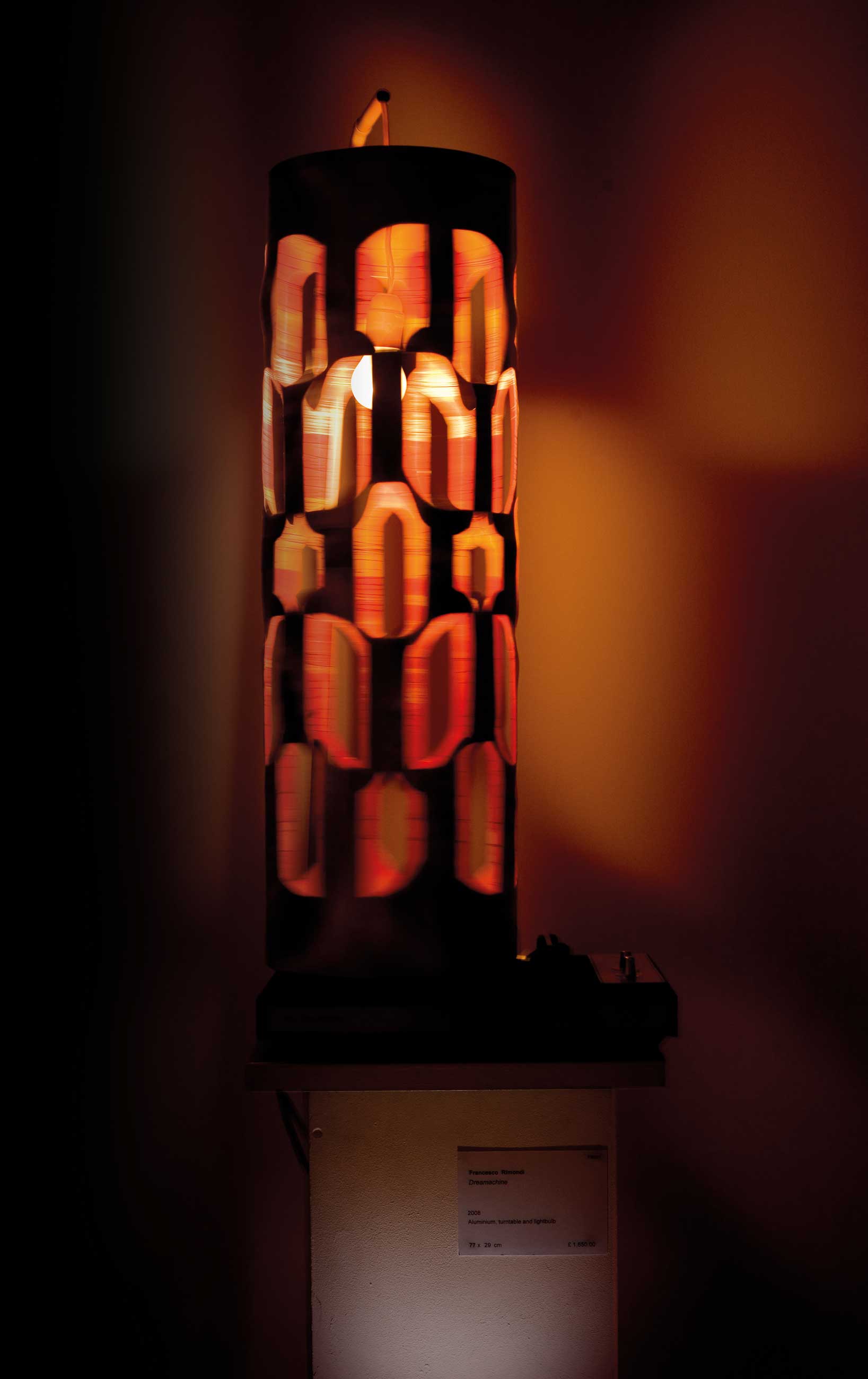
Brion Gysin: Dream Machine, New Museum, New York, USA
Brion Gysin: Dream Machine, Institut d’Art Contemporain, Villeurbanne, France |
| 2009 |
|
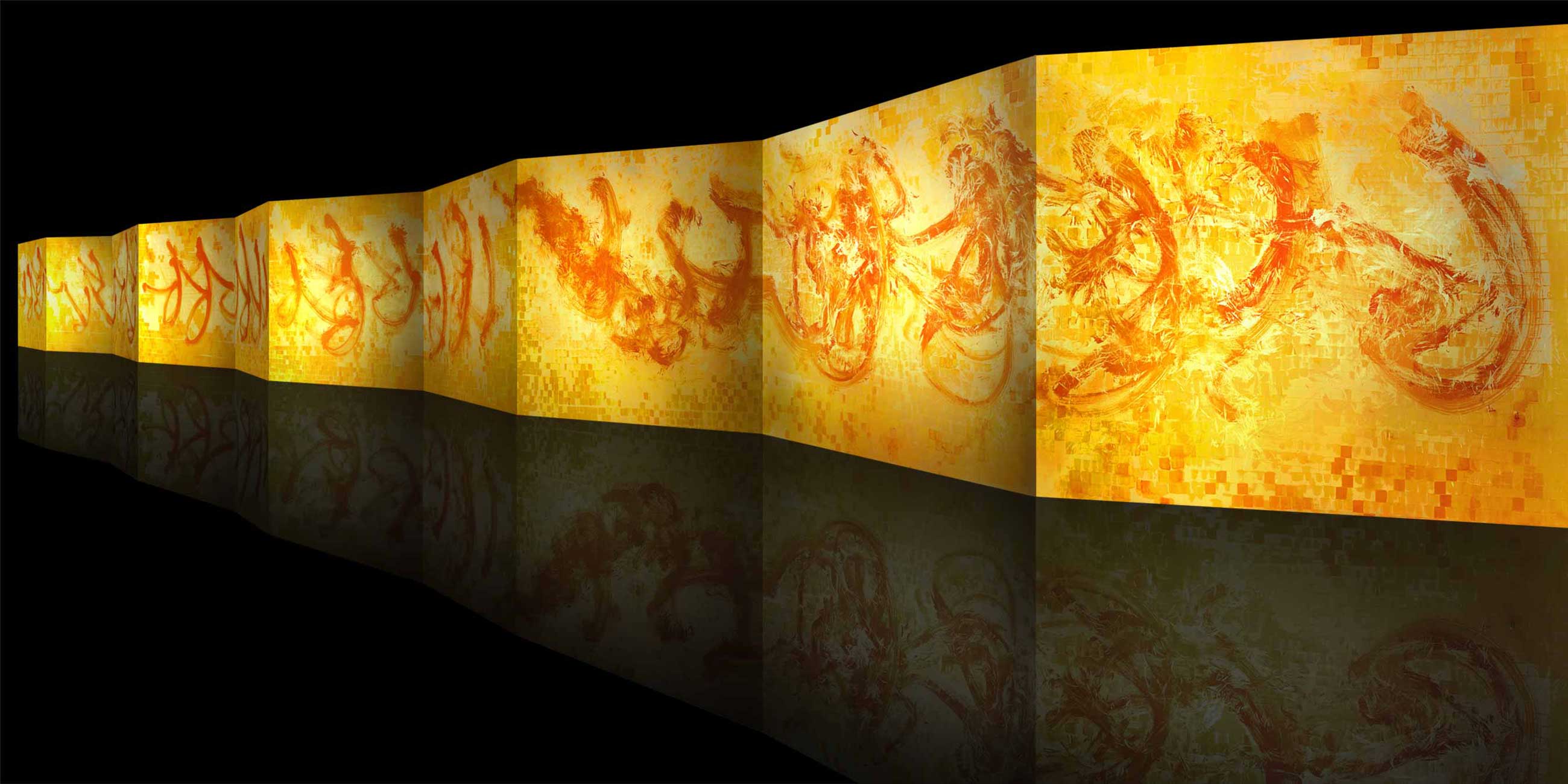
Calligraffiti of Fire, October Gallery, London, UK |
| 2006 |
|
Brion Gysin, Galerie Didier Devillez, Brussels, Belgium |
| 2000 |
|
Brion Gysin; I am that I am, Winnipeg Art Gallery, Winnipeg, Canada |
| 1999 |
|
Brion Gysin; I am that I am, Mendel Art Gallery, Saskatoon, Canada |
| 1998 |
|
Brion Gysin; I am that I am, The Edmonton Art Gallery, Edmonton, Canada |
| 1994 |
|
Guillaume Galloxzzi Gallery, New York, USA |
| 1993 |
|
Brion Gysin Play Back, Espace Electra, Paris, France |
| 1991 |
|
Caen, Lyon, Grenoble, France |
| 1986 |
|
Brion Gysin, calligraphies, permutations, cut ups, Galerie de France, Paris, France
Calligraffiti of Fire, Galerie Samy Kinge, Paris, France |
| 1985 |
|
Painting of Morocco from Felicity Mason’s collection, Tower Lajeski Gallery, New York, USA |
| 1982 |
|
Meda Mothi Gallery, Montpellier, France |
| 1981 |
|
Brion Gysin: Paintings, October Gallery, London, UK |
| 1976 |
|
Galerie Mollet-Villeville, Paris, France |
| 1975 |
|
Process, Galerie Germain, Paris, France
Process, Galerie Galerie Yvy, Geneva, Switzerland |
| 1973 |
|
Process, Galerie Weiller, Paris, France |
| 1970 |
|
Oils and Ink drawing on paper, Tangier Gallery, Tangiers, Morocco |
| 1963 |
|
Helena Rubinstein Salon, Paris, France
Tangier Gallery, Tangiers, Morocco |
| 1961 |
|
Unit, eight units of a Permutate painting, Galleria Trastevere, Rome, Italy |
| 1959 |
|
Library of the Kokutoubia, Marrakesh, Morocco |
| 1958 |
|
Library of the Kokutoubia, Marrakesh, Morocco |
| 1957 |
|
Sagittarius Gallery, New York, USA
Dunbar Gallery, Chicago, USA
Sagittarius Gallery, Rome, Italy |
| 1953 |
|
Carnet de Voyage au Sahara, Rembrandt Hotel, Tangiers, Morocco |
| 1939 |
|
Oils and Gouaches, Galerie Aux Quatre Chemins, Paris, France |
| Selected Group Exhibitions |
| 2024 |
|
Ayahuasca & Art of the Amazon, Sainsbury Centre, Norwich, UK
The Atomic age – artists put to the test of history, Musee d’art Moderne de Paris, Paris, France
Electric Dreams – Art and Technology Before the Internet, Tate Modern, London, UK |
| 2023 |
|
Dream Machines, DESTE Foundation, Centre for Contemporary Art, Athens, Greece
Friendships in art – Collective works, Mucem, Marseille, France |
| 2022 |
|
Nomadic Resonance, October Gallery, London, UK
Take a Walk on The Wild Side, New Galerie, Paris, France
|
| 2021 |
|
On the Bowery, Galerie Zurcher, New York, USA
Beat Generation Exhibition, John Natsoulas Center for the Arts, St Davis, California, USA
To the end of the world and over the edge – with Adolf Wolfli, Museum Villa Stuck, Munich, Germany
God save the Records!, Immanence Espace d’art Contemporain, Paris, France |
| 2020 |
|
Scrivere Disegnando, Centre d'Art Contemporain, Geneva, Switzerland
Bizzare Silks, Private Imaginings and Narrative Facts, etc., Kunsthalle Basel, Basel, Switzerland
Beat Re-Generation, featuring Jean-Michel Alberola, Loeve & Co, Paris, France
The Botanical Mind: Art, Mysticism and The Cosmic Tree, Camden Art Centre, London, UK
Les Mauvaises Herbes, Immanence Espace d’art Contemporain, Paris, France |
| 2019 |
|
Dream No Small Dream: Celebrating 40 Years of the Transvangarde, October Gallery, London, UK
William S. Burroughs & Brion Gysin – The Dreamachine, Von Bartha Basel, Basel Switzerland
Lost Loose and Loves: Foreign Artists in Paris 1944-1968, Museo Nacional Centro de Arte Reina Sofia, Madrid, Spain
|
| 2018 |
|
Black Light: Secret traditions in art since the 1950’s, Centre de Cultura Contemporània de Barcelona, Barcelona, Spain
A study in Scarlet, Frac Ile-de-France, Le Plateau, Paris, France
Weight of Light, Art Museum at the University of Toronto, Justina M. Barnicke Gallery, Toronto Canada |
| 2017 |
|
Galeristes, Carreau du Temple, Paris, France
1977, L'Onde - Théâtre et centre d'art, Vélizy-Villacoublay, France
SoixanteDixSept, Quand Rossellini Filmait Beaubourg, Le Ferme du Buisson, Noisiel, France
Art Paris, Grand Palais with Galerie Véronique Smagghe, Paris, France |
| 2016 |
|
Terminal 1.0, Western Front, Vancouver, Canada
Galeristes, Carreau du Temple, Paris, France
Beat Generation, ZKM/Museum für Kunst und Medientechnologie, Karlsruhe, Germany
FIAC, Grand Palais, with Galerie Frank Elbaz, Paris, France
Beat Generation, Centre Georges Pompidou, Paris, France |
| 2015 |
|
William S. Burroughs: Can You All Hear Me?, October Gallery, London, UK
Tout ne tient qu’à un fil, Galerie de France, Paris, France
Le Mot et la Chose, Galerie Nathalie Seroussi, Paris, France |
| 2014 |
|
SED TANTUM DIC VERBO (JUST SAY THE WORD), Blain|Southern, Berlin, Germany
Purple States, Andrew Edlin Gallery, New York, USA
Before Our Eyes, MACBA, Museu d’Art Contemporani de Barcelona, Barcelona, Spain
Paperwork: A Brief History of Artists’ Scrapbooks, ICA, London, UK
35 Years of Transvangarde, October Gallery, London, UK
Witnessing Visions, Ubu Gallery, New York, USA |
| 2013 |
|
A Trip from Here to There, MoMA, New York, USA
Textures: The Written Word in Contemporary Art, ACA Galleries, New York, USA
Masters of the Transvangarde, October Gallery, London, UK
William S. Burroughs Rètrospective, Deichtorhallen, Hamburg, Germany |
| 2012 |
|
Astral Weeks, Nina Johnson, Miami, USA
Swarms of Black Flies Make the Roses Purple, IMT, London, UK
Techno Nature, Galerie Zürcher, New York, USA
the name is BURROUGHS, ZKM, Karlsruhe, Germany
Marché de Noël, Galerie de France, Paris, France
FIAC, Grand Palais with Galerie Le Minotaure, Paris, France |
| 2011 |
|
The Purpose of Photography: A Permanent Invention MEP, Maison Européenne de la Photographie, Paris, France
Looking Back: The Fifth White Columns Annual, White Columns, New York, USA
Salon du Dessin, Palais de la Bourse, Paris, France
Un Nouveau Festival - 2ème édition, Musée National d'Art modern, Centre Georges Pompidou, Paris, France |
| 2010 |
|
Brion Gysin: Dream Machine, New Museum, New York, USA
Museum as Hub: The Bidoun Library Project, New Museum, New York, USA
Animism, Kunsthalle Bern, Bern, Switzerland
Dessins en Grande Largeur, Le Studiolo Galerie de France, Paris, France |
| 2009 |
|
SONIC YOUTH etc. : SENSATIONAL FIX, Kunsthalle Düsseldorf, Düsseldorf, Germany |
| 2008 |
|
Brion Gysin: Calligraffiti of Fire, October Gallery, London, UK |
| 2006 |
|
Tours et dètours dans la collection, Galerie de France, Paris, France |
| 2005 |
|
INTELLIGENCE NOW!, October Gallery, London, UK |
| 2001 |
|
FIAC, Grand Palais with Galerie de France, Paris, France |
| 1999 |
|
The Liverpool Biennial of Contemporary Art, Liverpool, UK
L’Appel du Maroc, Institut du Monde Arabe, Paris, France |
| 1997 |
|
Ici...là-bas, où le soleil se couche, CAC, Saint Priest, France |
| 1996 |
|
Ports of Entry: William S. Burroughs and the Arts, LACMA (Los Angeles County Museum), Los Angeles, USA
Art Miami'96, Miami Beach Convention Center, Miami, USA |
| 1994 |
|
Les Dimanches de l'Amour, Galerie du Cloître - Ecole Régionale des Beaux-Arts, Rennes, France
|
| 1993 |
|
1ere Triennale des Amériques, Espace Sculfort, Maubeuge, France
FIAC, Grand Palais with Galerie de France, Paris, France
Lyon Biennale, Lyon, France |
| 1991 |
|
Centre Georges Pompidou, Paris, France |
| 1990 |
|
Galería Sphira, Madrid, Spain |
| 1989 |
|
Institut Du Monde Arabe, Paris, France |
| 1988 |
|
Jack Tilton Gallery, New York, USA |
| 1987 |
|
documenta 8, Kassel, Germany |
| 1986 |
|
Galerie Lara Vincy, Paris, France |
| 1985 |
|
MoMA (Museum of Modern Art), New York, USA |
| 1984 |
|
Villa Arson, Nice, France |
| 1983 |
|
B-2 Gallery, London, UK |
| 1981 |
|
October Gallery, London, UK |
| 1980 |
|
Centre Georges Pompidou, Paris, France |
| 1979 |
|
Canon Photo Gallery, Geneva, Switzerland |
| 1935 |
|
Galerie Aux Quatre Chemins, Paris, France |